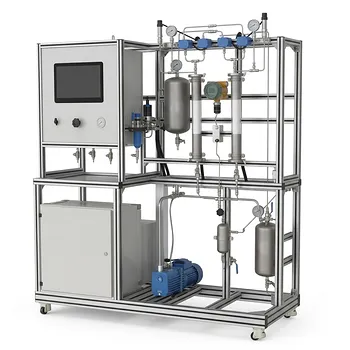
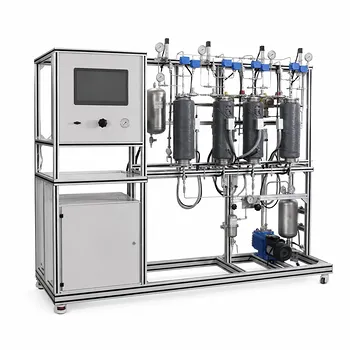
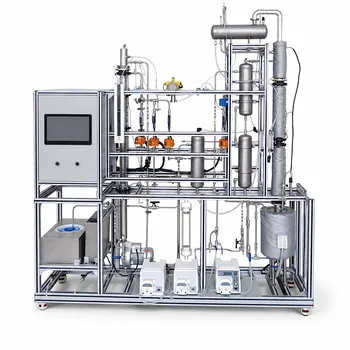
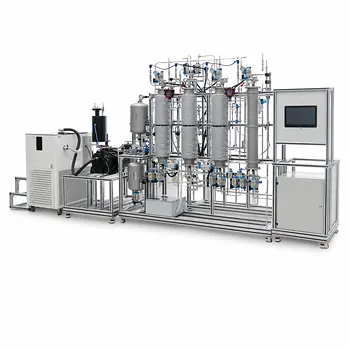
Particulate matter (PM10 and PM2.5) removal from industrial gas streams is demonstrated in pilot plants through a sequence of physical separation technologies. These scaled-down systems let you feed dust-laden air into cyclone separators, baghouse fabric filters, wet scrubbers, and electrostatic precipitators. By measuring particle concentration and size distribution before and after each unit, you directly see how centrifugal force, barrier filtration, and electrostatic charging capture fine aerosols – and you can quantify collection efficiency, pressure drop, and energy consumption side by side.
A well-designed pilot plant bridges theory and practice by giving you unambiguous, comparative performance data on the same gas stream. It reveals that no single device is universally superior; instead, the optimal choice balances removal efficiency, energy penalty, and the nature of the particulate.
The Core Separation Technologies at Pilot Scale
Pilot plants replicate the four dominant industrial approaches for particulate control. Each one exploits a distinct physical mechanism, and running them on identical inlet conditions makes their differences – and synergies – transparent.
Cyclone Separators: Harnessing Centrifugal Force
A cyclone spins the gas at high velocity, throwing larger particles to the wall where they drop into a collection hopper.
The pilot setup typically includes a variable-speed fan and a transparent cyclone body so you can observe the dust spiral in real time.
This is your go‑to technology for PM10 and coarser particles; it excels at low pressure drop and minimal maintenance.
However, its efficiency plummets for sub‑2.5 µm particles, a critical limitation that direct pilot measurements make unmistakable.
Baghouse Filters: Barrier Filtration at the Microscopic Level
Baghouse units force the dusty gas through woven or felted fabric tubes.
A dust cake builds on the fabric surface, turning the filter into an even finer barrier – often achieving >99% removal of PM2.5.
Pilot‑scale baghouses let you test different fabric materials, fiber diameters, and cleaning cycles (pulse‑jet, reverse‑air).
You record the steady rise in pressure drop as the cake forms and the sudden recovery after cleaning, linking filter condition to energy cost.
Electrostatic Precipitators: Charging and Collecting Fine Particles
An ESP uses a high‑voltage discharge to ionize the gas and charge particles, which then migrate to grounded collection plates.
Pilot units often feature adjustable voltage and multi‑field configurations, revealing how power input directly influences capture of sub‑micron particles.
Because the mechanism is electrostatic, it can handle high‑temperature, corrosive streams that would damage fabric filters.
At pilot scale, you can measure current density, voltage, and outlet concentration to build a clear relationship between operating cost and PM2.5 removal efficiency.
Wet Scrubbers: Liquid Contact for Dual Removal
Wet scrubbers contact the particle‑laden gas with a scrubbing liquid (usually water).
Pilot plants can simulate spray towers, venturi scrubbers, or mechanical agitators, often seen in gasification syngas cleanup to quench molten ash droplets and wash out fines.
A big advantage is simultaneous removal of soluble gases and sub‑micron particles through inertial impact and diffusion.
However, the trade‑off is a liquid effluent stream that requires further treatment – a complexity that pilot studies immediately highlight when you add wastewater analysis to the protocol.
Emerging Solutions: Nanostructured Filter Media
Some advanced pilot plants incorporate nanofiber‑coated filters or carbon nanotube mats to demonstrate how ultrafine fiber diameters enhance capture of PM2.5 and even smaller nanoparticles.
By comparing a standard baghouse filter against a nanofiber‑enhanced one on the same gas stream, you measure the improved efficiency per unit pressure drop.
This bridges academic research on nanomaterial‑enhanced mass transfer with pragmatic air pollution control.
It also teaches students that next‑generation physical barriers can meet tighter emission limits without proportionally higher energy costs.
Measuring Performance: Efficiency, Pressure Drop, and Energy
Demonstrating separation is only half the story; a pilot plant’s real value is the quantitative comparison it enables.
Particle Size Distribution Analysis
Real‑time or filter‑based analyzers track the number and mass concentration of PM10 and PM2.5 upstream and downstream of each device.
This reveals exactly which size fractions slip through a cyclone (nearly all sub‑micron) versus which are captured by a fabric filter (practically all above 0.3 µm).
Real‑Time Monitoring of Pressure and Flow
Every separation method imposes a pressure loss that directly translates to fan power.
Pilot plants instrumented with differential pressure transmitters and flow meters let you calculate the specific energy consumption (kWh per 1000 m³) for each technology, providing an economic dimension that textbooks alone cannot convey.
Understanding the Trade-offs and Pitfalls
No single unit operation is flawless. Grasping these trade‑offs is essential to using the pilot plant as a decision‑making tool.
The Efficiency–Energy Paradox
Baghouses and ESPs can achieve >99.9% efficiency on PM2.5, but their pressure drop is much higher than a cyclone’s.
A pilot study that maps efficiency versus fan power instantly demonstrates the diminishing returns: beyond a certain point, a small gain in capture requires a large energy investment.
Fine Particle Challenges
Cyclones, while simple, will fail a PM2.5 emission limit unless paired with a secondary device.
Even fabric filters can suffer particle re‑entrainment during pulse‑cleaning, causing momentary spikes in outlet concentration – a nuisance visible in pilot‑scale transient data.
Secondary Waste Streams
Wet scrubbers generate a particulate‑laden wastewater.
Supplementary syngas purification pilot plants show that the same scrubbing process that removes fly ash also creates a liquor containing dissolved salts and organics, requiring gravity separation and filtration before discharge – a chain of unit operations that a well‑designed pilot plant can replicate.
Making the Right Choice for Your Demonstration or Research Goal
Which pilot‑plant configuration best serves your purpose depends on what you need to learn or prove.
- If your primary focus is demonstrating fundamental physical mechanisms: Run a multi‑stage line with a cyclone, a baghouse, and an ESP, all fed the same dust. This makes the contrast between centrifugal force, barrier filtration, and electrostatic attraction unmistakable.
- If your primary focus is fine particle (PM2.5) removal efficiency: Concentrate on fabric filters and electrostatic precipitators. Use variable voltage and pulse‑cleaning sequences, and consider benchmarking against nanofiber‑enhanced media to show the impact of filter microstructure.
- If your primary focus is energy and sustainability: Quantify the pressure drop and fan energy for each device. Add a cyclone pre‑separator to reduce the dust loading on a baghouse and measure the net energy savings – a classic trade‑off that pilot data can illustrate convincingly.
- If your primary focus is integrated gas‑liquid treatment: Select a wet scrubber pilot train capable of quenching, spray washing, and demisting, and combine it with a wastewater clarification stage. This shows that physical particle removal often initiates a wider treatment chain.
A unit operations pilot plant turns the abstract concept of particulate separation into a tangible, measured comparison – and that direct insight is the surest foundation for sound engineering judgment.
Summary Table:
| Technology | Physical Mechanism | Target Particle Size | Key Advantage | Key Trade-off |
|---|---|---|---|---|
| Cyclone Separators | Centrifugal Force | PM10 & coarser | Low maintenance & pressure drop | Low efficiency for PM2.5 |
| Baghouse Filters | Barrier Filtration | PM2.5 & ultra-fine | Very high efficiency (>99%) | High pressure drop over time |
| Electrostatic Precipitators | Electrostatic Charging | Sub-micron / PM2.5 | Handles high-temp, corrosive gas | High energy/capital cost |
| Wet Scrubbers | Liquid Contact / Inertial Impact | PM2.5 & soluble gases | Simultaneous gas & particle removal | Generates wastewater stream |
Enhance Your Practical Engineering Training with LABPARK
Bridge the gap between theoretical gas treatment concepts and practical engineering applications. LABPARK provides premium Educational and Vocational Unit Operations Pilot Plants specializing in:
- Chemical Engineering
- Bioprocess & Biotech
- Environmental & Water Treatment
Designed for universities, research institutes, and enterprises, our pilot plants empower students and researchers to analyze real-time separation efficiency, pressure drops, and energy trade-offs first-hand.
Ready to upgrade your laboratory capabilities? Contact us today to discuss your custom pilot plant configuration!
Related Products
- Fixed-Bed Chemical Reaction and Gas Dust Tar Removal Unit Operations Pilot Plant
- Gas-Solid Heterogeneous Separation Demonstration Educational Unit Operations Pilot Plant
- Dual-Mode Gas Absorption and Desorption Unit Operations Training Pilot Plant
- Pressure Swing Adsorption Educational Unit Operations Pilot Plant
- Absorption and Desorption Educational Unit Operations Pilot Plant
People Also Ask
- When to transition from PID to adaptive control in pilot plants? Key process indicators.
- How do deviations in estimating latent heat impact pilot plant thermal systems? Avoid hardware mis-sizing.
- Why Compare Predicted and Experimental Excess Enthalpy? Key to Accurate Pilot Plant Scale-up
- Why are particle density, bulk density & voidage critical in pilot plants? Master Bed Fluid Dynamics
- How to study gasification in pilot plants? Compare exit gas composition & efficiency