Plasma treatment provides a direct, solvent-free method to demonstrate membrane surface modification in the pilot plant. By integrating a compact plasma system into bioprocess and water treatment curricula, students can permanently alter polysulfone or polyacrylonitrile membranes with helium, oxygen, or nitrogen plasma to introduce hydrophilic functional groups, effectively reducing fouling and stabilizing permeate flux. This hands-on approach bridges surface chemistry theory with real-world operational data, turning an abstract challenge into a controllable, measurable experiment.
The most effective way to embed plasma treatment in a pilot plant curriculum is to design a modular workbench where students activate membrane surfaces, quantify hydrophilic improvement via contact angle, and then track the direct effect on transmembrane pressure and flux. This teaches not only how to mitigate fouling at the material level but also why industrial operators value solvent-free, scalable surface engineering.
Why Plasma Treatment is a Powerful Teaching Tool
The Fundamental Fouling Problem
Membrane fouling—caused by solute adsorption, pore blocking, and concentration polarization—remains the single greatest efficiency killer in bioprocess and water treatment plants.
It raises operating costs, shortens membrane life, and obscures the true separation potential of a system.
What Plasma Treatment Actually Changes
Low-temperature plasma (He/H₂O, O₂, or N₂) bombards the membrane surface, breaking bonds and grafting oxygen- or nitrogen-containing groups.
This transforms a hydrophobic polymer like polysulfone into a permanently hydrophilic surface without using hazardous solvents, making the membrane far more resistant to organic and biological foulants.
The Solvent-Free Advantage
Traditional chemical grafting often relies on toxic solvents or initiators.
Plasma treatment eliminates that safety concern entirely, which is a crucial lesson for students who will work in regulated food, pharma, or water industries.
Designing a Pilot Plant Module Around Plasma Surface Modification
Start with a Simple, Reproducible Plasma Setup
A benchtop plasma generator with a controlled gas feed (helium, oxygen, or nitrogen) and a vacuum or atmospheric chamber is sufficient.
Treat flat-sheet polysulfone or PAN membrane coupons for a fixed time and power, then immediately test them.
Build the Measurement Loop Around the Membrane
Integrate the treated membrane into a small cross-flow pilot cell equipped with pressure transducers and flow meters.
After plasma activation, students measure static contact angle (droplet method) to confirm hydrophilicity, then run pure water flux tests at constant pressure to observe how the modified surface resists fouling.
Make Fouling Visible and Quantifiable
Introduce a model foulant—such as a protein solution (bovine serum albumin for bioprocess) or humic acid (for water treatment).
Students record the transmembrane pressure (TMP) rise and permeate flux decline over time, comparing untreated versus plasma-treated membranes side by side.
Scale the Learning with Simple Protocols
A full teaching module can fit into a single lab session:
- Cut and pre-wet membranes.
- Expose to plasma (e.g., 30–60 seconds).
- Assemble in test cell, condition with water.
- Run fouling challenge and record flux profiles.
- Backwash to demonstrate recovery.
Weaving Plasma Modification into the Larger Fouling Management Story
Surface Modification as One Piece of the Puzzle
While plasma treatment tackles the root cause at the material level, it must be paired with other strategies students learn in a comprehensive pilot plant curriculum.
These include feed pretreatment (pH adjustment, pre-filtration), flow optimization (higher cross-flow velocity, turbulence promoters), and periodic chemical cleaning—all of which can be demonstrated on the same pilot unit.
Comparing Chemical and Physical Modifications
In the same curriculum, students can contrast plasma-induced hydrophilization with UV-initiated grafting of hydrophilic monomers (like hydroxyethyl methacrylate) or cationic charge modifications (quaternary ammonium groups).
This comparison deepens their understanding of selectivity versus permeability trade-offs and the longevity of each modification.
Protecting Membranes When the Feed is Too Aggressive
For feed streams loaded with solids or aggressive chemicals, the curriculum can introduce vapor permeation as a complementary configuration.
In this setup, the liquid feed is first vaporized before contacting the membrane, preventing direct foulant–membrane contact—a critical lesson for plants handling harsh industrial streams.
Common Pitfalls and Trade-Offs in Teaching Plasma Modification
Permanence and Surface Rearrangement
Hydrophilic groups introduced by plasma can slowly reorient or migrate into the polymer bulk over time, partially reversing the anti‑fouling effect.
Students must learn to differentiate between the immediate treatment effect and long‑term stability under real process conditions.
Equipment Cost and Safety Constraints
A radio‑frequency plasma generator with gas handling adds capital cost and requires training for high‑voltage and vacuum safety.
Curricula must balance the educational value against budget and space, and ensure thorough risk assessments are in place.
Not Every Membrane Responds Equally
Polysulfone and PAN respond well, but other polymers (e.g., polyvinylidene fluoride) may require different gas chemistries or pre‑treatments.
A curriculum should highlight this materials‑response variability so students don’t assume a universal recipe.
Risk of Over‑Simplifying Industrial Reality
A lab‑scale plasma treatment can give an artificially optimistic picture.
In pilot‑scale modules, the untreated membrane support structure may still foul, and back‑pulsing dynamics differ.
Addressing these gaps with supplementary case studies or industrial‑scale data prevents over‑confidence.
Making the Right Choice for Your Pilot Plant Curriculum
After mastering the plasma treatment module, students should be able to select the right anti‑fouling approach for a given process. Here are the guiding scenarios for curriculum designers:
- If your primary focus is fundamental understanding: Structure the module to compare plasma treatment, chemical grafting, and pristine membranes on the same unit, letting students draw their own conclusions about wettability and fouling kinetics.
- If your primary focus is industrial readiness: Combine plasma surface modification with real‑time TMP monitoring and teach students to schedule cleaning‑in‑place cycles based on flux decay curves, mimicking a plant control room.
- If your primary focus is sustainable bioprocess design: Emphasize the solvent‑free nature of plasma treatment and have students calculate the reduction in cleaning chemicals and waste generated over a projected membrane lifetime.
- If your primary focus is holistic plant troubleshooting: Build a multi‑stage pilot skid that integrates pre‑filtration, plasma‑modified membrane loops, and chemical backwash, then challenge students to identify which fouling mechanism—adsorption, pore blocking, or gel layer—dominates in each scenario.
A well‑integrated plasma treatment module turns the abstract concept of membrane fouling into a tangible, solvable problem, equipping students with the material‑level insight they need to optimize any pilot plant.
Summary Table:
| Lab Module Step | Key Activity | Educational Value |
|---|---|---|
| Surface Activation | Plasma treatment of PSF/PAN membranes | Demonstrates solvent-free chemical modification |
| Hydrophilicity Test | Contact angle & pure water flux measurement | Quantifies surface energy changes |
| Fouling Challenge | Testing with BSA or humic acid | Links material science to process engineering |
| System Optimization | Comparing flux decay & cleaning protocols | Teaches real-world industrial plant operation |
Elevate Your Engineering Curriculum with LABPARK
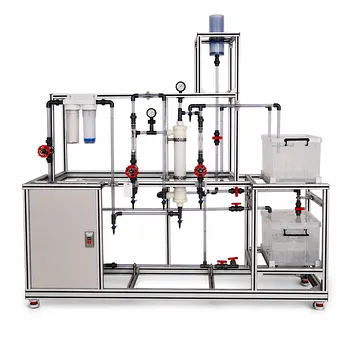
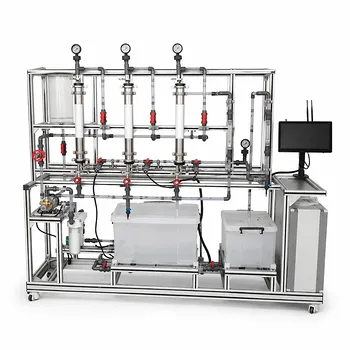
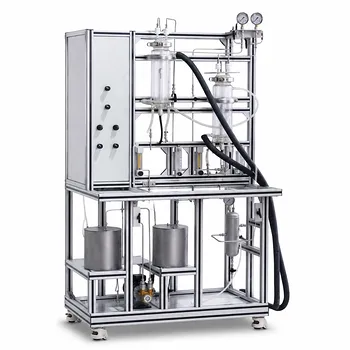
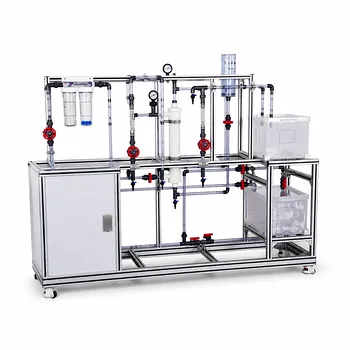
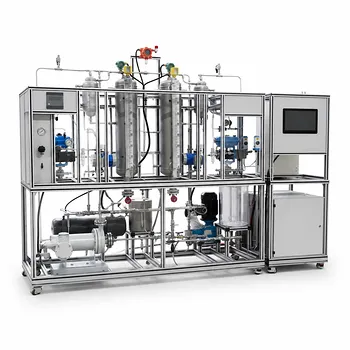
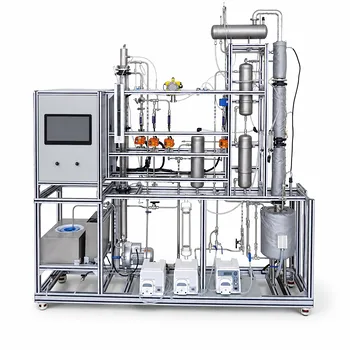
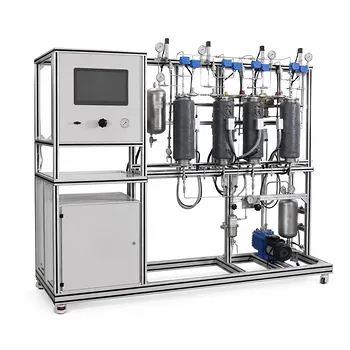
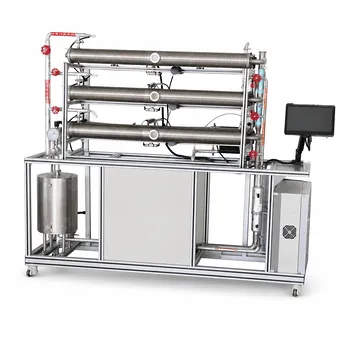
Are you looking to bridge the gap between surface chemistry theory and industrial operations? LABPARK provides state-of-the-art Educational and Vocational Unit Operations Pilot Plants in chemical engineering, bioprocess & biotech, and environmental & water treatment.
Designed specifically for universities, research institutes, and enterprises, our modular skids allow students and researchers to explore advanced membrane technologies, fouling mitigation, and process scale-up in a safe, controlled environment.
Ready to enhance your lab's training capabilities? Contact LABPARK today to discuss your pilot plant needs!
Related Products
- Ultrafiltration Membrane Separation Educational Pilot Plant
- Multi Functional Membrane Crystallization Educational Unit Operations Pilot Plant
- Multifunctional Membrane Separation Educational Pilot Plant with Ultrafiltration, Nanofiltration, Reverse Osmosis
- Photocatalytic Membrane Separation and Degradation Unit Operations Pilot Plant
- Hollow Fiber Ultrafiltration Membrane Separation Educational Pilot Plant
People Also Ask
- How do PEI, PVDF, and PSU membranes compare in pilot plants? Find the best fit.
- Pervaporation vs. Vapor Permeation: Handling Suspended Solids in Membrane Pilot Plants
- Why Use a Membrane Separation Pilot Plant vs. Lab Testing? Avoid Costly Scale-Up Failures
- Isotropic vs. Anisotropic Membranes: How to Choose the Best Pilot Plant Modules
- How do membrane pilot plants demonstrate synthetic vs biological membrane advantages?