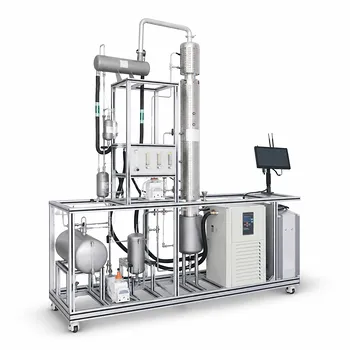
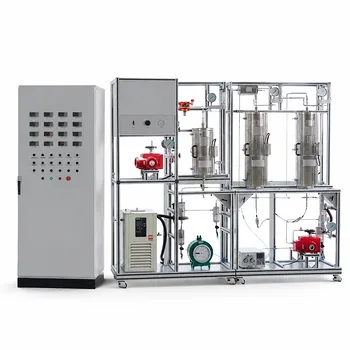
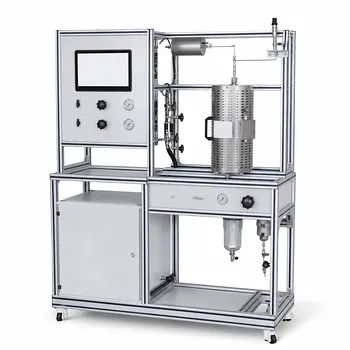
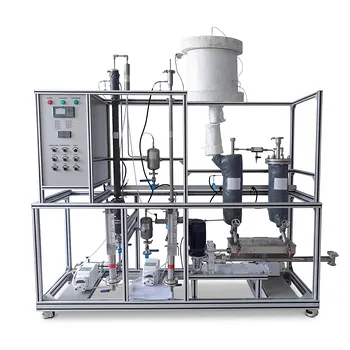
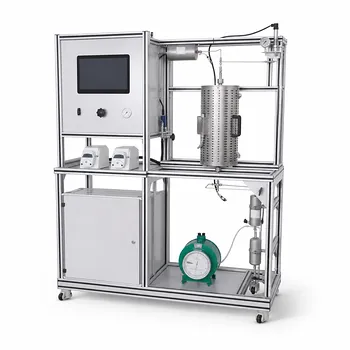
Tuning fuel product distribution in a hydrocracker-distillation pilot plant is the most straightforward method to demonstrate how refinery operating strategies shift yields between diesel, kerosene, and other fuels. By simultaneously adjusting the hydrocracking reactor’s severity—through temperature, pressure, and space velocity—and the distillation column’s cut-point controls—such as reflux ratio, feed tray, and temperature profile—operators can move the product slate from a maximum diesel mode to a maximum kerosene mode in real time. These physical adjustments make the abstract concepts of reaction kinetics and phase equilibrium tangible for students and researchers.
The core insight: Fuel product distribution is tunable by independently controlling cracking selectivity and boiling‑point separation. The pilot plant reveals that no single set of conditions is optimal for all fuels; you must balance cracking depth against separation precision, and the resulting trade‑offs in yield, quality, and energy consumption define the economic boundaries of refinery flexibility.
The Two-Step Process: Cracking Severity and Separation Precision
An integrated hydrocracking–distillation pilot plant mirrors the heart of a modern refinery. Heavy, waxy feed—long‑chain alkanes—enters the hydrocracker, where hydrogen and a bifunctional catalyst break and rearrange the molecules. The reactor effluent then flows into a fractionation column that slices the mixture into narrow boiling‑point fractions. The demonstration of product tuning lies in showing that you can push the envelope in each unit to favor a different fuel.
The Role of the Hydrocracking Reactor: Chemistry, Not Just Bruteforce
Hydrocracking uses a supported metal‑acid catalyst to combine hydrogen addition with carbon‑carbon bond breaking. The selectivity is high because it proceeds via carbenium ion intermediates, favoring beta‑scission and isomerization rather than random free‑radical chain reactions. This means the reaction network is controllable—you can steer it toward middle distillates (diesel, kerosene) rather than light gases.
The Distillation Column as a Sorting Gate
Whatever molecules the reactor produces, the distillation column sorts them by boiling point. Without column adjustments, a change in reactor severity would simply shift the whole boiling curve; the cut points must be deliberately moved to isolate the desired fuel fraction. The pilot plant column allows you to change reflux ratio, feed tray, and side‑draw locations, directly showing how these variables carve out a specific product.
Adjusting the Hydrocracker Reactor to Shift Selectivity
The reactor’s operating window is defined by three primary levers. Together, they control the depth of conversion and the shape of the product distribution curve.
Temperature: The Primary Handle for Cracking Severity
Raising the reactor temperature increases the rate of cracking reactions exponentially. In a pilot plant, a 5–10°C increase can shift selectivity from heavy diesel‑range molecules toward more kerosene and naphtha. This is because higher temperatures overcome activation barriers for secondary cracking, breaking already‑formed middle distillates into lighter products. By logging product samples at stepped temperature increments, students can plot carbon‑number distributions and see the peak move from C₁₅–C₂₂ down to C₁₀–C₁₆.
Pressure and Hydrogen Partial Pressure: Shaping Saturation and Coking
Hydrocracking requires high pressure to maintain catalyst activity. Increasing hydrogen partial pressure suppresses coke formation and promotes saturation of aromatics, which shifts the product slate toward more paraffinic, higher‑cetane diesel. In demonstration mode, running the pilot plant at constant temperature but varying pressure shows that lower pressure yields more olefins and aromatics—boosting octane for gasoline blending—while the diesel yield drops and catalyst deactivation accelerates. This trade‑off is a clear lesson in process economics.
Space Velocity: Controlling Residence Time
Liquid hourly space velocity (LHSV) determines how long the feed stays in the catalyst bed. A lower LHSV gives more time for cracking, favoring lighter products. By reducing the feed rate while holding temperature constant, operators can mimic a “max kerosene” mode where conversion deepens and diesel yield decreases. Conversely, a high LHSV limits conversion, preserving diesel‑range molecules. This is a kinetic lever that doesn’t require hardware changes, making it an ideal teaching tool.
Manipulating the Distillation Column for Boiling-Point Cuts
The hydrocracker sets the overall product spectrum, but the distillation column determines which molecules end up in the fuel tank. The pilot plant column typically offers several adjustable parameters.
Reflux Ratio and Temperature Profile
Increasing the reflux ratio improves separation sharpness, allowing a clean cut between kerosene and diesel. However, excessive reflux raises energy consumption. The pilot plant can demonstrate that in a maximum diesel mode, a moderate reflux ratio suffices because the cut point is wider, while a tight kerosene cut demands higher reflux to avoid contamination from heavier ends. Monitoring top and bottom temperatures during these adjustments links theory to measurable column operation.
Feed Tray Location and Side‑Draw Points
Where you introduce the feed and where you withdraw side streams directly influence the cut points. For a shift from diesel to kerosene, moving the feed tray higher in the column changes the internal traffic and enhances stripping of lighter components. In a pilot plant equipped with multiple side‑draw ports and product receivers—similar to those used in vocational unit operations setups—students can physically sample kerosene from a tray at a specific height and observe how moving the draw location alters the product’s boiling range. This is an extension of the crude oil fractionation exercises described in unit operations training, now applied to a hydrocracked stream.
Using Total Reflux to Validate Column Efficiency
Before tuning the cuts, operators often run the column at total reflux to determine the minimum number of theoretical stages via the Fenske equation. Checking actual separation against the Fenske prediction calibrates the column’s efficiency. Then, when reflux is reintroduced, students can compare the observed distillate composition with the Underwood‑calculated minimum reflux ratio. This builds a direct bridge from shortcut design methods to physical results, reinforcing why a certain reflux is needed to achieve a kerosene purity specification.
Bringing It Together: From Heavy Feed to Target Fuels
A typical demonstration sequence might run as follows: start with a heavy waxy feed and establish a baseline “maximum diesel” mode—moderate temperature (e.g., 380°C), high pressure, high LHSV, and a wide distillation cut. Then, without changing the feed, transition to “maximum kerosene” by raising temperature 10°C, lowering LHSV, and increasing the column reflux while narrowing the side‑draw cut range. The collected fractions instantly illustrate how the plant has been tuned.
Observing Real-Time Trade‑offs
While transitioning, operators monitor that the diesel fraction yield drops, but the kerosene fraction yield rises. They also see trade‑offs in product quality: the kerosene cut may now have a lower smoke point if secondary cracking increases aromatics, or the diesel may lose cetane number if the deeper cracking removes paraffins. This is the thermodynamic and kinetic balancing act referenced in the primary source—no single number changes in isolation.
Understanding the Trade-offs
Any demonstration of tuning must confront the unavoidable compromises. Highlighting these limitations builds trust and a realist mindset.
Yield vs. Quality
Pushing for a maximum diesel mode with mild cracking preserves cetane number but may leave unconverted heavy ends that reduce the diesel yield. Pushing for kerosene can overcrack valuable middle distillates into naphtha and gas, starving the diesel pool. The pilot plant’s mass balances will show that the sum of diesel and kerosene yields goes through an optimum, not a linear trade.
Catalyst Stability and Cycle Length
High‑temperature, low‑pressure runs to maximize light fuels accelerate coking on the hydrocracking catalyst. A short demonstration may not show deactivation, but sampling the differential pressure across the reactor or analyzing spent catalyst for carbon content can reveal the hidden cost. In a training context, this links the operating window to refinery maintenance economics.
Energy Costs of Separation
Tight cuts with high reflux ratios consume significantly more steam or electricity. The pilot plant’s energy meters can quantify the extra energy per liter of kerosene shifted. This makes the concept of energy‑optimal cut‑point selection concrete, and it aligns with reactive distillation’s heat integration principles: in industrial settings, energy is saved when exothermic reaction heat directly vaporizes the mixture, but here, the distillation energy penalty is front and center.
Equipment Limitations in a Small‑Scale Unit
Pilot plant columns often have fewer theoretical stages than industrial units. Achieving a sharp kerosene‑diesel split may require extremely high reflux, leading to flooding. Demonstrating these hydraulic limits teaches the importance of pilot plant design and proper scaling rules—a direct application of the modular, flexible pilot plant concept.
Making the Right Choice for Your Educational Goal
Whether you are designing a laboratory course or a research campaign, tailor the demonstration to the learning outcome you want to emphasize.
- If your primary focus is teaching kinetic vs. thermodynamic control: Run a series of experiments varying reactor temperature while keeping all distillation settings constant, and have students plot carbon number distributions. This isolates the cracking selectivity effect.
- If your primary focus is separation science and column operation: Use a pre‑produced synthetic feed resembling hydrocracker effluent, then let students manipulate reflux, feed tray, and side‑draw positions to hit predefined diesel or kerosene specs. Correlate results with Fenske and Underwood calculations.
- If your primary focus is process integration and energy trade‑offs: Design a full‑run procedure that transitions from max diesel to max kerosene mode, and ask students to record product yields, quality parameters, and total energy input. Require an economic analysis that balances product value against operating cost.
- If your primary focus is catalyst and reaction engineering: Run the hydrocracker at constant temperature but varying LHSV and pressure, and analyze the liquid product for distillation curves and PIONA composition. Link changes to the carbenium ion mechanism and hydrocracking catalyst behavior.
The integrated pilot plant is a miniature refinery that lays bare the fundamental levers for fuel product tuning. By systematically moving these levers and measuring the consequences, you transform an abstract optimization problem into a hands‑on proof of principle that stays with learners long after the experiment ends.
Summary Table:
| Parameter | Action | Impact on Fuel Distribution |
|---|---|---|
| Reactor Temperature | Increase | Shifts yield from diesel to lighter fractions (kerosene/naphtha) |
| Space Velocity (LHSV) | Decrease | Increases residence time, favoring lighter products (max kerosene) |
| Reflux Ratio | Increase | Sharpens separation between kerosene and diesel cuts |
| Feed Tray/Side-Draw | Adjust | Changes cut points to isolate specific product fractions |
Bring Hands-On Refinery Training to Your Institution
Are you looking to provide students or researchers with real-world experience in fuel tuning and unit operations? LABPARK provides Educational and Vocational Unit Operations Pilot Plants in chemical engineering, bioprocess & biotech, and environmental & water treatment for universities, research institutes, and enterprises.
Equip your lab with flexible, modular pilot units that demonstrate complex kinetics and separation science in real time. Contact our team today to discuss your project requirements and receive a customized solution.
Related Products
- Multi-Modal Distillation Unit Operations Training Pilot Plant
- Methane Cracking Educational Unit Operations Pilot Plant
- Multi-Functional Special Distillation Educational Pilot Plant
- Continuous Sieve-Plate Distillation Pilot Plant for Unit Operations Laboratory Education
- Green Anhydrous Ethanol Purification Extractive Distillation Unit Operations Training Pilot Plant
People Also Ask
- How can energy balance equations for condensers & reboilers be validated experimentally? Guide
- How can real-time carbon number prediction improve distillation pilot plants? Optimize control.
- How does catalyst water concentration affect distillation pilot plant design? Key separation train choices.
- Why is vacuum operation capability an essential feature for a distillation unit operations pilot plant? Unlock Efficiency
- What are the primary reflux ratio control strategies? Master Distillation Unit Operations