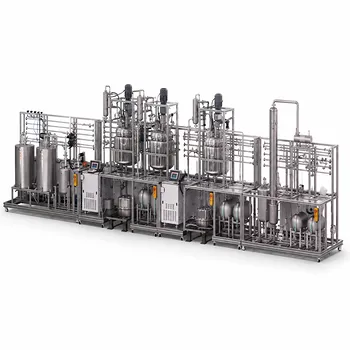
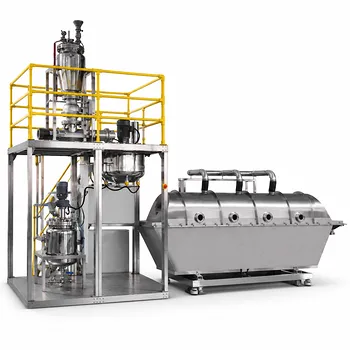
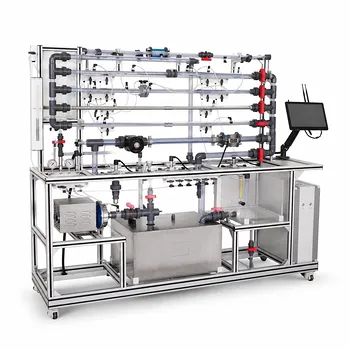
Bridging theory and practice is at the heart of this question. In a chemical engineering pilot plant, students integrate first-principles modeling by defining control volumes around individual unit operations, measuring real-time mass flow, temperature, and composition, and then solving mass and energy balances to predict steady-state and dynamic behavior. This process transforms abstract differential equations into tangible, validated models that expose the inherent gap between an idealized simulation and the physical world.
The true educational value is not just in proving the equations right, but in teaching students to diagnose why they are wrong. A pilot plant forces a confrontation with real-world heat loss, mixing inefficiencies, and sensor dynamics, making model validation the core learning objective, not an afterthought.
Why Pilot Plants Are the Missing Link
The Simulation Trap
Chemical engineering curricula excel at teaching students to build computer-simulated process models. These models are cost-effective and fast. However, they inherently rely on idealized assumptions like perfect mixing, negligible heat loss, and instant sensor response.
This creates a dangerous blind spot. A simulation can be beautifully coded and output a perfect mass balance, but it tells a student nothing about the robustness of the design to real fluid dynamics or transient fouling. The deep need here is to build professional skepticism, not just software proficiency.
Physical Verification as the Anchor
A pilot plant serves as the empirical anchor. It is a professional-grade physical system that allows students to collect critical performance data—actual heat transfer coefficients, reaction kinetics, and pressure drops—under controlled conditions. By directly comparing this physical data with a first-principles model, the student’s question shifts from “Did my code run?” to “Why does reality deviate from my balance equations?”.
The Mechanics of Integration: From Equations to Insight
Defining the System and Measuring Reality
The first step is a disciplined definition of the control volume. A student working on a pilot-scale powder discharge or a continuous reactor must physically trace the system boundaries on the equipment. They then measure the inputs, outputs, and accumulation by reading flow meters, thermocouples, and composition analyzers.
This act of measurement is revelatory. The data is inherently noisy. A pipe might radiate heat, a sensor might lag. These physical parameters form the raw inputs for the mass balance equation: Accumulation = In - Out ± Generation.
Solving Mass Balances with Real Data
Take a complex configuration: a pilot plant with a reactor, a separator, and a recycle loop. A theoretical model treats this as a closed-loop algebraic solution. In the pilot plant, students measure the fresh feed rate, the reactor effluent composition, and the recycle stream flow. They then calculate the recycle ratio and separator efficiency to close the overall mass balance.
This practical work immediately reveals concepts that are abstract on paper. A mass balance that won’t close around the loop demonstrates the non-negotiable need for a purge stream to remove inert buildup—a lesson etched into memory by a real pressure drop, not a textbook paragraph.
Closing the Energy Balance Loop
Energy balances follow the same principle. By measuring the enthalpy of all inlet and outlet streams and the work input, students apply the accumulation equation: Change in Enthalpy = Heat In - Heat Out. In a pilot-scale heat exchanger, they can directly measure the heat lost to the environment.
That measured heat loss is the key. If the calculated energy accumulation is negative, it confirms an endothermic process requiring external supply. Translating the formula Q_lost = U * A * (T_wall - T_amb) into a quantified number calculated from their own flawed data is when thermodynamic theory becomes operational skill.
Validating Dynamic Models
This is where modeling becomes visually powerful. Consider a pilot-scale batch reactor. The theoretical foundation is a set of ODEs: a material balance (dC_A/dt = -r_A) and an energy balance (ρ*Cp*dT/dt = ΔH*r_A - U*A*(T-T_c)).
By equipping the reactor with real-time sensors for concentration (C_A), reactor temperature (T), and coolant temperature (T_c), students can run an experiment and plot physical concentration/time and temperature/time curves. They then overlay the numerical simulation curves from a tool like MATLAB. The discrepancy between the two curves allows them to back-calculate the actual overall heat transfer coefficient (U) and validate kinetic parameters, turning parameter estimation into an investigative task.
Integrating Empirical Models for Complex Phenomena
First-principles models can struggle with messy, complex phenomena like powder segregation inside a hopper. Here, the primary reference points to a powerful hybrid approach: combining fundamental balances with multivariate latent variable models (LVMs). A student can use the mass balance to track total powder flow, but then train an LVM on historical segregation data to predict how variations in raw material properties will affect the final discharge composition. This teaches that model complexity is a strategic choice, not a default.
Understanding the Trade-offs
The Cost of Physical Reality
A pilot plant is not a frictionless learning tool. A simulation resets with one click. A pilot plant requires significant time for setup, cleaning, and troubleshooting a mechanical failure. A stuck valve can consume a three-hour lab period, teaching a lesson in maintenance—but not necessarily mass transfer—unless the instructor frames the failure as a real-world process constraint.
When Simulation Falls Short
Simulations fail silently. They will output a negative heat transfer coefficient if coded incorrectly. A pilot plant fails loudly and physically. This can be intimidating. Students can become overwhelmed by the “noise” of heat loss, mixing inefficiencies, and sensor lag, and be unable to isolate the core chemical engineering principle. The trade-off is between the clarity of a perfect model and the chaotic truth of physical data that must be filtered and understood.
The Skill of Uncertainty Management
The ultimate lesson is that all plant data is imperfect. The model itself is a deliberate simplification. Integrating first principles in a pilot plant teaches students to manage bimodal uncertainty: the error in the physical measurement and the error in the model’s assumptions. This is a high-level cognitive skill that cannot be taught from a textbook, only from reconciling a flawed model with flawed data to arrive at a sufficiently robust process design.
Making the Right Choice for Your Training Goal
The way you integrate modeling into a pilot plant curriculum should align with the learning outcome you prioritize. A plug-and-chug lab report achieves little; intentionally designed ambiguity achieves everything.
- If your primary focus is fundamental principle mastery: Design experiments to measure a single parameter, like the overall heat transfer coefficient
U, and force students to quantify all sources of energy loss. Confirming a textbook number is less valuable than explaining a 30% deviation. - If your primary focus is scale-up and process design insight: Use the pilot plant to run the same process at two different batch sizes or flow rates. Then challenge students to predict the larger-scale performance using only first-principles transport models, revealing how non-linear heat and mass transfer limitations emerge.
- If your primary focus is data-driven modeling and process robustness: Integrate empirical tools like latent variable models with the mass balance framework. Have students assess how raw material variability propagates through a balanced flowsheet, teaching risk assessment alongside conservation laws.
The goal is not to produce students who can copy a balance equation from a whiteboard to a pump, but engineers who instinctively distrust a perfect model until it has been properly humbled by a physical one.
Summary Table:
| Aspect | Idealized Process Simulation | Physical Pilot Plant Validation |
|---|---|---|
| System Assumptions | Perfect mixing, zero heat loss, instant sensor response | Real fluid dynamics, environmental heat loss, sensor lag |
| Key Learning Focus | Software proficiency & mathematical syntax | Professional skepticism & uncertainty management |
| Failure Mode | Silent errors (e.g., impossible physical values) | Physical deviations forcing empirical diagnostics |
| Educational Value | Fast, low-cost code execution | Hands-on parameter estimation & scale-up insight |
Empower the Next Generation of Engineers with LABPARK
Bridging the gap between mathematical theory and physical reality requires robust, industry-grade hardware. LABPARK provides state-of-the-art Educational and Vocational Unit Operations Pilot Plants in chemical engineering, bioprocess & biotech, and environmental & water treatment.
We help universities, research institutes, and enterprises build hands-on training environments where students learn to diagnose real-world deviations, validate mathematical models, and master process operations.
Ready to elevate your lab or training facility? Contact LABPARK today to explore our customizable pilot plant solutions.
Related Products
- Carbon Dioxide Hydrogen Methanol Synthesis Educational Unit Operations Pilot Plant
- Multi-Reactor Educational Pilot Plant for Reaction Engineering Unit Operations
- Ethyl Acetate Synthesis Unit Operations Pilot Plant for Practical Training
- Multi Pump Fluid Transport Process Piping Unit Operations Training Pilot Plant
- Multi-Modal Distillation Unit Operations Training Pilot Plant
People Also Ask
- How do temp & pressure affect methanol synthesis pilot plants? Optimize equilibrium and catalyst performance.
- Why is a purge system necessary when operating a gas recirculation loop in a methanol synthesis pilot plant? (Guide)
- Why do modern methanol pilot plants operate at lower pressures? Catalyst & Feed Requirements Explained
- What are the operational requirements for catalyst activation? Safe Methanol Pilot Plant Operation
- Why is the chemical plant startup schedule crucial? De-risk scale-up with pilot plants.