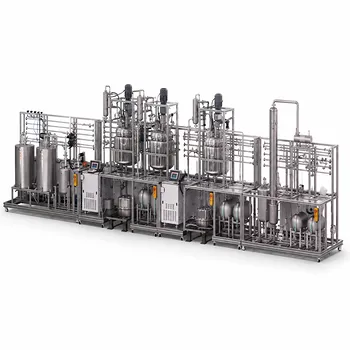
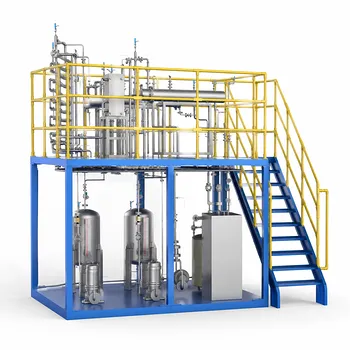
FMEA isn't just a paperwork exercise—it's the most powerful tool you have to prevent a small mistake from becoming a safety incident or a shattered research dataset. You apply Failure Mode and Effects Analysis (FMEA) to an educational or research pilot plant by assembling a multidisciplinary team early in the design phase and systematically brainstorming failure modes for each unit operation. For every potential failure, the team rates Severity (SEV), Occurrence (OCC), and Detection (DET) on a standardized scale such as 1, 4, 7, or 10. The three scores are multiplied to yield a Risk Priority Number (RPN). Any failure mode with an RPN greater than 100 must trigger dedicated design modifications or updated operating procedures before students or researchers ever interact with the equipment.
The real power of FMEA in a teaching or research environment is that it hardens the plant and hardens the minds operating it. A thorough analysis for a typical unit operations pilot plant identifies at least 50 hazard checkpoints—anything fewer signals blind spots. The method forces a structured, teachable conversation about cause and consequence, transforming risk assessment from a passive checklist into an active safety culture builder.
How FMEA Unfolds in a Pilot Plant Project
Assembling the Right Team
An FMEA is only as good as the perspectives in the room. You need a group that blends process chemistry, equipment, control, and safety expertise. In an educational setting, this usually means instructors, lab engineers, and often senior students or researchers who will actually run the experiments. Their hands-on familiarity with valve sequences, pump quirks, and sensor lag is irreplaceable when imagining what could go wrong.
Brainstorming Failure Modes by Unit Operation
The team walks through each step of every unit operation—distillation, reaction, filtration, heat exchange—and asks, "How could this fail?" Common failure modes in pilot plants include pump mixing inaccuracies, flow rate drift, temperature control runaway, valve misoperations, and instrument calibration failures. The goal isn't to list every theoretical possibility but to capture those that could realistically compromise safety, data quality, or equipment integrity.
Scoring Severity, Occurrence, and Detection
Once failure modes are listed, the team assigns three ratings using a predefined scale. Severity captures the consequence if the failure happens unchallenged. Occurrence estimates how often it might happen in normal or stressed operation. Detection rates the likelihood that existing controls or alarms would catch the failure before it causes harm. Multiplying these values yields the Risk Priority Number. A score above 100 is a clear trigger for action.
Mandating Change When RPN Exceeds the Threshold
The point of FMEA is not to admire risks—it's to eliminate or mitigate them. Any failure mode with an RPN over 100 demands a concrete response. This could be a hardware change (adding a relief valve, switching to a more robust pump), a procedural rewrite (mandatory double-check of valve alignment), or a control interlocks upgrade. In an educational pilot plant, these mandated changes become teachable examples of the design-safety feedback loop.
Why FMEA Is a Natural Fit for Education and Research
Building a Process Safety Mindset Early
When students participate in an FMEA workshop during plant design, they internalize a risk-based way of thinking. They learn that safety isn't a set of rules tacked on at the end—it's a design input. For many, this is a stark contrast to simply reading a standard operating procedure. They begin to see every valve and sensor as a potential failure point that demands respect.
Simulating Failure Modes to Cement Learning
A pilot plant designed with FMEA in mind allows instructors to physically simulate identified failure modes in a controlled way. Students can observe, for example, what happens when a flow controller drifts out of calibration, and then apply experimental strategies—like univariate or multivariate testing—to diagnose and correct the problem. This closes the loop between theory and muscle memory.
Protecting Research Data Integrity
In a research pilot plant, safety isn't the only concern. A temperature control failure that ruins a batch of catalyst or contaminates a product can set a months-long program back. FMEA explicitly connects equipment failures to final product quality measures like purity or yield, so researchers see the operational risk to their own data. The analysis forces the team to ask not just "Is it safe?" but "Is it reliable enough to trust the results?"
Understanding the Trade-offs and Pitfalls
The Checklist Depth Trap
A superficial FMEA is worse than none because it breeds false confidence. A checklist with fewer than 50 identified hazard checkpoints for a standard educational unit operations plant is almost always incomplete. True thoroughness requires hours of deep discussion, not a rushed afternoon. Skipping this depth risks leaving critical failure modes undiscovered until a real incident occurs.
Subjectivity and Scoring Drift
The RPN is only as reliable as the team's calibration. Different groups may assign wildly different Occurrence or Detection scores for the same failure. Without a clear, shared scale and honest self-assessment, numbers can be manipulated to stay under the 100-point threshold. A culture that penalizes high scores rather than treating them as opportunities for improvement will quickly render the exercise pointless.
The Resource Cost of Rigor
A full FMEA for a complex pilot plant demands significant faculty and engineer time—time that could be spent on other teaching or research activities. The process must be weighed against the real likelihood and severity of harm. For a simple, ambient-pressure, non-toxic system, an exhaustive 100-item FMEA may be overkill. The key is to match the analysis depth to the inherent hazard level of the process.
Making the Right Choice for Your Educational or Research Goal
The best application of FMEA depends on what you most need to protect. Use this goal-oriented approach to guide your implementation.
- If your primary focus is student and researcher safety: Treat the RPN >100 rule as non-negotiable. Make design modifications or procedural changes mandatory before any human interaction. Run periodic re-validations, especially after any near-miss.
- If your primary focus is embedding process safety culture in the curriculum: Integrate the FMEA workshop as a graded exercise early in the plant design course. Have students defend their ratings and then test their predictions in simulated failure runs.
- If your primary focus is safeguarding research data quality: Orient the FMEA heavily toward failure modes that corrupt purity, yield, or reproducibility. Emphasize Detection controls—better sensors, automated data validation—so that a bad run is caught before it becomes a bad paper.
When done rigorously, FMEA turns risk into a learning opportunity—and that’s the ultimate mitigation strategy.
Summary Table:
| FMEA Phase | Core Activity | Critical Objective |
|---|---|---|
| Team Assembly | Gather instructors, lab engineers, and researchers | Ensure diverse operational insights |
| Failure Identification | Walk through distillation, reaction, and filtration steps | Identify common failures (drift, runaway) |
| RPN Scoring | Rate Severity, Occurrence, and Detection (1-10 scale) | Highlight high-risk areas (RPN > 100) |
| Action & Mitigation | Implement hardware redesigns or procedural changes | Eliminate safety hazards and data loss |
Elevate Safety and Reliability in Your Labs with LABPARK
Integrating risk-mitigation strategies like FMEA is essential for protecting students and preserving research data. LABPARK provides high-quality Educational and Vocational Unit Operations Pilot Plants in chemical engineering, bioprocess & biotech, and environmental & water treatment for universities, research institutes, and enterprises.
Let us help you design safe, robust, and industry-standard systems tailored to your curriculum and research goals. Contact LABPARK today to discuss your project needs!
Related Products
- Natural Product Extraction Unit Operations Training Pilot Plant
- Fixed-Bed Chemical Reaction and Gas Dust Tar Removal Unit Operations Pilot Plant
- Ethyl Acetate Synthesis Unit Operations Pilot Plant for Practical Training
- Methanol Synthesis and Catalyst Performance Evaluation Educational Unit Operations Pilot Plant
- Electrolytic Hydrogen Production Educational Unit Operations Pilot Plant
People Also Ask
- How to Demo Solubility Sensitivity in SFE Pilot Plants? Practical Thermodynamics
- How do pilot plants differentiate physical vs chemical extraction? Enhance Chemical Engineering Training
- How are HTU and NTU applied to determine extraction column height? Guide to Pilot Plant Scaling
- Why use split-plot designs in pilot plants instead of CRD? Optimize process parameters effectively.
- What are the limitations of acentric factor models? Avoid pilot plant errors with polar fluids.