The path to solving scaling and corrosion mysteries in your pilot plant begins not with knowing how much sulfur is present, but what form it takes. The differentiation and quantification of sulfur species in deposit scales are achieved through a systematic combination of solvent extraction and targeted chemical analysis. By using benzene to separate free/organic sulfur from the inorganic matrix, and then applying the Eschka method for total sulfur alongside a specific sulfate determination, you can back-calculate the individual proportions of sulfide, sulfate, elemental, and organic sulfur with a defensible mass balance.
Before investing in new water treatment chemicals or exotic metallurgy, stop guessing at the cause of fouling. The real diagnostic power comes from a simple, budget-friendly speciation procedure that turns a lump "sulfur" number into a clear story of your process chemistry.
Why a Total Sulfur Number Misleads Your Investigation
A single value for "sulfur" in a deposit report is a cocktail of four chemically distinct species. Treating them as one will lead you to misdiagnose the root cause of your pilot plant problems.
The Four Faces of Sulfur in a Deposit
Your scale sample contains sulfur that can be categorized into two solubility-based groups:
- Benzene-soluble fraction: This includes free elemental sulfur and organic sulfur compounds (such as asphaltene-like materials or process-derived organosulfur species). These point to feedstream issues or thermal decomposition.
- Benzene-insoluble fraction: This is the inorganic backbone, comprising inorganic sulfide (corrosion product, e.g., iron sulfide) and inorganic sulfate (scaling salt, e.g., calcium sulfate). These are your direct electrochemical and scaling indicators.
Why Total Sulfur Alone is a Deceptive Metric
Imagine a scale that is entirely calcium sulfate versus one that is iron sulfide. Both show "total sulfur" on an analysis report, but one demands a scale inhibitor strategy, while the other screams for an oxygen scavenger or metallurgy upgrade. A single number conflates these drastically different process failures, making effective troubleshooting impossible.
A Proven Method for Speciation: Separate, Then Analyze
The analytical scheme relies on a logical sequence of physical separation and bulk chemical measurements. No exotic instrumentation is needed—just classic, robust wet chemistry.
Step 1: Partitioning the Sample with Benzene Extraction
First, you must physically isolate the distinct solubility classes. A weighed portion of the dry, homogenized scale is exhaustively extracted with hot benzene.
- What dissolves: Free elemental sulfur and organic sulfur compounds are completely removed into the solvent.
- What remains: The undissolved residue contains only the fixed inorganic sulfide and sulfate species. Any oil-wet or organic-rich deposits are now out of the picture for the next phase of analysis.
Step 2: Quantifying Total Sulfur in Both Fractions
The Eschka method is then applied independently to both the original, unextracted sample and the extracted residue. This classic combustion method converts all sulfur forms in a sample to sulfate, which is then precipitated and weighed as barium sulfate.
- You now possess two critical benchmarks: the total sulfur in the whole scale (S_total) and the total inorganic sulfur in the residue (S_inorganic_residue).
Step 3: A Targeted Assay for Inorganic Sulfate
Now, perform a direct analysis for inorganic sulfate only on the benzene-extracted residue. This is typically done through a direct dissolution and barium precipitation that does not involve the oxidative Eschka combustion, ensuring only the sulfate present is measured (S_sulfate).
Step 4: Calculating the Unmeasured Species by Difference
You now hold three analytical keys. The individual species are calculated using simple subtraction, guided by the principle of mass conservation:
- Organic + Free Sulfur = S_total - S_inorganic_residue
- Inorganic Sulfide Sulfur = S_inorganic_residue - S_sulfate
- Sulfate Sulfur = S_sulfate (as directly measured)
This generates a complete, quantitative mass balance of the sulfur speciation in your deposit.
Understanding the Trade-offs and Technical Limitations
This method is elegant in its simplicity but relies on sharp analytical boundaries. Ignoring these limitations will compromise your conclusions.
The Distinctiveness of the Benzene Separation
The entire scheme depends on the assumption that benzene quantitatively extracts only free and organic sulfur. In reality, extremely fine, pyrophoric iron sulfide particles or colloidal sulfur can occasionally slip through filters, or conversely, some high-molecular-weight organosulfur may resist extraction. Your technique's precision here dictates the accuracy of the final speciation.
The Blind Spot: Free Sulfur vs. Organic Sulfur
This procedure deliberately groups free elemental sulfur and organic sulfur into a single "benzene-soluble" bucket. It will not tell you if your deposit is elemental sulfur precipitating from a Claus-type reaction or a heavy organic foulant. If this distinction is critical for your pilot plant, you'll need a further analytical step, such as GC-MS or HPLC of the benzene extract.
The Central Role of the Eschka Method
The entire calculation chain relies on the quality of your Eschka analysis. This technique requires meticulous sample mixing with Eschka mixture and controlled combustion. Incomplete oxidation will give falsely low total sulfur, corrupting both your organic and sulfide numbers. Rigorous procedural blank corrections are mandatory.
Making the Right Choice for Your Process Diagnostics
How you use this scheme depends on your specific troubleshooting goal in the pilot plant. Apply the results strategically.
- If your primary focus is confirming a corrosion mechanism: Zero in on the calculated inorganic sulfide value. A dominant sulfide fraction in the residue is a direct biomarker for microbial sulfate reduction or sour corrosion; this confirms you need to look at biocide efficacy or H₂S scavenging.
- If your primary focus is optimizing water treatment or injection chemistry: The inorganic sulfate number is your key. A high sulfate ratio indicates scaling from incompatible waters or evaporative concentration—validate your scale inhibitor selection and dosage immediately.
- If your primary focus is troubleshooting organic contamination or feedstock instability: Pay attention to a high benzene-soluble sulfur fraction. This points to carryover of organosulfur compounds from upstream unit operations or thermal degradation products that may require a process-side solvent wash or filtration upgrade.
Stop treating sulfur as a single enemy. By dissecting it into its component parts with this straightforward sequence, you transform a simple deposit analysis from a dead-end data point into a clear, actionable roadmap for your pilot plant's operational integrity.
Summary Table:
| Sulfur Fraction | Key Species Included | Analytical Method | Diagnostic Value |
|---|---|---|---|
| Benzene-Soluble | Free elemental sulfur, organic sulfur | Benzene extraction + Eschka combustion | Indicates feedstream issues or thermal decomposition |
| Inorganic Sulfate | Calcium sulfate, scaling salts | Direct dissolution + Barium precipitation | Indicates scaling, poor water chemistry, or low inhibitor dosage |
| Inorganic Sulfide | Iron sulfide, corrosion products | Calculated by difference (Inorganic Residue - Sulfate) | Confirms sour corrosion or microbial sulfate reduction |
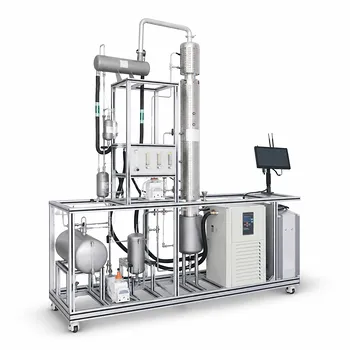
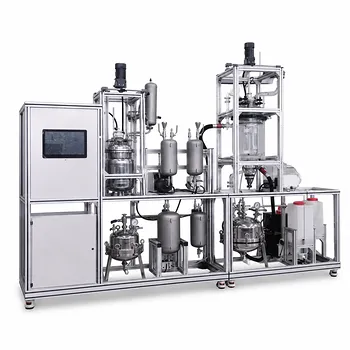
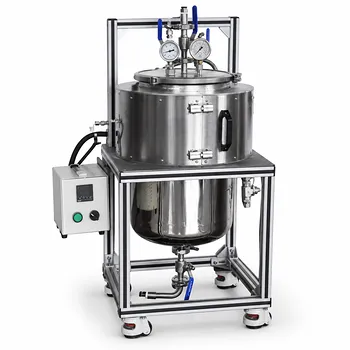
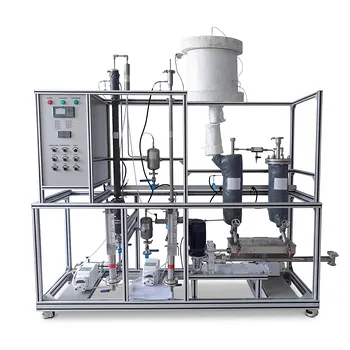
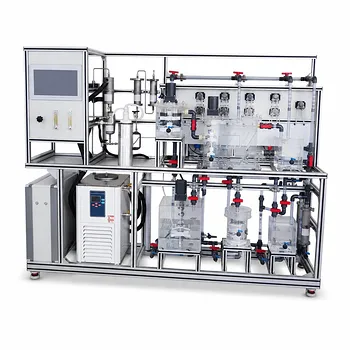
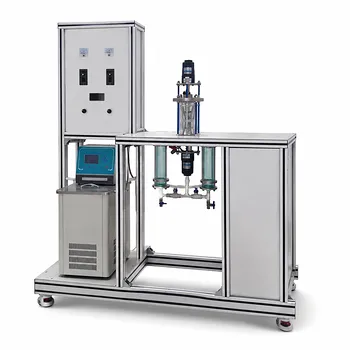
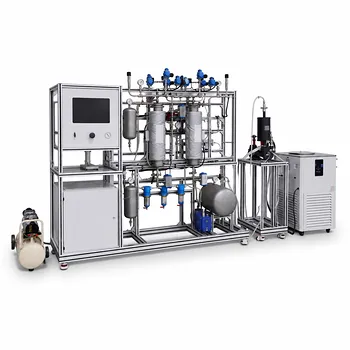
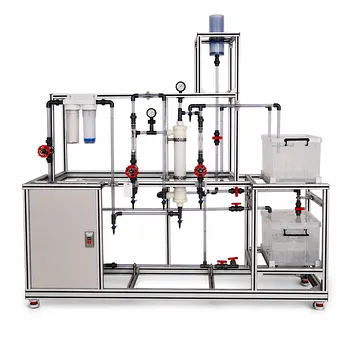
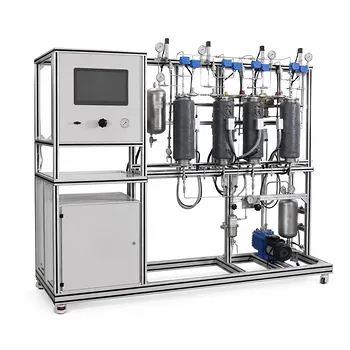
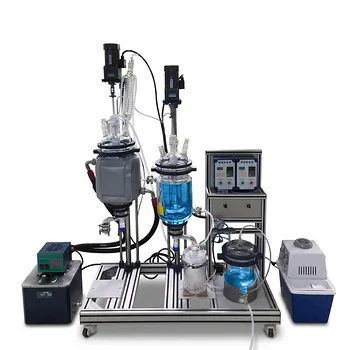
Diagnosing scaling and optimizing process chemistry requires precise control and state-of-the-art systems. LABPARK provides advanced Educational and Vocational Unit Operations Pilot Plants in chemical engineering, bioprocess & biotech, and environmental & water treatment. Designed to help universities, research institutes, and enterprises bridge the gap between laboratory research and industrial application, our pilot plants enable deep process analysis and reliable scaling simulation.
Ready to elevate your research or training capabilities? Contact our technical specialists today to find the perfect pilot plant solution.
Related Products
- Continuous Sieve-Plate Distillation Pilot Plant for Unit Operations Laboratory Education
- Gallium and Indium Selective Extraction Educational Pilot Plant
- Methanol Synthesis and Catalyst Performance Evaluation Educational Unit Operations Pilot Plant
- Multi-Modal Distillation Unit Operations Training Pilot Plant
- Multi-Functional Special Distillation Educational Pilot Plant
People Also Ask
- How to select the right activity coefficient model (Wilson, NRTL, UNIQUAC) for distillation pilot plants?
- How can real-time carbon number prediction improve distillation pilot plants? Optimize control.
- What are the primary reflux ratio control strategies? Master Distillation Unit Operations
- Why is vacuum operation capability an essential feature for a distillation unit operations pilot plant? Unlock Efficiency
- How does catalyst water concentration affect distillation pilot plant design? Key separation train choices.