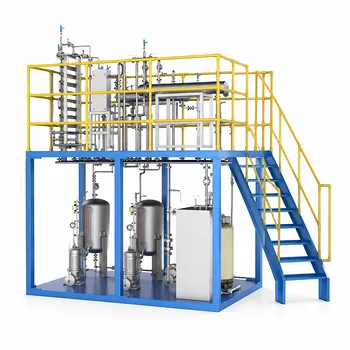
The key to decoupling interacting control loops in a chemical engineering pilot plant is a deliberate design strategy that starts with variable selection and ends with dynamic compensation.
Through optimal pairing of manipulated and controlled variables, staggering loop response speeds, limiting the number of actively controlled variables, and employing decoupling compensators, you can virtually eliminate disruptive cross‑coupling. These methods transform a seemingly conflicted network of loops into a set of cooperative, independently manageable controllers.
In pilot plants, where the goal is to study process dynamics rather than maximize throughput, conservative tuning—wide proportional bands, long integral times—is often your first and most powerful tool against coupling. For inherently coupled systems like simultaneous temperature and flow control, a decoupling compensator provides independent loop operation while preserving responsiveness.
Why Loop Coupling Happens in a Pilot Plant
In a unit operations pilot plant, material and energy streams naturally link process variables.
If you adjust the hot stream flow rate to control temperature, the total flow rate changes and disturbs the flow controller. In a distillation column, increasing reflux affects both top composition and bottom level.
Every control valve you move inevitably influences more than one measurement because the process itself does not isolate these relationships. Coupling becomes a disruptive force when two controllers fight to correct different deviations with the same limited valve authority.
Four Proven Strategies to Minimize Coupling
1. Optimal Variable Pairing and the Single Valve Rule
The simplest form of decoupling is to never give two controllers a reason to compete.
Analyze the process and assign each manipulated variable to the controlled output it influences most strongly. In practice, the single control valve rule is critical: any process stream between unit operations must have only one control valve, preventing loops from simultaneously trying to adjust the same flow.
For a distillation column, its five available valves are systematically paired—one for pressure (condenser), two for liquid levels (reboiler base and reflux accumulator), and two for product flow rates or ratios. This pre‑designed pairing removes ambiguity and minimizes interaction at the hardware level.
2. Controller Detuning and Uniform Control Loops
Dynamic coupling is reduced when controllers operate on different time scales.
Detuning staggers the frequency response: make the inner flow loop fast and tight, while temperature or level loops are tuned to be sluggish and unresponsive to rapid fluctuations.
In educational pilot plants, uniform control loops deliberately employ a very wide proportional band (often greater than 100%) and an exceptionally long integral time. Derivative action is excluded because it would generate rapid valve movements. The result is a gentle, smoothing action that inherently decouples loops—no loop lunges aggressively enough to disturb its neighbor.
3. Loop Reduction
Sometimes the best way to eliminate coupling is to simply stop controlling one of the variables.
In a distillation column, simultaneously controlling both top and bottom compositions creates a fierce dynamic battle over reflux and boilup. The loop reduction strategy controls only one key composition (either top or bottom) while the other is left to float within acceptable boundaries.
This removes the source of conflict. The uncontrolled composition will drift, but the pilot plant’s primary goal—demonstrating material balance or separation behavior—is met with a drastically simpler, de‑coupled control structure.
4. Decoupling Compensator Design
When you truly cannot sacrifice independent control of both variables, you must dynamically cancel the cross‑coupling.
A decoupling compensator is placed between the controller outputs and the final control elements. It cross‑calculates the signals so that, for instance, a temperature controller’s move to adjust hot flow is pre‑emptively combined with an opposing move on the cold flow, preserving total flow rate.
This approach, highlighted in the primary reference and detailed in supplementary material, uses a simple matrix of transfer functions to neutralize interaction. It is the most performant option, but demands a reasonably accurate process model.
Understanding the Trade-offs
Every decoupling method carries a price that must be evaluated in a pilot plant context.
Detuning drastically reduces loop interaction, but at the cost of sluggish recovery from real disturbances. A uniform level loop may take minutes to correct a level deviation.
Loop reduction eliminates complex tuning challenges, but you give up precise regulation of one product stream, which may be unacceptable for some experiments.
Decoupling compensators offer fast, independent control, yet they are sensitive to model mismatch. If the pilot plant is frequently reconfigured, the decoupler must be retuned or re‑designed, eroding the benefit of plug‑and‑play flexibility. For educational and rapidly changing pilot plants, simplicity often trumps theoretical performance.
Applying These Strategies to Your Pilot Plant Configuration
The right choice depends on your plant’s primary mission. Use these guidelines to match the decoupling approach to your goals.
- If your primary focus is educational demonstration of material balance and smooth, observable dynamics: Employ uniform control loops with wide proportional bands and long integral times. This inherently decouples loops while giving students time to see process changes.
- If your primary focus is high‑fidelity independent control of both temperature and flow in a blending unit: Implement a decoupling compensator to achieve crisp set‑point tracking without interference, even though it requires a reliable model.
- If your primary focus is rapid setup and maximum flexibility across many different experiments: Enforce the single control valve rule and rigorously optimize variable pairing. Preventing loops from sharing authority at the design stage is the most robust, low‑maintenance form of decoupling.
By deliberately selecting where to couple and where to decouple, you turn loop interaction from a design flaw into a controllable, instructive feature of your pilot plant.
Summary Table:
| Strategy | Core Action | Best For | Key Trade-off |
|---|---|---|---|
| Variable Pairing | Pair each manipulated variable to the strongest output | General plant design | Hardware-level constraints |
| Controller Detuning | Stagger loop response speeds (sluggish loops) | Educational demonstrations | Sluggish recovery from disturbances |
| Loop Reduction | Control only one key variable; let others float | Simple dynamic analysis | Loss of precise control on one stream |
| Decoupling Compensator | Use dynamic transfer functions to cancel interaction | High-fidelity independent control | Highly sensitive to model mismatch |
Optimize Your Control Systems with LABPARK
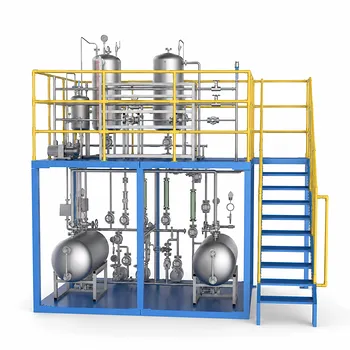
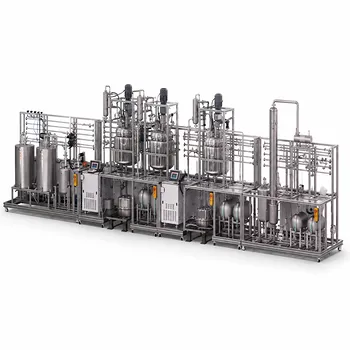
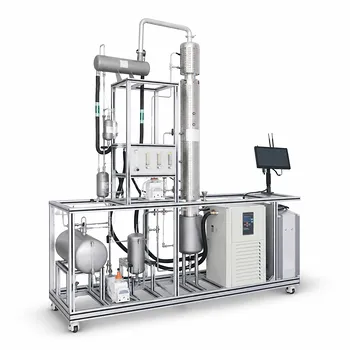
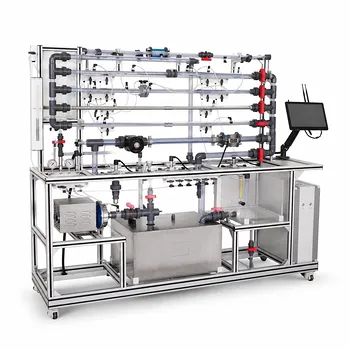
Achieving stable, decoupling control loops is essential for effective process analysis. LABPARK designs and delivers premium Educational and Vocational Unit Operations Pilot Plants in chemical engineering, bioprocess & biotech, and environmental & water treatment.
Engineered specifically for universities, research institutes, and enterprises, our systems offer flexible, transparent control configurations that simplify teaching and research.
Ready to elevate your lab's capabilities? Contact LABPARK today to find the perfect pilot plant solution for your needs!
Related Products
- Carbon Dioxide Hydrogen Methanol Synthesis Educational Unit Operations Pilot Plant
- Multi-Reactor Educational Pilot Plant for Reaction Engineering Unit Operations
- Ethyl Acetate Synthesis Unit Operations Pilot Plant for Practical Training
- Multi Pump Fluid Transport Process Piping Unit Operations Training Pilot Plant
- Multi-Modal Distillation Unit Operations Training Pilot Plant
People Also Ask
- How do temp & pressure affect methanol synthesis pilot plants? Optimize equilibrium and catalyst performance.
- Why is a purge system necessary when operating a gas recirculation loop in a methanol synthesis pilot plant? (Guide)
- Why do modern methanol pilot plants operate at lower pressures? Catalyst & Feed Requirements Explained
- What are the operational requirements for catalyst activation? Safe Methanol Pilot Plant Operation
- Why is the chemical plant startup schedule crucial? De-risk scale-up with pilot plants.