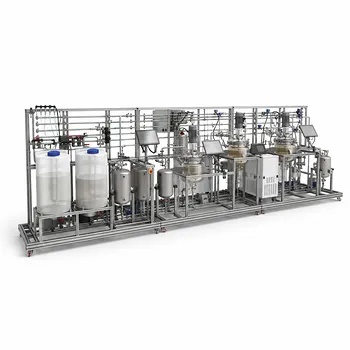
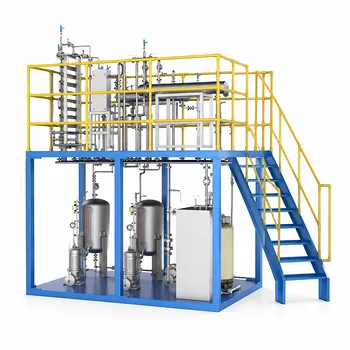
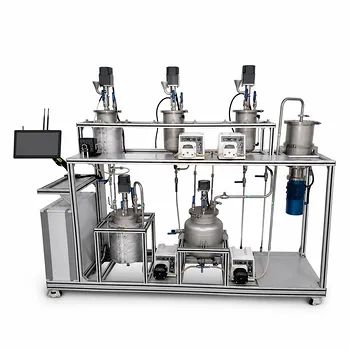
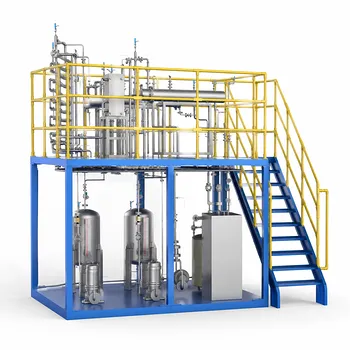
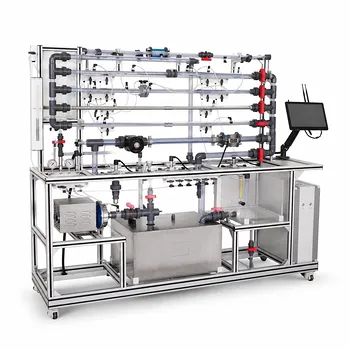
Solid catalyst poisoning is the silent killer of hydrogen fuel cells. In integrated hydrogen-fuel cell training systems, carbon monoxide (CO) irreversibly binds to a Proton Exchange Membrane Fuel Cell’s (PEMFC) platinum electrode, choking the electrochemical reaction. Chemical engineering unit operations pilot plants solve this by configuring a rigorous, multi-stage gas cleanup train—including water-gas shift reactors, selective oxidation units, and/or membrane reformers—that slashes CO concentration from percent levels down to a fuel-cell-safe trace of less than 10 ppm.
A well-configured pilot plant for CO poisoning mitigation is not just a gas cleanup device; it is a dynamic teaching platform. It allows students and researchers to systematically isolate each unit operation—reforming, shifting, polishing, and purification—and observe how catalyst formulation, temperature control, and mass balances dictate the life and death of a fuel cell’s heart.
The CO Poisoning Challenge in PEMFC Systems
The surface need is to stop CO from killing a fuel cell. The deep need is to understand why a 10 ppm threshold is so critical and how each unit operation in a pilot plant contributes to achieving it.
Why a Few Parts Per Million Can Cripple a Fuel Cell
PEMFCs operate at relatively low temperatures (typically 60–80 °C), where the anode’s platinum catalyst is exquisitely sensitive to CO. CO adsorbs onto the platinum surface far more strongly than hydrogen does, blocking the active sites.
Even a CO concentration as low as 10 ppm can cause a significant voltage drop and reduce the fuel cell’s power output. In a training environment, this threshold becomes a precise target—a tangible goal that forces students to master gas purification and reaction engineering.
The Unique Role of a Pilot Plant in This Learning
A pilot plant bridges the gap between textbook theory and industrial reality. It doesn’t just produce hydrogen; it deliberately integrates the very units that convert or remove CO.
Students can manipulate parameters like steam-to-carbon ratio, reformer temperature, and air injection rates to see exactly how CO slips through—and how to stop it. This hands-on exposure is what transforms conceptual knowledge into practical competence for the hydrogen economy.
Configuring the Pilot Plant for CO Management
The primary reference emphasizes catalytic reactors with low CO selectivity, membrane reformers, and water-gas shift. The supplementary references detail the precise sequence: evaporator, reformer, WGS, selective oxidation. The optimal configuration stitches these together into a coherent, teachable system.
The Sequential Reactor Train: Reforming, Shifting, and Polishing
This is the classic, modular approach that makes every reaction step visible.
A catalytic steam reformer first converts a fuel (methanol, propane, or methane) and steam into a hydrogen-rich syngas. Unfortunately, this syngas contains 5–15% CO. The pilot plant’s reformer is often designed with a catalyst that can be varied—demonstrating how low-CO-selectivity formulations directly reduce the downstream cleanup burden.
The water-gas shift (WGS) reactor then takes center stage. It reacts that CO with steam over a shift catalyst to produce CO₂ and more H₂. A pilot plant typically includes both a high-temperature and low-temperature WGS stage, showing students the thermodynamic and kinetic trade-offs. This step can drop CO from several percent down to roughly 0.5%.
A selective oxidation (SelOx) reactor polishes the gas stream. By injecting a precisely metered amount of air, the SelOx catalyst preferentially oxidizes the remaining CO to CO₂ without consuming too much hydrogen. This reactor is the final gatekeeper, routinely bringing CO below the critical 10 ppm target.
Membrane Reactors: An Integrated Path to Low-CO Hydrogen
An alternative configuration replaces the separate reformer and cleanup train with a membrane reformer (MR) . Here, a palladium-based membrane is integrated directly into the reformer.
The membrane is permeable only to hydrogen. As H₂ is produced, it is continuously extracted, shifting the reaction equilibrium and simultaneously leaving CO and other gases on the retentate side. This single-unit operation can deliver ultra-pure hydrogen with <1 ppm CO, dramatically simplifying the pilot plant layout.
For training, an MR pilot plant elegantly demonstrates the power of process intensification and the principle of Le Chatelier’s principle in action.
Feed Purification and Guard Beds: Prevention at the Source
Often, the best way to handle CO is to prevent its precursors from entering the system. The supplementary references stress upstream separation and sacrificial guard beds.
A feed purification unit (e.g., desulfurizer) removes impurities that could not only poison the fuel cell but also deactivate the shift or reforming catalysts. An adsorbent guard bed placed immediately before the PEMFC can act as a final safety net, trapping any trace CO that sneaks through.
In a training context, a guard bed fitted with a CO-sensitive indicator or sampling port gives students a binary, visual confirmation of whether their upstream operations were successful. It’s a practical lesson in defense-in-depth.
Simulating Real-World Degradation and Regeneration
A pilot plant’s value multiplies when it teaches not just pure operation, but failure and recovery. CO poisoning isn’t only a fuel-cell problem; it can deactivate the process catalysts themselves.
Controlled Poisoning Studies
The pilot plant can be configured with a trace impurity injection loop. By deliberately spiking the feed with a known CO concentration, students can monitor the decline in a catalyst’s conversion efficiency in real-time.
This turns the pilot plant into a forensics lab. Students can isolate whether deactivation occurred in the WGS catalyst or the reformer, measuring the concentration profile along the reactor train. They see firsthand how a “poisoned” shift catalyst passes more CO downstream, triggering a cascade of problems.
Regeneration System Integration
To close the loop, the pilot plant must demonstrate recovery. The supplementary references outline methods like calcination (controlled coke burning), chemical washing, and reduction.
A pilot unit can incorporate a dual-reactor swing system or a regeneration gas manifold. While one catalyst bed performs the reaction, the other undergoes a controlled oxidation/reduction cycle to restore its activity. Students then measure the recovered conversion rate, quantifying the effectiveness and understanding the economics of catalyst lifespan management.
Understanding the Trade-offs
No configuration is perfect. An authoritative guide must lay out the inherent compromises.
- Complexity vs. Purity: The sequential reformer-WGS-SelOx train yields excellent purity but involves three separate catalyst zones, each with its own thermal management and control loops. For a teaching lab, this can be an advantage (more to study) or a challenge (more to maintain).
- Membrane Cost and Durability: Membrane reformers produce pristine hydrogen but at a high capital cost. Pd-membranes are sensitive to thermal cycling and can be embrittled by hydrogen. A pilot plant must incorporate careful startup/shutdown protocols, which themselves become a training module on material science limitations.
- Selectivity vs. Throughput: A catalyst formulation optimized for low CO selectivity (as mentioned in the primary reference) might reduce catalyst activity or promote coking if not carefully balanced. Students must navigate this performance map, a core chemical engineering skill.
- Energy Integration Trade-off: WGS reactors are most efficient at specific temperature windows. Integrating heat recovery from the reformer exhaust is essential for overall efficiency but complicates the plant’s operability. The pilot plant becomes a live optimization problem in energy pinch analysis.
Making the Right Choice for Your Training Objective
The ideal pilot plant configuration depends entirely on what deep concept you want your students or researchers to master.
- If your primary focus is fundamental reaction engineering and catalyst selectivity: Choose a highly modularized train with interchangeable reformer catalysts. Crucially, include a WGS reactor that can operate at different temperatures and a SelOx unit with precise O₂ dosing. This setup lets you run design-of-experiment (DOE) studies on low-CO formulations and shift kinetics.
- If your primary focus is process intensification and hydrogen purity: Select a membrane reformer pilot plant. It showcases multi-functionality, mass transfer limitations across a membrane, and the impact of sweep gas. The training module shifts from a sequence of steps to the elegance of equilibrium displacement.
- If your primary focus is industrial catalyst longevity and regeneration: Build the plant with side-stream injection ports for deliberate poisoning and a dedicated regeneration circuit with controlled gas feeds for oxidation and reduction. Include online gas analyzers at multiple points to map the deactivation front.
- If your primary focus is complete system integration for the hydrogen economy: Implement the full evaporator-reformer-WGS-SelOx chain with integrated heat exchangers and a final PEMFC stack. The learning outcome becomes the holistic energy balance and the cascading consequences of a purification upset.
The ultimate purpose of these pilot plants is to transform an invisible molecular threat into a visible, measurable, and conquerable engineering challenge. By carefully selecting the configuration, you give your students the hands-on wisdom to build a future where hydrogen energy is not just clean, but reliably, enduringly clean.
Summary Table:
| Configuration | Key Units | Target CO Level | Primary Training Focus |
|---|---|---|---|
| Sequential Train | Reformer, WGS, SelOx | < 10 ppm | Multi-stage kinetics & catalyst selectivity |
| Membrane Reformer | Pd-based Membrane | < 1 ppm | Process intensification & equilibrium shifts |
| Guard Beds / Purif. | Desulfurizer, Guard Bed | Safety net | Upstream purification & safety protocols |
Enhance Your Hydrogen Fuel Cell Training with LABPARK
Overcoming carbon monoxide catalyst poisoning is a critical skill for the future of clean energy. LABPARK provides state-of-the-art Educational and Vocational Unit Operations Pilot Plants in chemical engineering, bioprocess & biotech, and environmental & water treatment, tailored specifically for universities, research institutes, and enterprises.
Equip your students and researchers with hands-on learning systems that simulate real-world reactions, purification, and regeneration processes. Contact us today to customize your training pilot plant!
Related Products
- Natural Product Extraction Unit Operations Training Pilot Plant
- Fixed-Bed Chemical Reaction and Gas Dust Tar Removal Unit Operations Pilot Plant
- Ethyl Acetate Synthesis Unit Operations Pilot Plant for Practical Training
- Methanol Synthesis and Catalyst Performance Evaluation Educational Unit Operations Pilot Plant
- Electrolytic Hydrogen Production Educational Unit Operations Pilot Plant
People Also Ask
- How to Demo Solubility Sensitivity in SFE Pilot Plants? Practical Thermodynamics
- How do pilot plants differentiate physical vs chemical extraction? Enhance Chemical Engineering Training
- How are HTU and NTU applied to determine extraction column height? Guide to Pilot Plant Scaling
- How do fluid transport principles apply to pilot plant configuration? Optimize your unit operations.
- Why use step disturbance in pilot plants? Master process control dynamic response.