Real-time pollutant monitoring in pilot plants demands a shift from purely retrospective analysis. Biosensing methods complement traditional chromatography by filling the critical time gap—providing continuous, in-situ, rapid screening of contaminants like heavy metals, ammonia, and pesticides directly in the process stream. While chromatography delivers unmatched accuracy for definitive identification, biosensors enable immediate feedback and dynamic mapping of pollutant distributions that offline lab analysis cannot offer.
Traditional chromatography excels at precise, validated quantification but remains a slow, laboratory-bound process. Biosensors step in as a real‑time early‑warning system, turning the pilot plant into a responsive testbed where remediation progress is tracked continuously and confirmed analytically when needed.
The Bottleneck of Laboratory-Bound Analysis
Traditional tools such as GC‑MS and HPLC are the gold standard for chemical analysis. However, in a pilot plant setting, their inherent limitations create a significant monitoring delay.
The Offline Analysis Lag
These methods require labor‑intensive sample preparation and are confined to the laboratory. As a result, they provide only periodic snapshots of water quality, often with turnaround times of hours or days.
Lost Process Insight
Such delays make it impossible to catch transient contamination spikes or monitor dynamic remediation progress in real time. Plants relying solely on chromatography operate with a historical view, unable to adjust treatment processes instantly when conditions change.
The Power of Real-Time Biosensing
Biosensing techniques introduce a fundamentally different paradigm. They harness biological recognition elements—enzymes, antibodies, or DNA—to detect specific pollutants with high sensitivity.
Continuous, In-Situ Screening
When integrated directly into pilot plant flow systems, these biosensors enable cost‑effective, real‑time or continuous monitoring. They provide an uninterrupted stream of data on contaminants such as heavy metals, ammonia, pesticides, and Biological Oxygen Demand (BOD).
Mapping Contaminant Distributions
Instead of single‑point lab samples, a network of biosensors can map the spatial distribution of pollutants across the plant. This reveals how contamination moves, concentrates, or degrades, giving operators a dynamic picture of system performance that chromatography alone cannot produce.
How They Work Together: A Complementary Monitoring Strategy
The true strength lies not in choosing one method over the other, but in orchestrating a dual‑approach strategy where each method amplifies the other’s value.
Triggering Smart Sampling
Biosensors excel as an early‑warning layer. When a real‑time sensor detects a sudden deviation or contaminant peak, it can automatically trigger a targeted grab sample for subsequent GC‑MS or HPLC analysis. This moves chromatography from routine surveillance to intelligent, event‑driven confirmation.
Calibration and Validation Feedback
The high accuracy of chromatography serves to regularly validate and recalibrate biosensor readings in the complex pilot plant matrix. In turn, continuous biosensor data highlights when and where chromatographic verification is most urgently needed, preventing blind spots and optimizing analytical resources.
Guiding Remediation in Real Time
During treatment trials, biosensors track remediation progress minute by minute—showing, for example, how quickly a contaminant concentration drops. This immediate feedback lets engineers fine‑tune dosing or process parameters on the fly, while periodic chromatographic analysis provides the definitive performance benchmark required for reporting.
Navigating the Real-World Integration Challenges
Integrating biosensors into pilot plants introduces technical hurdles that must be addressed to maintain realistic, research‑grade environments.
Tackling Matrix Interference
Variables like fluctuating pH, changing ionic strength, and the presence of toxic co‑contaminants can distort biosensor signals. Robust sensor design and matrix‑specific calibration protocols are essential to isolate the target pollutant’s response from background noise.
Ensuring Long‑Term Reliability
For continuous operation, sensors must combine low maintenance with sustained stability. This often requires anti‑biofouling coatings, automated cleaning routines, or replaceable recognition elements to survive extended exposure to wastewater, sludge, or soil media without drift.
Interfacing with Diverse Media
A pilot plant may handle multiple streams. A biosensor platform must be adaptable enough to interface with liquids, slurries, and even damp solids, maintaining consistent performance across these varied matrices without requiring complete recalibration at every transition.
Understanding the Trade-Offs and Limitations
A balanced view of biosensing requires a clear‑eyed look at where it still falls short compared to mature chromatographic methods.
Selectivity vs. Matrix Complexity
Biosensors offer high specificity for a target analyte but can sometimes cross‑react with structurally similar compounds in complex environmental samples. Chromatography’s physical separation and spectral confirmation provide a level of definitive identification that biosensors rarely match.
Regulatory Acceptance
For compliance reporting, regulatory bodies almost always demand standardized chromatographic evidence. Biosensor data remains a powerful screening and process‑control tool, but final legal‑grade quantification still depends on the laboratory‑based methods.
Maintenance Demands
While chromatography requires skilled operators and consumable gases/solvents, biosensors demand regular recalibration, membrane replacement, and fouling prevention. Neglecting these needs can lead to silent sensor drift and false confidence—a pitfall chromatographic runs avoid through internal standards and batch‑based QC.
Making the Right Choice for Your Pilot Plant Goal
The optimal strategy depends on your plant’s core objective. Use the following guidelines to align the complementary duo with your primary focus.
- If your primary focus is rapid process control and early warning: Deploy a network of real‑time biosensors to drive instant adjustments, reserving chromatography for periodic verification and exceptional events.
- If your primary focus is regulatory compliance and detailed contaminant identification: Maintain chromatography as the backbone, using biosensors only to prioritize samples and screen for unexpected pollutants between official testing cycles.
- If your primary focus is cost‑effective spatial mapping of contamination plumes: Place multiple biosensors across the pilot system to generate a real‑time contaminant heatmap, then validate a handful of critical points with targeted chromatographic analysis.
By weaving biosensing into the fabric of pilot plant operations, you transform chromatography from a retrospective audit into a proactive partner—giving you the speed to act, the accuracy to prove, and the insight to innovate.
Summary Table:
| Feature | Biosensing Methods | Traditional Chromatography |
|---|---|---|
| Primary Role | Real-time screening & early warning | Definitive quantification & compliance |
| Response Time | Continuous, instant feedback | Delayed (hours to days), offline |
| Location | In-situ, integrated into process streams | Offline, laboratory-bound |
| Key Benefit | Maps dynamic pollutant distributions | High accuracy & regulatory acceptance |
Optimize Your Process Research & Training with LABPARK
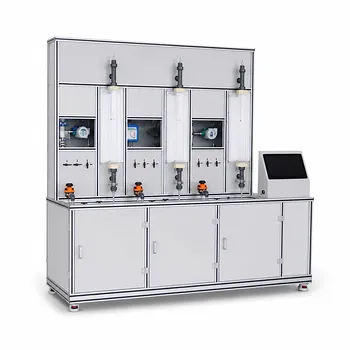
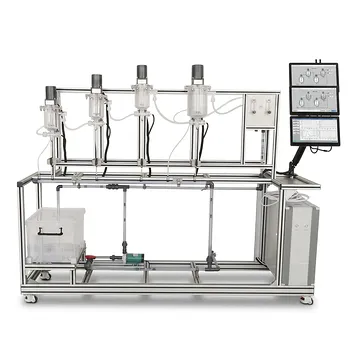
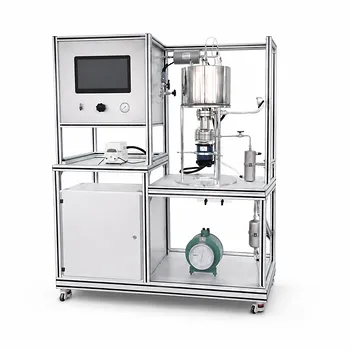
To successfully implement and study advanced monitoring techniques like biosensing, your facility needs a reliable, scale-down testing environment. LABPARK provides state-of-the-art Educational and Vocational Unit Operations Pilot Plants in chemical engineering, bioprocess & biotech, and environmental & water treatment.
Designed specifically for universities, research institutes, and enterprises, our pilot plants enable researchers and students to gain hands-on experience with real-time process monitoring, dynamic system control, and advanced wastewater treatment operations.
Ready to elevate your laboratory capabilities? Contact LABPARK today to request a quote or customize your pilot plant!
Related Products
- Educational Rotary Disc Liquid-Liquid Extraction Pilot Plant
- Continuous Batch Extractive Distillation Educational Pilot Plant
- Multi-Functional Special Distillation Educational Pilot Plant
- Multi-Modal Distillation Unit Operations Training Pilot Plant
- Multi-Functional Membrane Separation Educational Pilot Plant for Unit Operations Lab
People Also Ask
- How do density and IFT affect liquid-liquid extraction pilot plants? Optimize Column Performance
- How are ternary phase diagrams and LLE data applied in extraction experiments? Optimize Pilot Plant Scale-up
- In a liquid-liquid extraction pilot plant, how is a ternary-phase diagram utilized to determine solvent feed requirements?
- How Do Selectivity & Distribution Coefficients Influence LLE Pilot Plant Solvent Choice?
- How to Validate BIPs for LLE Pilot Plants? Steps to Align Simulations with Reality