Biological fouling in a cooling tower pilot plant is controlled by deploying a chemical biocide using an intermittent, high-concentration “slug dosing” strategy. For the majority of larger pilot systems, chlorine or hypochlorite is the most cost-effective solution. If you are running a smaller unit, copper sulfate or sodium pentachlorophenate serve as practical alternatives. The key operational insight is to avoid continuous low-level dosing entirely, as it breeds resistance and undermines long-term performance.
The single most important decision for controlling biological fouling in a pilot cooling tower is not just which chemical you use, but how you apply it. A slug strategy—applying 3 to 4 times the theoretical biocide requirement and letting several days elapse between doses—prevents microorganisms from developing resistance and keeps the system clean without requiring constant chemical feed.
Why Cooling Towers in Pilot Plants Are a Breeding Ground for Biofilm
To grasp the dosing strategy, you must first understand the aggressive biological environment inside a pilot cooling tower. The open system design is its own worst enemy.
The Airborne Inoculation Loop
As warm water cascades down through the tower, it acts like a liquid filter for the atmosphere. The water absorbs airborne spores, bacteria, and organic debris. This continuous inoculation means there is never a sterile baseline to protect.
A Perfect Growth Incubator
Inside the tower, the combination of warm water, dissolved nutrients, and ample sunlight exposure on wetted surfaces creates a near-ideal incubator for rapid microbial growth. Left unchecked, this growth rapidly forms protective slime layers, accelerates iron deposition, and establishes differential aeration cells that drive under-deposit corrosion. In a pilot plant, where the goal is often to study scaling, corrosion, or process efficiency, a biofilm out of control can completely invalidate your data.
Selecting the Right Biocide for Your System Scale
The primary reference establishes a clear choice hierarchy based on pilot plant size. The chemical agent you select dictates your handling infrastructure and cost profile.
Chlorine / Hypochlorite: The Workhorse for Larger Pilots
For larger pilot cooling towers, treatment with chlorine gas or liquid sodium hypochlorite (bleach) is the most economical and widely available solution. These oxidizing biocides rapidly disrupt cell walls and destroy organic slime. They can be fed from standard chemical metering pumps or gas chlorinators, making them easy to integrate into a well-instrumented pilot system. The key is to never let the residual become continuous and sub-lethal.
Alternative Biocides for Smaller Setups
Small-scale pilot units may lack the ventilation, chemical scrubbers, or footprint required for safe chlorine gas handling. Here, non-oxidizing compounds become the preferred choice. Copper sulfate acts as an effective algaecide, while sodium pentachlorophenate provides broad-spectrum bacterial and fungal control. These are often applied as batch doses directly to the tower sump, keeping the operation simple.
Mastering the Slug Dosing Strategy
The choice of chemical is useless without the correct application pattern. The primary reference explicitly warns against a common mistake: continuous, low-level biocide feed.
How Intermittent Overdosing Prevents Resistance
A continuous trickle of biocide acts as a perfect training ground for resistant organisms. The few microbes that survive the low concentration reproduce, eventually creating a population that is completely immune to your chemical. The slug system breaks this cycle. By applying a dose that is three to four times the theoretical lethal concentration, you deliver a shock that overwhelms even partially resistant cells.
The Critical Pause Between Doses
After the slug dose dissipates, you intentionally allow several days to elapse before the next application. This dry spell is not downtime—it is a strategic vulnerability window. Any surviving organisms are exposed to zero chemical pressure, causing them to revert to their normal, non-resistant state. When the next high-concentration slug hits, it wipes them out before they can adapt. This cyclical shock-and-rest pattern keeps the microbial population from ever establishing a resistant gene pool.
Understanding the Trade-offs and Common Pitfalls
No biocide strategy is free of risks. Implementing slug dosing in a pilot plant requires you to manage a few sharp edges.
The Corrosion Management Burden
Oxidizing biocides like chlorine, especially at 3 to 4 times the normal dosage, can temporarily spike the water’s oxidation-reduction potential (ORP). If your pilot plant is constructed with materials like mild steel and lacks a robust corrosion inhibitor program, each slug dose becomes a controlled corrosion event. You must monitor residual halogen levels and return them to a safe zone before enforcing a hold time, or you’ll trade one fouling problem for another.
Safety and Degradation in Small Spaces
High-concentration chemical handling in a confined pilot plant bay requires strict safety protocols. Sodium pentachlorophenate, for instance, breaks down under alkaline conditions and high temperatures; if your pilot operates at elevated pH, its efficacy drops. Copper sulfate can precipitate if the water chemistry shifts, accumulating as a sludge rather than a dissolved toxin. You must verify that your chosen biocide chemistry is compatible with your makeup water quality at shock concentrations.
How to Apply This to Your Pilot Cooling Tower
Your specific biocide protocol should match the scale of your operation and the sensitivity of your downstream measurements.
- If your primary focus is minimizing operating cost in a large pilot: Use sodium hypochlorite with an automated metering pump set to deliver a slug dose once every 3–5 days, then let the residual decay naturally.
- If you are operating a small, benchtop cooling loop with limited safety infrastructure: Choose a single non-oxidizing batch biocide like copper sulfate and manually dose the sump at a 3x maintenance dose on a fixed weekly schedule.
- If your pilot study is specifically investigating material corrosion rates: Do not use continuous chlorination. Switch to the slug method and plan your corrosion coupon analyses so that the spike periods are accounted for as a distinctive operational event, not an outlier.
- If preventing microbial resistance is non-negotiable for a long-term study: Reject any suggestion of continuous dosing. Lock in the slug interval—even if it seems aggressive—and never shorten the pause between doses.
The resilience of your pilot plant data depends on maintaining a cryogenic clean heat transfer surface. By matching the biocide to your scale and committing to the shock dosing interval, you turn biological control from a guessing game into a predictable, transparent unit operation.
Summary Table:
| Biocide | Recommended Scale | Key Advantages | Major Precautions |
|---|---|---|---|
| Chlorine / Hypochlorite | Larger Pilot Plants | Economical, widely available, rapid slime disruption | Can cause corrosion; requires ORP monitoring |
| Copper Sulfate | Smaller Pilot Plants | Effective algaecide, simple manual sump dosing | May precipitate if water chemistry shifts |
| Sodium Pentachlorophenate | Smaller Pilot Plants | Broad-spectrum bacterial & fungal control | Degrades under alkaline & high-temp conditions |
Optimize Your Water Treatment Research with LABPARK
Building a reliable pilot system requires robust design and precise operational control. LABPARK provides industry-leading Educational and Vocational Unit Operations Pilot Plants in chemical engineering, bioprocess & biotech, and environmental & water treatment for universities, research institutes, and enterprises. We help you configure systems that minimize fouling and deliver accurate, reproducible data.
Contact our technical experts today to find the perfect pilot plant solution for your lab!
Related Products
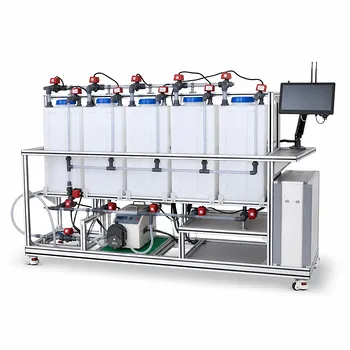
- Electrochemical Water Treatment Educational Unit Operations Pilot Plant
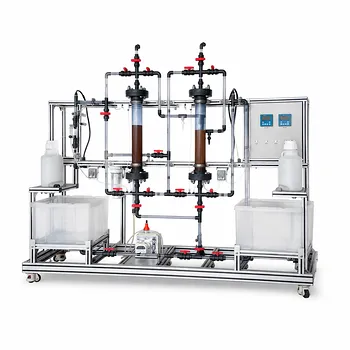
- Ion Exchange Water Purification Educational Pilot Plant for Engineering Unit Operations
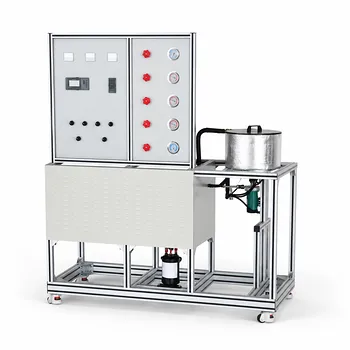
- Hot Filtration Educational Unit Operations Pilot Plant Laboratory System
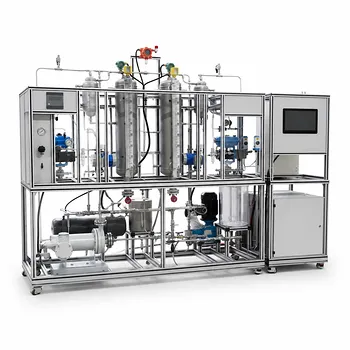
- Dual-Mode Rectification Pilot Plant for Practical Training Unit Operations
- Electrolytic Hydrogen Production Educational Unit Operations Pilot Plant
People Also Ask
- What design features do educational electrochemical pilot plants utilize to manage gas liberation and water loss?
- How can unit operations pilot plants show lead-acid concentration vs state of charge? Real-time monitoring guide.
- How do educational electrochemical pilot plants scale up electrolysis? Master industrial engineering.
- How to Estimate Sulfate in Water Treatment Pilot Plant Deposits: Gravimetric Guide
- How can foaming be managed during steam generation experiments in water treatment unit operations pilot plants? Tips