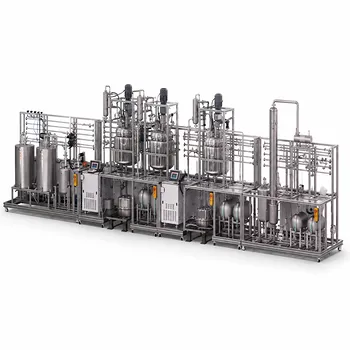
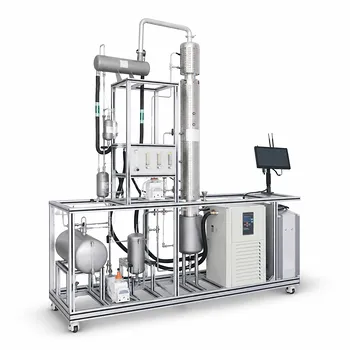
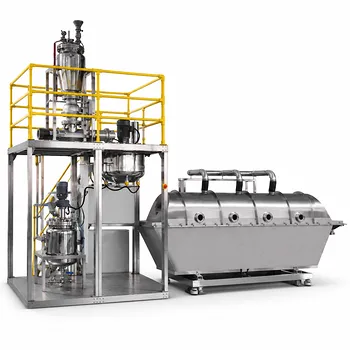
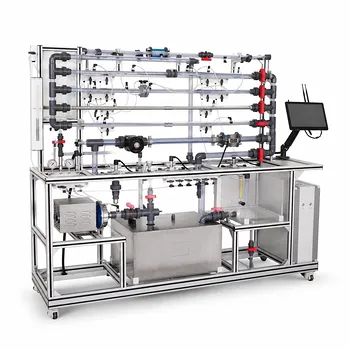
You see the direct answer right here. A chemical engineering unit operations pilot plant demonstrates these effects by allowing you to perform controlled, comparative catalytic runs. You load reactors with catalysts that vary only in their carrier structure or promoter chemistry, then operate them under identical, industrially relevant conditions of temperature, pressure, and flow. Real-time measurements of conversion, selectivity, and pressure drop reveal exactly how each formulation choice impacts reaction performance and catalyst longevity—turning abstract textbook concepts into quantifiable engineering trade-offs.
The true value of a pilot plant is its ability to isolate formulation variables. By swapping out carrier materials or promoter loadings while holding all other factors constant, you instantly see why macroporous, low-surface-area inert carriers minimize side reactions, and how alkali metal promoters preserve activity by delaying poisoning. The pilot plant does not just show that these properties matter; it shows how much they matter under conditions that mimic real production environments.
How a Pilot Plant Reveals Carrier Property Effects
The choice of carrier is not a random decision; it directly governs the transport of reactants to the active sites and the fate of the products once formed. In a unit operations pilot plant, you can physically load two reactors with catalysts where the active metal phase is identical but the carrier is different—for example, a high-surface-area γ-Al₂O₃ versus a low-surface-area α-Al₂O₃—and immediately see the performance gap.
The Influence of Surface Area and Porosity
In educational or R&D pilot plants, you can systematically change the carrier and monitor conversions. When you use a low-surface-area, macroporous inert material like α-Al₂O₃ (with a surface area <1 m²/g) , the product stream tells a different story than when you use a high-surface-area support.
The low surface area and large pores minimize the residence time of products within the catalyst pellet. This directly limits the chance for desired molecules to undergo destructive secondary reactions. The pilot plant’s online sensors and product analysis (e.g., via gas chromatography) provide the hard data that connects carrier architecture to selectivity.
Minimizing Mass Transfer and Side Reactions
A pilot plant’s continuous flow operation exposes a core truth about diffusion. Under high flow rates, you will observe a significant drop in conversion and product yield on high-surface-area carriers due to intraparticle mass transfer limitation.
The macroporous α-Al₂O₃ carrier avoids this trap. By operating the pilot plant at varying space velocities, students and engineers can measure the pressure drop across the bed and calculate the effectiveness factor. This directly demonstrates why an “inert” carrier that seems wasteful from a surface area standpoint actually delivers superior performance for fast, diffusion-limited reactions.
How Promoters Shape Catalyst Performance
Promoters are added in tiny quantities, yet their fingerprint on pilot-plant data is massive. The demonstration becomes powerful when you run identical base catalysts with and without a promoter, comparing their performance over time.
Enhancing Stability with Alkali Metals
When you spike the feed with a known poison (such as a sulfur compound) or operate at elevated temperatures, the un-promoted catalyst begins to deactivate rapidly. The pilot plant’s data logging system charts a sharp decline in conversion over a few hours.
In the reactor loaded with the alkali metal-promoted catalyst, the story is different. The conversion curve remains flatter, and the deactivation rate is measurably slower. The pilot plant provides the time-on-stream data that proves promoters reduce catalyst poisoning and improve thermal stability. You can also monitor the temperature profile along the reactor bed; the promoted catalyst will show a more stable, uniform heat release, confirming its resistance to sintering.
Balancing Activity and Selectivity
Promoters do not simply make the catalyst tougher; they reshape the selectivity landscape. In a pilot plant, you can test a series of catalysts with the same silver active component but varying promoter loadings.
A higher silver content alone—for instance, up to 33.2% —may boost initial activity, but without the right promoter package, it often creates hot spots that drive the reaction toward unwanted byproducts. The pilot plant reveals this trade-off in real time. By analyzing the product stream, you can identify the precise promoter concentration that yields the best selectivity without sacrificing excessive activity, a balance that purely theoretical models cannot reliably predict.
Understanding the Trade-offs
A pilot plant does not present a simplistic “better or worse” picture. It forces you to confront the multivariable trade-offs that define commercial catalyst design. These are the difficult decisions that the data makes visible.
Activity vs. Deactivation
You might see a catalyst formulation with excellent initial conversion but a steep deactivation curve. In a pilot plant, this becomes painfully obvious when the conversion drops by 20% within a single shift. The trade-off between high initial activity and long-term stability is a core lesson.
Operators can leverage the pilot plant to run accelerated aging tests. By increasing the operating temperature or contaminant concentration, you simulate months of industrial use in just days. The resulting data on catalyst lifetime guides the selection of a formulation that keeps the reactor at a target throughput for an economically viable cycle length.
Throughput vs. Catalyst Lifetime
Pushing a reactor to extremely high space velocities can maximize output in the short term, but it often crushes pellet integrity and shortens cycle length. A pilot plant’s pressure drop sensors will flag when a carrier begins to mechanically fail, providing direct evidence of attrition or plugging.
You learn that a macroporous carrier, while avoiding diffusion issues, may have lower crush strength. The pilot plant thus demonstrates the need to balance carrier physical durability with mass transfer properties, and how promoters that minimize coking can indirectly extend catalyst life by keeping the pores open.
Making the Right Choice for Your Goal
Pilot-plant experimentation transforms catalyst design into a clear, objective decision-making process. Based on the performance data, your formulation strategy should be tailored to your specific operational priorities.
- If your primary focus is maximum conversion in a clean feedstock: Lean toward a catalyst with a high active metal loading (such as the upper end of the silver content range) without over-emphasizing promoters. The pilot plant data will guide you to the point where selectivity trade-offs become unacceptable.
- If your primary focus is long catalyst life under harsh conditions: Prioritize alkali metal promoters for thermal stability and poison resistance. Use the pilot plant’s accelerated deactivation runs to confirm that the extended cycle length justifies any minor sacrifice in initial activity.
- If your primary focus is pure product with minimal side reactions: Select a macroporous, low-surface-area inert carrier like α-Al₂O₃. Verify with pilot-plant selectivity data that the physical transport path indeed prevents secondary reactions, even at the cost of operating at a slightly higher reactor temperature.
Ultimately, the pilot plant removes the guesswork. It translates the microscopic chemistry of carriers and promoters into the macroscopic language of engineering: dollars per kilogram of product, reactor uptime, and separation costs.
Summary Table:
| Catalyst Component | Key Characteristics | Reaction Performance Impact |
|---|---|---|
| Low-surface-area Carrier (α-Al₂O₃) | Macroporous, inert structure | Minimizes side reactions; limits mass transfer resistance |
| Alkali Metal Promoters | Low-concentration additives | Delays catalyst poisoning; improves thermal stability |
| High Active Metal Loading | High active phase concentration | Boosts initial conversion; increases hot spot risks |
Advance Your Lab's Capabilities with LABPARK
Bridge the gap between theoretical chemistry and industrial practice. LABPARK provides premier Educational and Vocational Unit Operations Pilot Plants in chemical engineering, bioprocess & biotech, and environmental & water treatment. Specially designed for universities, research institutes, and enterprises, our systems deliver the real-time data needed to master reaction kinetics and catalyst optimization.
Contact LABPARK today to find the perfect pilot plant for your institution!
Related Products
- Carbon Dioxide Hydrogen Methanol Synthesis Educational Unit Operations Pilot Plant
- Multi-Reactor Educational Pilot Plant for Reaction Engineering Unit Operations
- Ethyl Acetate Synthesis Unit Operations Pilot Plant for Practical Training
- Multi Pump Fluid Transport Process Piping Unit Operations Training Pilot Plant
- Natural Product Extraction Unit Operations Training Pilot Plant
People Also Ask
- How do temp & pressure affect methanol synthesis pilot plants? Optimize equilibrium and catalyst performance.
- Why is a purge system necessary when operating a gas recirculation loop in a methanol synthesis pilot plant? (Guide)
- Why do modern methanol pilot plants operate at lower pressures? Catalyst & Feed Requirements Explained
- What are the operational requirements for catalyst activation? Safe Methanol Pilot Plant Operation
- Why is the chemical plant startup schedule crucial? De-risk scale-up with pilot plants.