Nickel gravimetric analysis via dimethylglyoxime hits a hard ceiling at 100 mg of nickel. Push beyond that threshold, and the method’s own reagent becomes a contaminant. Excess dimethylglyoxime (DMG) coprecipitates with your nickel complex, artificially inflating the mass. The prescribed fix is not repeating the test but changing the drying protocol: bump the oven temperature to 150°C to selectively volatilize the excess DMG, leaving the actual nickel dimethylglyoxime untouched.
The classic DMG gravimetric method demands that the total nickel in solution never exceed 100 mg. Coprecipitation of excess reagent sabotages accuracy beyond this limit. If a heavier precipitate forms anyway—common when analyzing heavy corrosion deposits—the corrective action is to dry at 150°C instead of the standard 110–120°C, driving off the volatile DMG excess and restoring reliable results.
Why the 100 mg Limit Is Non-Negotiable
The dimethylglyoxime method relies on a beautifully specific precipitation reaction. DMG chelates nickel ions into a bulky, scarlet-red solid that is easy to filter, dry, and weigh.
But the reagent itself has a solubility problem. When you add too much DMG to precipitate high nickel loads, the unreacted excess simply cannot stay dissolved. It crashes out alongside your desired nickel complex. This coprecipitation is not stoichiometric—it becomes a random, mass-dictated error that destroys the gravimetric factor.
The Coprecipitation Trap in High-Nickel Samples
Coprecipitation of excess DMG is the silent saboteur of student results.
In a training laboratory analyzing scale from boiler tubes or cooling water deposits, nickel levels often far exceed expectations. Students following standard procedures may add reagent based on a fixed volume rather than adjusting for high metal content. The result is a grossly overestimated nickel weight, leading to confusion and misplaced blame on sample preparation. Teaching the 100 mg limit clarifies that the method itself has an upper boundary that must be respected through starting mass or dilution.
What Happens Above 100 mg
Above 100 mg of nickel, the error curve steepens rapidly.
The primary reference notes that coprecipitation becomes “significant.” In practice, a 120 mg nickel sample could report as 130 mg or more after normal drying. The increase is not linear because the precipitation environment becomes supersaturated with DMG, physically trapping pockets of reagent inside the growing crystal lattice. You cannot filter or wash this intrusion away because it is intimately bound with the complex. The error is structural.
Managing Excess Precipitation: The 150°C Thermal Fix
Students must confront a harsh truth: samples from real industrial environments rarely arrive with a neat label stating nickel content. An analyst may unknowingly overload the glassware and produce a precipitate far beyond the ideal mass. Discarding the work wastes time and expensive resources. The solution is a straightforward post-precipitation thermal treatment.
Volatilizing the Excess Reagent
Dry the questionable precipitate at 150°C instead of the textbook 110–120°C.
Dimethylglyoxime has a lower sublimation/volatilization temperature than the nickel dimethylglyoxime complex itself. By holding the dried precipitate at 150°C, you selectively evaporate the coprecipitated excess DMG while the true nickel complex remains stable. This step corrects the mass down to the genuine nickel dimethylglyoxime content. It is a targeted troubleshooting technique that teaches students to think critically about the chemistry behind weighing, not just follow a recipe.
The Standard Drying Range and Its Purpose
Standard drying at 110–120°C removes adsorbed moisture and volatile impurities.
In a well-controlled precipitation where nickel is below 100 mg, this lower temperature range is sufficient to bring the precipitate to constant weight without degrading the complex. The method's official procedures assume this ideal scenario. However, they do not account for operator error or the brute-force reality of analyzing unknown corrosion deposits. The higher 150°C protocol is an empirical field adjustment validated in engineering pilot plant training.
Understanding the Trade-offs
Applying a higher drying temperature is a rescue operation, not a free pass to ignore limits. There are pitfalls a technical advisor must highlight.
Thermal Stability of the Nickel Complex
Prolonged heating at 150°C can start to compromise the complex if pushed too far.
The reference specifies that the complex remains stable for the required period, but indefinite baking is not advised. Students should bring the precipitate to constant weight with repeated short heating intervals. Overheating risks slight decomposition, introducing a negative error that undermines the fix’s intent. Precision timing becomes part of the lesson.
When Dilution Is the Better Choice
If you know the nickel load is massive, quantitative dilution before precipitation is always cleaner.
The 150°C method is a last resort for an already-formed precipitate. Proactive practitioners will dissolve the sample, dilute a known aliquot to bring nickel mass below 100 mg, and then precipitate. This avoids the coprecipitation issue entirely and yields textbook-standard conditions. Teaching this hierarchy—first prevent, then correct—builds analytical maturity.
Making the Right Choice for Your Lab
The core lesson for chemical engineering and water treatment trainees is that gravimetric methods are physical chemistry experiments, not magic. The weight limit is a boundary, and the drying adjustment is a diagnostic tool.
- If your primary focus is training on standard, well-characterized samples: Dilute all unknowns to keep nickel mass below 100 mg. Reinforce the 100 mg limit as a fundamental design rule, and dry at 110–120°C for consistent, comparable results.
- If your primary focus is troubleshooting real corrosion deposits that may have already produced an oversize precipitate: Do not discard the crucible. Oven-dry at 150°C in short cycles until constant weight, document the adjustment, and discuss why the error occurred. This turns a procedural failure into a powerful learning moment.
A weight limit is not a restriction; it is a precise instruction on how the chemistry behaves. Mastering the management of excess precipitation turns a rigid method into a flexible, robust skill that serves engineers long after they leave the pilot plant.
Summary Table:
| Parameter | Standard Protocol | Overloaded Protocol (>100 mg Ni) |
|---|---|---|
| Nickel Weight Limit | ≤ 100 mg | > 100 mg (Reagent coprecipitates) |
| Drying Temperature | 110–120°C | 150°C (Volatilizes excess DMG) |
| Primary Risk | None (Moisture removed) | Thermal degradation if overheated |
| Best Practice | Direct precipitation | Dilution prior to precipitation |
Equip Your Lab for Precision and Scale with LABPARK
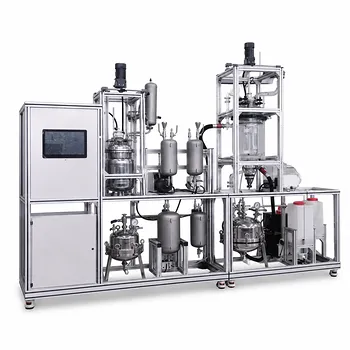
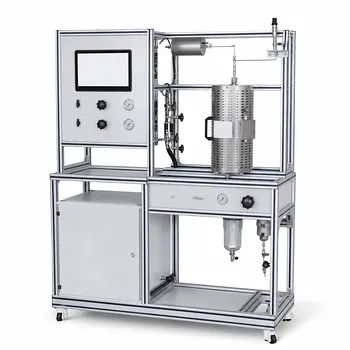
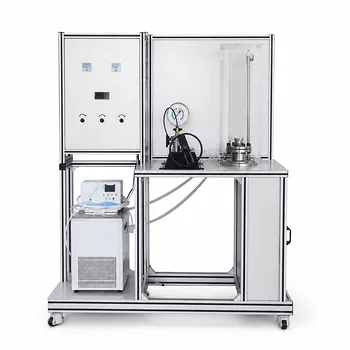
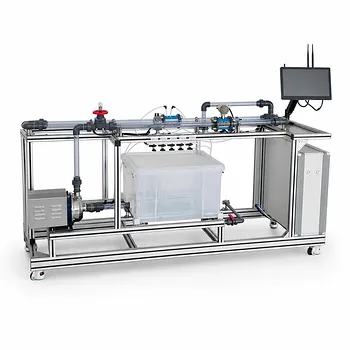
Accurate analytical training requires robust, real-world equipment. LABPARK provides premium Educational and Vocational Unit Operations Pilot Plants in chemical engineering, bioprocess & biotech, and environmental & water treatment. Designed specifically for universities, research institutes, and enterprises, our systems bridge the gap between textbook theory and industrial practice.
Ready to upgrade your laboratory training capabilities? Contact LABPARK today to discover how our pilot plants can enhance your curriculum and research outcomes!
Related Products
- Gallium and Indium Selective Extraction Educational Pilot Plant
- Carbon Dioxide Hydrogenation Methanol Synthesis Educational Unit Operations Pilot Plant
- Methanol Synthesis and Catalyst Performance Evaluation Educational Unit Operations Pilot Plant
- Carbon Dioxide PVT Curve Determination Educational Unit Operations Pilot Plant
- Electrolyte Distillation Purification and Formulation Educational Pilot Plant
People Also Ask
- How do pilot plants differentiate physical vs chemical extraction? Enhance Chemical Engineering Training
- What is the significance of the isopycnic line in liquid-liquid extraction? Avoid Column Flooding
- How do droplet motion states affect kD in extraction pilot plants? Optimize Mass Transfer
- Why is predicting multicomponent LLE from binary data more challenging than VLE? Master your pilot plant design.
- How are ternary phase diagrams and LLE data applied in extraction experiments? Optimize Pilot Plant Scale-up