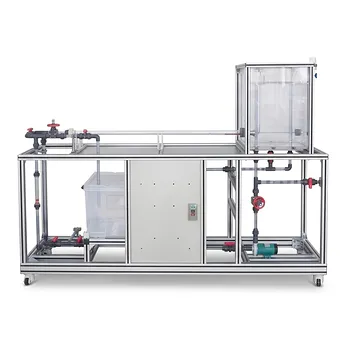
When you’re dealing with highly exothermic or energetic reactions, the choice of reactor is not a matter of convenience—it’s a safety-critical decision. Continuous flow reactors answer that challenge by slashing the volume of reactive mixture present at any instant and by providing heat transfer capabilities that are an order of magnitude—or more—beyond what a stirred tank can deliver. For pilot-plant research into chemistries like nitrations, oxidations, or other runaway-prone systems, this combination eliminates the two root causes of catastrophic failure: a large, poorly cooled thermal mass.
The overwhelming reason to adopt a continuous flow reactor for energetic chemistries is safety through radical volume reduction and superior heat transfer. The reaction mixture exists only as a minuscule slug moving through a high‑surface‑area conduit, which prevents heat accumulation and enables instant emergency quenching. By removing the large reactive inventory and poor cooling that make batch tanks dangerous, flow reactors make hazardous research both possible and predictable.
The Thermal Runaway Problem in Batch Stirred Tanks
The Hazard of a Large Reactive Inventory
In a batch reactor, the entire charge of reactants sits together as heat builds. If the cooling system cannot keep up, the entire mass can self‑accelerate into an unstoppable runaway, releasing energy and pressure that can destroy equipment. The bigger the tank, the worse the potential outcome, because all the energy is trapped in one place.
The Heat Transfer Bottleneck
Stirred tanks rely on jackets or internal coils whose heat‑transfer area grows much slower than the volume. They typically offer surface‑to‑volume ratios around 2 m⁻¹ and heat transfer coefficients of 100–700 W/m²K. For a fast exothermic reaction, this meagre cooling capacity cannot prevent hot spots. Once a hot spot forms, it accelerates the reaction locally, releasing even more heat—a classic feedback loop that leads to runaway.
How Continuous Flow Reactors Invert the Risk
Drastically Smaller Reactive Inventory
A flow reactor processes the reaction as a continuous stream through narrow channels or tubing. At any given moment, only a few millilitres—or even micro‑litres—are inside the active zone. This tiny volume means the absolute maximum energy release is negligible. More importantly, if a deviation occurs, you can instantly quench the reaction by diverting the stream into a cold solvent or dilution line—a feat that is physically impossible in a large tank.
Exceptional Heat Transfer Capabilities
Flow geometries, particularly microchannel or small‑diameter tube reactors, push surface‑to‑volume ratios up to 200 m⁻¹—a hundred‑fold increase over a batch vessel. Combined with laminar‑flow heat transfer coefficients that can reach 10,000–35,000 W/m²K, this pulls reaction heat away as fast as it is generated. The result is near‑isothermal operation, with no hot spots to trigger runaway. As the primary reference underlines, that precise temperature control is the foundation of safe energetic‑reaction research.
Ultra‑Fast Mixing Eliminates Local Gradients
Batch mixing times often exceed 10 seconds; continuous pipe reactors can mix within 0.1 seconds. Uniform composition and temperature are established long before significant conversion occurs, preventing the local concentration spikes that can spark decomposition. When mixing and heat transfer are both instantaneous relative to the reaction rate, the chemistry behaves predictably.
Research Benefits That Go Beyond Safety
Reliable Kinetic Data for Scale‑Up
Heat‑transfer limitations are the number‑one reason batch scale‑up fails for exothermic reactions. A continuous flow reactor operates isothermally, stripping away the fog of transport phenomena. Researchers obtain intrinsic kinetic parameters that hold true regardless of scale, enabling rational design of both continuous and batch production units.
Accessing Forbidden Process Windows
Because flow reactors confine hazards so effectively, it becomes safe to intentionally explore higher temperatures and pressures—regions where reaction rates and selectivities often improve dramatically. The same chemistries that are too risky to run at high temperature in a stirred tank become routine in a flow pilot plant, opening up new routes to higher yields.
Improved Selectivity Through Plug‑Flow Behavior
Minimal backmixing in a continuous tubular reactor prevents the over‑reaction of valuable intermediates. In consecutive schemes—common in nitrations—this suppresses the formation of wasteful or even explosive side products. The combination of tight temperature control and plug‑flow residence time distribution delivers both safety and better product quality.
Understanding the Trade‑offs: When Continuous Flow Isn’t a Silver Bullet
Challenges with Solids and Slurries
Microchannels and narrow tubes can plug if solid particles form, catalysts shed fines, or precipitates appear. Even robust designs like jet loop reactors—which circulate slurry through an external exchanger—require catalyst particles with low hardness and high attrition resistance. If your chemistry inherently generates solids, a continuous system demands careful feed filtration and possibly special pump technologies.
Increased Equipment Complexity
A flow pilot plant demands high‑precision pumps, mass‑flow controllers, back‑pressure regulators, and inline analytics to maintain a steady state. While the benefits are large, capital cost and operator skill requirements are higher than for a simple batch kettle. The trade‑off must be weighed against the safety and data‑quality gains.
Residence Time Limitations for Slow Reactions
Reactions that require many hours to complete would need impractically long tubes or extremely low flow rates, risking phase separation, channeling, or clogging. In such cases, a well‑instrumented batch or fed‑batch reactor may still be the more practical research tool, possibly with enhanced external cooling.
Making the Right Choice for Your Pilot‑Plant Study
The best reactor configuration follows directly from the nature of the chemistry and what you need to learn.
- If your primary focus is maximum safety for highly exothermic or energetic chemistries: Choose a continuous flow microreactor or narrow‑bore tubular system. Its tiny reactive inventory and instant‑quench capability make thermal runaway nearly impossible.
- If your primary focus is obtaining intrinsic, heat‑transfer‑independent kinetic data: Use an isothermal plug‑flow reactor. It removes transport disguises and delivers pure reaction‑rate information.
- If your primary focus is scaling up a heat‑transfer‑limited process: A flow pilot plant provides a safer, more linear path because the cooling principle scales with channel length, not tank diameter.
- If your primary focus is handling solids, viscous media, or very slow reactions: Evaluate whether a continuous stirred‑tank with external cooling or a jet‑loop reactor offers a better balance, or invest in robust solids‑handling features for your flow system.
When you align the reactor architecture with the inherent hazard of your chemistry, the pilot plant stops being a potential danger zone and becomes a controlled, data‑rich platform that propels your research forward safely.
Summary Table:
| Feature | Batch Stirred Tanks | Continuous Flow Reactors |
|---|---|---|
| Surface-to-Volume Ratio | Low (~2 m⁻¹) | High (up to 200 m⁻¹) |
| Heat Transfer Coefficient | 100–700 W/m²K | 10,000–35,000 W/m²K |
| Reactive Inventory | Large (high runaway risk) | Minimal (instant quench capable) |
| Mixing Time | > 10 seconds | < 0.1 seconds |
| Best For | Slow reactions, slurries | Fast, highly exothermic reactions |
Upgrade Your Research Safety with LABPARK
Transitioning from batch to continuous flow is crucial for handling highly exothermic reactions safely. LABPARK provides premium Educational and Vocational Unit Operations Pilot Plants in chemical engineering, bioprocess & biotech, and environmental & water treatment.
We help universities, research institutes, and enterprises achieve precise thermal control, eliminate runaway risks, and secure reliable scale-up data. Contact LABPARK today to find the perfect pilot plant solution for your laboratory.
Related Products
- 100L Continuous Loop Hydrogenation Educational Unit Operations Pilot Plant
- Gas Phase Mixing and Residence Time Distribution Determination Educational Unit Operations Pilot Plant
- Residence Time Distribution and Reactor Flow Characteristics Determination Educational Pilot Plant
- Tubular Reactor Flow Characteristics Determination Educational Unit Operations Pilot Plant
- Continuous Batch Extractive Distillation Educational Pilot Plant
People Also Ask
- How do pilot plants overcome mass transfer limits in hydrogenation? Scale Up with Confidence
- How can unit operations pilot plants demonstrate simultaneous removal of light and heavy impurities? Configure a modular setup
- Why Use PTFE & Hastelloy in Chemical Pilot Plants? Prevent Corrosion & Ensure Safety
- Why are particle density, bulk density & voidage critical in pilot plants? Master Bed Fluid Dynamics
- How can chemical engineering students use unit operations pilot plants to study kinetics? Master reactor scale-up!