A pH reading without temperature compensation is not a true pH reading—it is a distorted signal that will misguide every downstream decision. In chemical engineering and bioprocess pilot plants, temperature compensation is non-negotiable because the ionization of water, the response of the pH electrode, and the behaviour of biomolecules and chemical reactions all shift with temperature. Without automatic temperature compensation (ATC), a system will mistake a thermally driven change in hydrogen ion activity for a change in process chemistry, leading directly to incorrect chemical dosing, process drift, and potential product loss.
The fundamental issue is that the ion-product constant of water ((K_w)) and the electrode slope factor both change with temperature. This causes the neutral point of pH to shift and the millivolt output of the sensor to drift. In a pilot plant where reactions run at non-ambient or fluctuating temperatures, failing to compensate for these effects means the pH value you see is not the pH of the solution at your reference condition, making reliable control impossible.
The Fundamental Chemistry That Forces Temperature Compensation
The Shifting Neutral Point of Water
Water’s self-ionization is an endothermic process. As temperature rises, more water molecules dissociate, pushing (K_w) higher.
At 0°C, (K_w \approx 0.114 \times 10^{-14}), while at 100°C it rockets to (55.0 \times 10^{-14}). This means the concentration of both hydrogen and hydroxide ions increases with temperature, and the neutral pH point slides below 7.0.
Because (pH + pOH = pK_w), the pH of pure, neutral water is exactly (pK_w/2). At 25°C that is 7.00, but at 50°C it is roughly 6.63, and at 100°C it is about 6.14. If your pilot plant sensor reads pH 6.8 in deionized water at 80°C, the water is not acidic—it is neutral, and any acid dosing triggered by that reading would be an expensive mistake.
The Nernstian Slope Is a Temperature Variable
The glass electrode converts hydrogen ion activity into a millivolt signal governed by the Nernst equation:
[ E = E^0 + \frac{2.303,RT}{nF} \times pH ]
The slope factor (S = 2.303RT/nF) is directly proportional to absolute temperature. At 25°C it equals 0.0592 V per pH unit. At 60°C it jumps to 0.0661 V per pH unit. Without temperature compensation, the meter’s microprocessor would interpret the raw millivolt signal using the wrong slope, delivering a pH reading that can be off by several tenths of a pH unit—a massive error in a tightly controlled process.
How Temperature Changes the Measuring System Itself
Calibration Buffers Are Not Immune
Even the standard buffers used to calibrate your sensor have pH values that change with temperature. A common phosphate buffer reads 6.951 at 5°C but drops to 6.833 at 50°C. If you calibrate a sensor with a buffer at room temperature but then insert it into a 40°C bioreactor, the offset and slope stored in the meter are no longer valid. Two-point calibration must be performed with buffers equilibrated at the process temperature, and the meter must know that temperature to assign the correct buffer pH values.
The Sensor Requires a Living Calibration Curve
In pilot plants, operators should perform a two-point calibration—for example, starting with pH 6.86 buffer at 20°C and then selecting pH 4.00 (acidic process) or pH 9.18 (alkaline process). Temperature compensation corrects the slope and buffers to the process temperature, but it cannot replace proper calibration habits. If the temperature correction is turned off or incorrectly set, the entire calibration becomes invalid, and every subsequent measurement is engineering guesswork.
The Devastating Consequences in Bioprocess Pilot Plants
Proteins and Enzymes Demand Narrow Operating Windows
Enzymes are biological catalysts whose three‑dimensional structure—and thus activity—is exquisitely sensitive to pH and temperature. Even a deviation of 0.5 pH units outside the optimum can cause denaturation, permanently killing the catalyst. When a fermentation broth is intentionally heated to accelerate growth, a non-compensated pH reading may suggest that the medium has acidified. An automated dosing system will then add alkali, potentially pushing the actual process pH into a lethal alkaline range and destroying the enzyme activity vital for yield.
Microbial Kinetics Double the Risk
Microbial growth rate ((\mu_{max})) follows an Arrhenius relationship with temperature, but only within a narrow optimal band. Outside that band, growth crashes. Similarly, bacteria, yeast, and moulds have very specific optimal pH ranges—often within 0.2–0.5 units wide. If a student or researcher observes a “pH drop” that is actually a thermal artifact and responds by adjusting the acid feed, the culture can be driven out of its safe pH window, causing cell lysis, contamination, or complete batch failure.
The Ripple Effects in Chemical Engineering Processes
Precipitation and Side Reactions Multiply
In complexation chemistry, a pH shift of just 0.3 units can cross the solubility boundary and cause unwanted metal hydroxide precipitation. These solids foul reactors, block lines, and ruin catalyst beds. Because temperature directly alters the equilibrium constants of acid–base reactions, a reactor sampled at 60°C without thermal compensation will misreport the true degree-of-neutralization. The result could be an acidic process that is actually basic, triggering a cascade of side reactions like ester saponification or metal oxide contamination.
Analytical Integrity Hangs on a Few Degrees
Even in simple quality-control analyses—such as gravimetric phosphate determination in pipeline scale deposits—temperature control is critical. The ammonium molybdate precipitation step requires the solution to be heated to about 45°C but never above 50°C. Exceeding this threshold contaminates the precipitate with excess molybdic anhydride (MoO₃), producing falsely high phosphate readings and misleading scaling assessments. This is not a compensation problem per se, but it illustrates that every temperature–pH interaction in a pilot plant can invalidate data and process decisions.
Understanding the Trade-offs (What Compensation Cannot Fix)
ATC corrects the measurement system—the electrode slope and the neutral point shift due to (K_w)—but it does not undo real chemical changes. The solution’s true acid‑base equilibria will shift with temperature because dissociation constants ((K_a)) are temperature‑dependent. A process that is perfectly neutralized at 25°C may genuinely become more acidic or basic when heated. Temperature compensation prevents the sensor from lying to you, but it does not eliminate the need to understand the inherent temperature sensitivity of the reaction itself. Operators must distinguish between a measurement artifact and a genuine process shift when designing control logic.
Making the Right Choice for Your Pilot Plant
Every pilot plant must bake temperature compensation into its measurement and control strategy. The specific approach depends on your primary process goal:
- If your primary focus is enzyme or protein processing: Use high-quality pH sensors with integrated ATC, calibrate at the bioreactor’s operating temperature with temperature‑equilibrated buffers, and set alarm limits that account for the real pH shift that temperature can cause in your medium.
- If your primary focus is microbial fermentation or cell culture: Implement dual‑channel monitoring (pH and temperature) with a controller that uses real‑time temperature input for slope correction, and design the dosing algorithm to ignore spurious, thermally driven transients by incorporating a rate‑of‑change window.
- If your primary focus is chemical synthesis or neutralization: Map out the temperature–pH relationship for your specific reaction system during scale‑up trials, and use that map to program feed‑forward control in addition to feedback pH control. Never rely on ATC alone to manage a process where the equilibrium constant itself moves with temperature.
- If your primary focus is analytical or water chemistry monitoring: Standardize all pH measurements to a fixed temperature (e.g., 25°C) and apply the correct temperature correction factors after calibration, ensuring that sample handling does not introduce thermal bias.
Temperature compensation is not an accessory—it is the only way to separate sensor truth from thermal fiction. Master it, and your pilot plant data becomes a faithful narrative of the process, not a distorted reflection.
Summary Table:
| Parameter | Temperature Impact | Operational Risk (Uncompensated) | ATC Solution |
|---|---|---|---|
| Water Ionization ($K_w$) | Neutral pH drops as temperature rises (e.g., 6.14 at 100°C) | Spurious acid/alkali dosing based on false acidity | Corrects reading reference to reflect true chemical neutrality |
| Electrode Slope | Voltage output per pH unit increases with temperature | Over- or under-estimation of actual pH values | Dynamically adjusts the Nernstian slope calculation |
| Calibration Buffers | Buffer pH values shift dynamically during calibration | Invalid sensor offset and calibration errors | Recalculates exact buffer values based on real-time temperature |
| Biological Systems | Enzyme denaturation and microbial growth rate crashes | Decreased yield, cell lysis, or total batch failure | Safeguards the narrow optimal pH window for biocatalysts |
Optimize Your Process Accuracy with LABPARK Pilot Plants
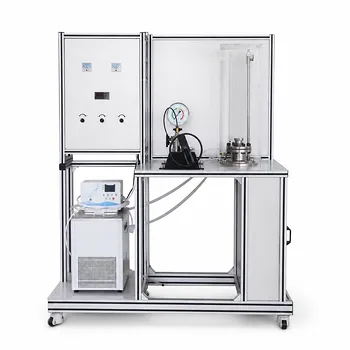
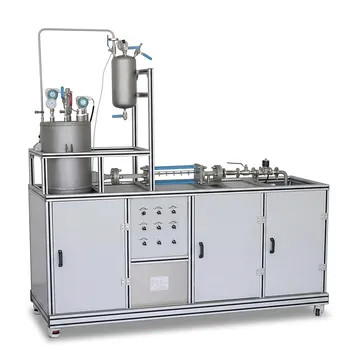
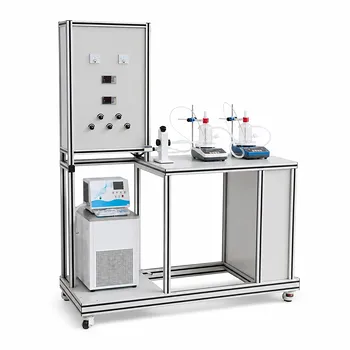
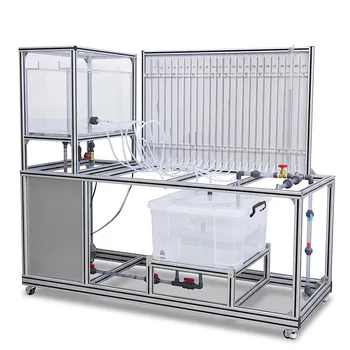
Accurate pH control and temperature compensation are vital for reliable scale-up, research, and vocational training. LABPARK delivers industry-grade Educational and Vocational Unit Operations Pilot Plants in chemical engineering, bioprocess & biotech, and environmental & water treatment tailored for universities, research institutes, and enterprises.
Equip your facility with precision-instrumented systems that prepare students and researchers for real-world process challenges. Contact LABPARK today to discuss your custom project requirements and request a technical proposal!
Related Products
- Orifice and Venturi Flowmeter Calibration Educational Pilot Plant for Fluid Mechanics Laboratory
- Carbon Dioxide PVT Curve Determination Educational Unit Operations Pilot Plant
- Centrifugal Pump Performance and Orifice Flowmeter Calibration Educational Pilot Plant
- Ion Exchange Water Purification Educational Pilot Plant for Engineering Unit Operations
- Alkaline Membrane Water Electrolysis Educational Pilot Plant Unit Operations Training System
People Also Ask
- What is the difference between static and stagnation pressure? Master Pilot Plant Flow Measurement
- How is the hydrodynamic entrance length estimated for high-Re channel flows? Design accurate pilot-plant measurements
- What primary boundary conditions are applied at fluid-solid surfaces when conducting flow experiments on fluid mechanics educational pilot plants?
- How do pilot plants demonstrate siphon pressure variations? Visualizing Bernoulli's Energy Balance
- How does high-frequency pressure oscillation affect velocity distribution and boundary layer behavior? Discover Stokes-layer effects