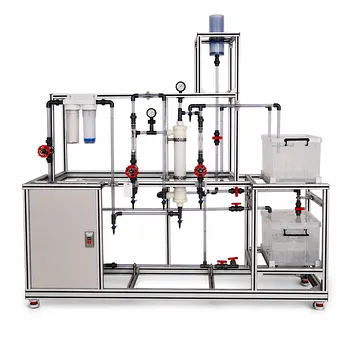
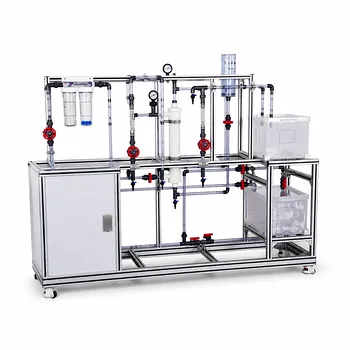
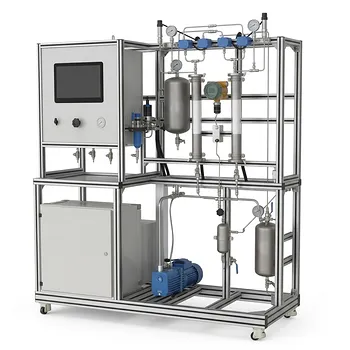
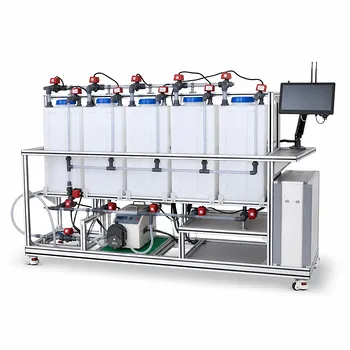
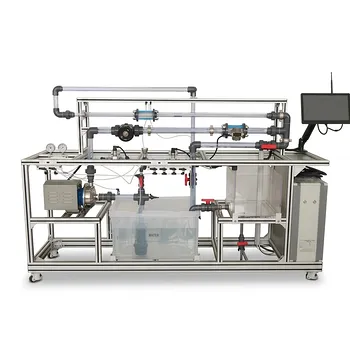
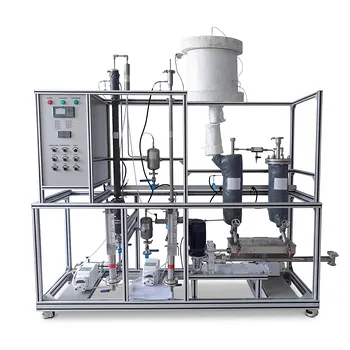
Integrating ERDs and low-energy membranes is what turns a standard RO pilot plant into a true teaching instrument for modern process design. These components allow students and researchers to confront the single largest variable in membrane desalination — specific energy consumption — head-on. Instead of merely observing separation, they analyze, measure, and optimize a system that mirrors the industry’s shift toward lower operational costs and smaller carbon footprints. The result is a curriculum that connects thermodynamic principles directly to the sustainable engineering practices that employers now demand.
A pilot plant without energy recovery teaches the “what” of reverse osmosis; a plant with ERDs and low-energy membranes teaches the “how” and “why” of truly cost-effective, environmentally responsible design. It transforms a unit operation experiment into a hands-on education in process economics, energy integration, and system-level optimization.
The Hidden Curriculum: Energy as a Design Variable
Chemical engineering education can inadvertently treat utilities as a post-design afterthought. An RO pilot plant equipped with energy recovery corrects this.
Making the “Invisible” Cost Visible
In commercial operations, utility costs — electricity, steam, cooling water — typically represent 5% to 15% of the cash cost of production. Standard pilot plants often obscure this, as students focus on separation efficiency alone. Energy recovery devices make power draw an immediate, measurable parameter.
Bridging the Gap Between Mass Balance and Energy Balance
Every RO system has high-pressure brine that still carries immense kinetic and pressure potential. A pressure exchanger or turbocharger captures that energy and transfers it to the feed, lowering net pump work. Students who instrument and calculate this loop perform a live energy balance, reinforcing that mass and energy decisions are inseparable.
From Lab Scale to Industrial Logic
Industry does not evaluate membranes by rejection rate alone — it judges them by the kilowatt-hours per cubic meter of clean water. A pilot plant with ERDs trains students to think in these terms, preparing them to speak the language of plant managers and process engineers immediately.
The Technology Window: How ERDs and Low-Energy Membranes Work Together
The educational value multiplies when both efficient membranes and recovery devices are present, because the system’s energy savings become non-linear and interactive.
Low-Energy Membranes: Redefining the Operating Point
Low-energy RO (LER) membranes achieve comparable flux and rejection at significantly lower feed pressures. They shift the process from, say, 70 bar to as low as 50 bar. This directly reduces pump work, but it also changes the available energy in the concentrate stream — a nuance students must explore through data.
The Synergy That Changes the Economics
When low-pressure membranes meet an energy recovery device, the combined effect on net specific energy is greater than the sum of the individual contributions. Students can plot pump curves, calculate recovery rates, and discover the optimal operating window where membrane life, fouling propensity, and total energy cost intersect.
Demonstrating the Carbon Connection
Lower energy use translates to smaller carbon footprints. A pilot plant running on ERDs and LER membranes allows students to quantify this link, creating a tangible connection between equipment selection and a company’s environmental, social, and governance (ESG) targets.
Safety, Accessibility, and the Learning Environment
Beyond educational philosophy, there are practical laboratory benefits that make integration critical for a teaching pilot plant.
Lower-Pressure Operation Reduces Hazard Barriers
LER membranes operate at pressures that are inherently safer. This allows for more hands-on troubleshooting, membrane changes, and sensor adjustments without the heightened risk profile of a high-pressure, high-energy system. More student time on the unit means deeper learning.
A Platform for Advanced Experimentation
A safer, lower-energy system also encourages guided failure and testing at the boundaries. Students can deliberately induce scaling or fouling and observe the energy penalty, or alter recovery ratios to see the impact on ERD efficiency. This hypothesis-driven experimentation is the heart of an effective unit operations lab.
Understanding the Trade-offs
No design choice is without compromise, and acknowledging this teaches students the critical skill of balancing competing constraints.
Capital vs. Operating Cost at Pilot Scale
Adding a pressure exchanger or turbocharger to a small pilot system increases upfront complexity and cost. The educational conversation must include an honest economic analysis: at what plant capacity does the ERD pay back? Students learn that elegant engineering is about the right fit, not just adding technology.
Maintenance and Control Challenges
ERDs introduce additional rotating equipment or high-precision pressure vessels. This provides a valuable opportunity for students to compare maintenance logs, observe downtime events, and understand that real-world reliability can be just as important as design-point efficiency.
Membrane Sensitivity and Selectivity
Some low-energy membranes achieve their reduced pressure requirements by sacrificing a small amount of rejection or by being more chemically sensitive. A well-designed pilot curriculum uses this to teach students how to read membrane specification sheets critically and how to match membrane chemistry to the feed water profile.
Making the Right Choice for Your Curriculum Goals
The decision to integrate ERDs and low-energy membranes into a pilot plant should be driven by the core skills you aim to develop. Use these goal-driven guidelines to align the hardware with the learning outcome.
- If your primary focus is fundamental transport phenomena: A basic, single-stage RO with thorough instrumentation is sufficient. Adding complex energy recovery can distract from the core mass transfer and diffusion principles you want students to absorb first.
- If your primary focus is industrial readiness and process economics: Integrating an ERD and low-energy membranes is non-negotiable. Students must leave the lab able to calculate levelized water costs, optimize power consumption, and present a business case for energy efficiency.
- If your primary focus is sustainable design and green engineering: This integration is the centerpiece. It lets you build an entire module around lifecycle thinking, carbon accounting, and the principles of process intensification — all within a single, controllable unit operation.
- If your primary focus is process control and dynamic optimization: The multi-variable nature of an ERD-equipped RO system (pressure, recovery, energy recycle, flux) creates a rich environment for tuning PID loops, testing model predictive control, and exploring how decisions ripple through an interconnected system.
Ultimately, a pilot plant that includes energy recovery and low-energy membranes stops being a mere demonstration of reverse osmosis. It becomes a compact, hands-on laboratory for the type of system-level thinking that defines the most valuable chemical engineers in any industry.
Summary Table:
| Component | Primary Function | Educational & Operational Value | Key Trade-off / Consideration |
|---|---|---|---|
| Energy Recovery Devices (ERDs) | Captures kinetic and pressure energy from brine stream | Teaches live energy balance, process economics, and carbon footprint reduction | Increases upfront capital cost and system complexity |
| Low-Energy Membranes (LER) | Operates at lower feed pressures while maintaining flux | Improves lab safety, reduces pump work, and demonstrates system optimization | May have slightly lower rejection rates or higher sensitivity |
| Combined Integration | Creates non-linear, interactive energy savings | Provides a platform for advanced experimentation and ESG-aligned design | Requires more sophisticated control systems and maintenance |
Bring Sustainable Process Design to Your Lab
Equip your students and researchers with the tools to master modern process economics and energy optimization. LABPARK provides high-quality Educational and Vocational Unit Operations Pilot Plants in chemical engineering, bioprocess & biotech, and environmental & water treatment.
Designed specifically for universities, research institutes, and enterprises, our custom pilot plants bridge the gap between classroom theory and real-world industrial efficiency.
Ready to elevate your engineering curriculum? Contact LABPARK today to discuss your custom pilot plant requirements!
Related Products
- Multifunctional Membrane Separation Educational Pilot Plant with Ultrafiltration, Nanofiltration, Reverse Osmosis
- Multi-Functional Membrane Separation Educational Pilot Plant for Unit Operations Lab
- Rising and Falling Film Evaporation Educational Unit Operations Pilot Plant
- Dual-Mode Rectification Pilot Plant for Practical Training Unit Operations
- Ion Exchange Water Purification Educational Pilot Plant for Engineering Unit Operations
People Also Ask
- Pervaporation vs. Vapor Permeation: Handling Suspended Solids in Membrane Pilot Plants
- How do PEI, PVDF, and PSU membranes compare in pilot plants? Find the best fit.
- What are the trade-offs of polymer vs inorganic membranes in teaching pilot plants? Key laboratory comparison.
- What are the advantages of membrane separation in pilot plants? Efficient Organic Vapor Recovery
- How can operators optimize operating conditions and cleaning protocols in membrane separation pilot plants to mitigate fouling?