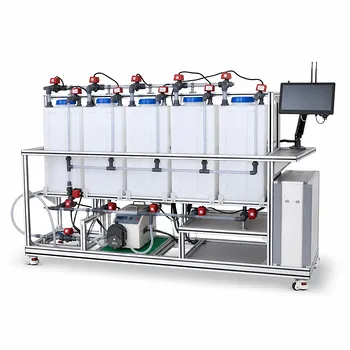
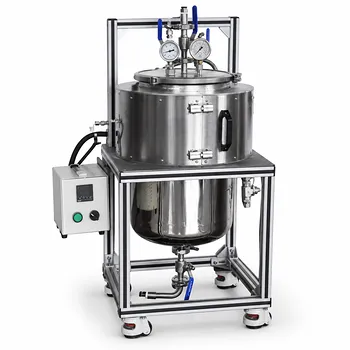
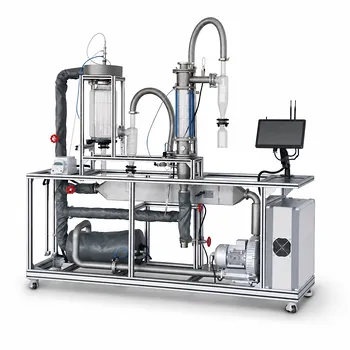
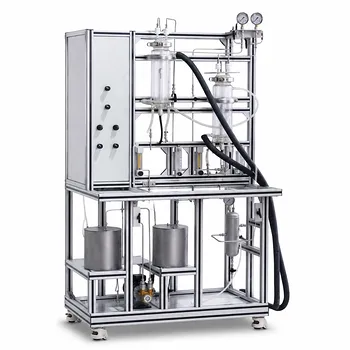
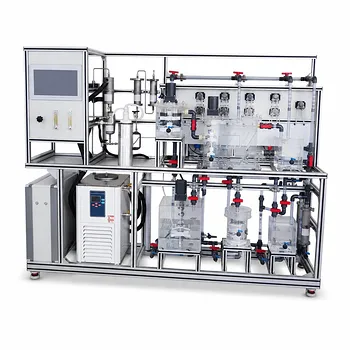
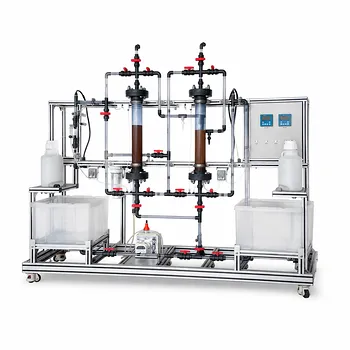
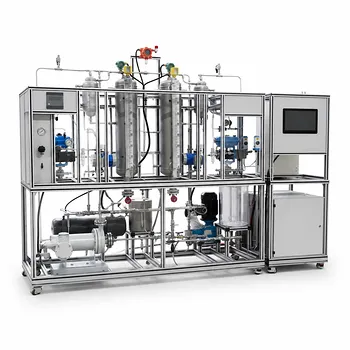
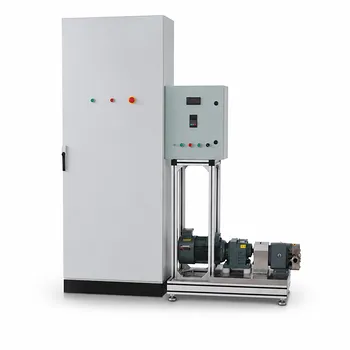
The integration of a waste treatment unit operation in a chemical engineering pilot plant transforms abstract environmental concepts into tangible, hands-on competence.
It allows students and trainees to directly operate neutralization, filtration, and purification systems for exhaust gases, wastewater, and solid residues. This safe, simulated environment builds the practical skills needed to master emissions control, safety regulations, and green chemistry practices—precisely the capabilities modern industry demands.
Modern chemical plants must treat the “three wastes” as an inherent part of production, not an afterthought. Integrating a dedicated waste treatment module into pilot-plant training makes this connection visible and operational, ensuring future engineers instinctively design and run processes with waste minimization and treatment built in from the start.
The Imperative of Embedding Waste Treatment in Training
The surface need is clear: give students practical exposure to environmental technology.
The deeper need is to reshape how engineers think about process design, making sustainability an automatic reflex rather than a compliance checkbox.
Bridging the Gap Between Theory and Industrial Reality
Chemical engineering curricula excel at teaching reaction kinetics, thermodynamics, and unit operations in isolation.
However, real plants generate exhaust, wastewater, and spent materials continuously. A pilot plant that omits waste treatment creates a dangerous blind spot.
When students operate a distillation column or a reactor without seeing its effluent stream, they miss the lifecycle of the process.
Integrating a waste treatment unit forces them to confront the consequences of every production step—exactly as they will in industry.
Hands-On Competence with Regulatory and Safety Protocols
Emissions limits, discharge permits, and safety data sheets are not just paperwork.
In a pilot plant, learners physically monitor pH, adjust neutralization dosing, and verify that treated water meets preset specifications.
This hands-on repetition embeds regulatory awareness more deeply than any lecture.
It also teaches safe handling of hazardous streams under controlled, instructional conditions, reducing the risk of future operational errors.
Instilling a Green Chemistry Mindset from Day One
Green chemistry principles call for preventing waste, not just treating it.
A waste treatment module that also enables solvent recovery, material recycling, or effluent polishing demonstrates that waste is often a misdirected resource.
Students who practice recycling solvents from a reactor’s wash cycle or separating valuable metals from a liquid stream develop a resource‑efficiency instinct.
They learn to ask, “Can this stream be reused or purified?” before defaulting to disposal.
Understanding the Full Impact on Learner Development
The value of an integrated waste unit goes beyond environmental compliance.
It reshapes analytical skills, system thinking, and professional confidence.
Building a System‑Level Awareness
A production reactor does not exist in a vacuum; its waste affects downstream treatment performance.
When the pilot plant connects the reactor, separation train, and treatment unit in one flow sheet, students observe cause and effect directly.
A sudden pH drop in the reactor outlet immediately challenges the neutralization system.
Troubleshooting that interaction teaches the kind of dynamic, interdependent thinking that separate bench‑scale experiments cannot provide.
Developing Crucial Data‑Interpretation Skills
Waste treatment units generate streams of data: contaminant concentrations, flow rates, pressure drops, and chemical consumption.
Learners must correlate this data with upstream operating conditions—batch versus continuous mode, catalyst deactivation, or feed impurities.
This practice sharpens their ability to use real‑time information for process optimization.
It also prepares them for the digital monitoring and reporting tools that are standard in modern plants.
Reducing the “Fear Factor” of Environmental Systems
Waste treatment is often perceived as a complex, non‑productive cost center.
By operating a small, transparent pilot unit, students see that treatment is based on the same fundamental principles—mass transfer, reaction engineering, fluid dynamics—they already understand.
That familiarity dismantles the mental barrier between “production” and “environmental.”
It produces graduates who are equally at ease optimizing a reactor and troubleshooting a scrubber.
Understanding the Trade‑offs and Implementation Challenges
While the benefits are compelling, incorporating a waste treatment unit into a pilot plant demands careful thought.
Educators must weigh cost, complexity, and pedagogical focus.
Space, Cost, and Maintenance Realities
A dedicated treatment skid—complete with tanks, pumps, sensors, and controls—adds significant capital and maintenance expense.
Institutions with tight budgets may struggle to justify the investment over adding another reactor or advanced control module.
Furthermore, treatment units often handle corrosive or fouling materials, increasing the risk of equipment damage if not properly operated.
This makes comprehensive operation manuals and strict startup‑shutdown protocols essential, as highlighted by the critical need for step‑by‑step guidance in training environments.
The Risk of Simplification and “Black Box” Treatment
A pilot‑scale waste unit may not replicate the complexity of a full‑scale biological treatment plant or high‑temperature incinerator.
If presented as a simplistic black box, it can give a false sense that treatment is always easy and complete.
The solution is to ensure that the unit includes enough measurement points and process transparency.
Students should see the internals, sample effluents, and calculate removal efficiencies, not just press a button.
Balancing Core Curriculum with Environmental Depth
Time in a pilot plant is limited; every hour spent on waste treatment is an hour not spent on reactor kinetics or distillation.
Programs must decide how deeply to dive into environmental technology without diluting core chemical engineering fundamentals.
The most successful integrations treat waste treatment as a cross‑cutting theme woven into existing experiments.
For example, a distillation‑based solvent recovery exercise inherently teaches both separation and waste minimization.
Making the Right Choice for Your Training Programme
The decision to integrate a waste treatment unit operation is not universal—it depends on your specific learning objectives.
Align your approach to the competencies you most want to develop.
If your primary focus is producing operators ready for direct plant floor roles:
Prioritize a realistic treatment skid with mandatory emergency‑shutdown drills and rigorous manual‑based procedures to build immediate, compliance‑oriented competence.
If your primary focus is developing design‑minded process engineers:
Emphasize a flexible treatment module that allows students to reconfigure sequences (e.g., neutralization before filtration versus filtration before neutralization) and compare resource recovery options to spark innovation.
If your primary focus is bridging the gap between batch and continuous processing mindsets:
Integrate the waste treatment unit with both batch and continuous reactors so learners can measure how produced‑waste profiles change, reinforcing lean manufacturing and real‑time control principles.
If your primary focus is embedding a culture of waste minimization:
Design experiments where students must reduce the volume or toxicity of the treatment unit’s feed by modifying upstream conditions, directly linking process optimization with environmental performance.
Every valve turned and sample taken in a waste treatment pilot unit shapes a professional who sees environmental responsibility not as a constraint, but as a core engineering skill.
Summary Table:
| Key Objective | Core Competency Developed | Educational Value |
|---|---|---|
| Theory to Practice | Real-world emissions control & safety | Bridges the gap between process design and waste management |
| Green Chemistry | Solvent recovery & resource recycling | Instills a resource-efficiency mindset from day one |
| System Dynamics | Troubleshooting reactor-to-treatment loops | Sharpens analytical and data-interpretation skills |
Elevate Your Practical Training with LABPARK
Equip your students and researchers with the hands-on competence required by modern green industries. LABPARK provides premium Educational and Vocational Unit Operations Pilot Plants in chemical engineering, bioprocess & biotech, and environmental & water treatment designed for universities, research institutes, and enterprises.
Ready to upgrade your laboratory with integrated, industry-aligned training systems? Contact us today to discuss your custom configuration!
Related Products
- Solid Waste Pyrolysis and Refining Educational Pilot Plant for Unit Operations
- Fixed-Bed Chemical Reaction and Gas Dust Tar Removal Unit Operations Pilot Plant
- Electrochemical Water Treatment Educational Unit Operations Pilot Plant
- Multi-Functional Membrane Separation Educational Pilot Plant for Unit Operations Lab
- Gas-Solid Heterogeneous Separation Demonstration Educational Unit Operations Pilot Plant
People Also Ask
- How do educational unit operations pilot plants bridge theory and design? Bridge the Engineering Gap
- How do educational unit operations pilot plants address safety and waste management when scaling up?
- When to transition from PID to adaptive control in pilot plants? Key process indicators.
- Why is the chemical plant startup schedule crucial? De-risk scale-up with pilot plants.
- Why Use PTFE & Hastelloy in Chemical Pilot Plants? Prevent Corrosion & Ensure Safety