Direct furnace ignition, also called "loss on ignition" (LOI), is routinely skipped in scale sample analysis for one critical reason: it obliterates the very information you need. High-temperature ashing can drive off volatile elements, transform salts into nearly insoluble oxides, and attack the crucible itself—leaving you with an intractable residue that resists dissolution for subsequent elemental determination. Instead, modern chemical engineering labs depend on non-destructive combustion and evolution methods that quantify carbon and sulfur species without ever compromising the sample's inorganic matrix.
Scale deposits are complex mixtures where carbon and sulfur exist in multiple forms. LOI burns away these forms and alters the mineral structure, making accurate speciation and downstream analysis extremely difficult. The smarter path is a sequence of targeted analytical techniques that preserve solubility and yield precise, actionable data on free carbon, organic carbon, carbonate, and various sulfur compounds.
The Hidden Dangers of Direct Furnace Ignition
LOI might seem like a quick way to estimate “organics” or moisture, but for systematic scale analysis, it introduces more problems than it solves.
Volatilization of Key Elements
High temperatures (often 500–1000 °C) cause certain elements to escape as gases. This isn’t just about carbon; elements like sulfur, chlorine, and even some metals can be lost. When you later try to reconcile a mass balance or quantify corrosion species, the numbers simply won’t add up.
Conversion of Salts to Highly Insoluble Oxides
Many scale components start as hydroxides, carbonates, or sulfates that dissolve relatively easily in acids. The furnace changes them. For example, calcium carbonate becomes calcium oxide, which is far less soluble in dilute acid and prone to forming a hard, refractory crust. This can turn a routine dissolution step into a lengthy, aggressive acid-digestion nightmare.
Chemical Attack on the Crucible
Porcelain, quartz, or even platinum crucibles can react with the sample at high heat. Alkaline salts in the scale can etch the crucible surface, causing weight errors and contaminating the ash with material from the container itself. That contamination then biases every subsequent elemental analysis you attempt.
The Solubility Bottleneck
Ultimately, the combined effect is an ash that simply refuses to go back into solution. You might need fusions with lithium metaborate or repeated treatments with hydrofluoric and perchloric acids—time-consuming, hazardous procedures that still risk losing volatile elements. That’s why many labs treat LOI as a last-resort bulk parameter, not a step in a detailed compositional analysis.
The Modern Solution: A Non-Destructive Analytical Sequence
Instead of starting with a furnace, the recommended approach uses combustion and evolution-based instruments to measure carbon and sulfur species directly on the original and solvent-extracted sample.
Total Carbon, Carbonate, and Organic Carbon
Commercial carbon analyzers combust a small subsample and detect the evolved CO₂—this gives total carbon. A separate aliquot is treated with acid to release carbonate carbon, which can also be measured by the same detector. Subtract the carbonate carbon from total carbon, and you have organic carbon. Crucially, the sample never sees a furnace that destroys everything; you simply consume a tiny portion for each measurement.
Sulfur Speciation
Similarly, combustion instruments equipped with sulfur detectors can quantify total sulfur. By coupling this with selective extraction steps (e.g., water or dilute HCl), you can differentiate between soluble sulfates, sulfides, and elemental sulfur—all without volatilizing the components or generating insoluble residues.
The Solvent Extraction Pivot
For many scale deposits, the most insightful workflow involves analyzing the same sample before and after a solvent extraction (e.g., with an organic solvent to remove free hydrocarbons). This reveals how much carbon is truly “free” (extractable) versus bound in carbonate or refractory organic matter. The extracted residue remains fully soluble in acids for subsequent ICP or XRF analysis of the inorganic elements, a feat impossible after LOI.
Understanding the Trade-offs
While the non-destructive path is superior for detailed scale characterization, it’s not a magic bullet. Some trade-offs exist.
Speed vs. Speciation
A single LOI measurement can be performed quickly and gives a single mass-loss figure. That may be acceptable for a rough process control check where you only need a total organic+moisture estimate. But in troubleshooting corrosion or scaling, you lose the ability to distinguish, say, iron carbonate from hydrocarbon oils—two very different problems with different chemical solutions.
Instrumentation Cost
Combustion analyzers require capital investment and calibration standards. If you rarely need detailed speciation, the cost may be hard to justify. However, for a laboratory that routinely investigates deposits, the time saved on digestions and the risk of erroneous conclusions more than offset the expense.
Residue Integrity
With the alternative method, you intentionally consume small, representative subsamples for carbon and sulfur analysis, while the remaining bulk sample stays intact for other tests. There is no danger of insolubility or crucible contamination, and you can still get a “loss on solvent extraction” value that replaces the misleading LOI mass loss.
Making the Right Choice for Your Goal
Apply a workflow driven by your analytical objective, not by tradition.
- If your primary focus is detailed elemental quantification and mineralogical form: Avoid furnace LOI entirely. Start with combustion-based total carbon and sulfur, followed by a solvent extraction to differentiate free, organic, and carbonate carbon. Keep the residue soluble for further inorganic tests.
- If your primary focus is a simple, rapid estimate of total volatiles (moisture + organics) without speciation: LOI might suffice as a quality control parameter. But recognize its severe limitations—don’t rely on it for root-cause failure investigations or precise mass balances.
- If your primary focus is on sulfur corrosion mechanisms: Use combustion analysis before and after selective extraction to distinguish sulfide, sulfate, and elemental sulfur. LOI would blend all these into an uninterpretable mass loss and convert some into insoluble oxides.
Ultimately, the decision to omit the furnace step protects the integrity of your sample and ensures that every carbon and sulfur species can be identified and quantified. Modern chemical engineering laboratories abandon LOI not because it's technically wrong to measure mass loss, but because it destroys the very story the scale is trying to tell.
Summary Table:
| Feature / Aspect | Direct Furnace Ignition (LOI) | Alternative Methods (Combustion & Extraction) |
|---|---|---|
| Sample Integrity | Destroyed (volatilizes elements, creates insoluble oxides) | Preserved (sample matrix remains soluble for ICP/XRF) |
| Carbon & Sulfur Speciation | Impossible (provides only total bulk mass loss) | Precise (differentiates free, organic, carbonate, and sulfur forms) |
| Contamination Risk | High (chemical attack on crucibles alters weight/composition) | None |
| Best Use Case | Quick, rough quality control checks | Detailed root-cause failure and corrosion investigations |
Elevate Your Chemical Engineering & Analytical Capabilities with LABPARK
Optimizing analytical workflows is just one step in achieving laboratory excellence. LABPARK provides premium Educational and Vocational Unit Operations Pilot Plants in chemical engineering, bioprocess & biotech, and environmental & water treatment.
Whether you are a university, research institute, or enterprise looking to bridge the gap between theory and industrial practice, our cutting-edge pilot plants deliver the reliability and precision you need.
Contact us today to discover how LABPARK can customize the perfect pilot plant solution for your facility!
Related Products
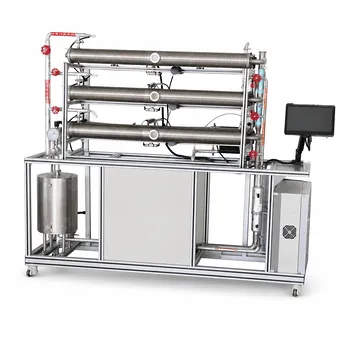
- Three-Tube Heat Transfer Educational Pilot Plant for Unit Operations Training
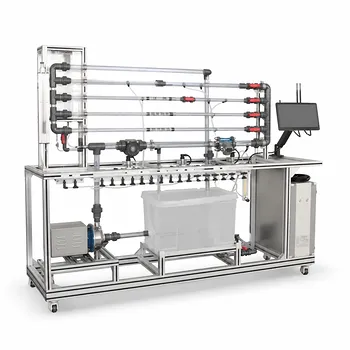
- Fluid Friction Resistance Determination Educational Unit Operations Pilot Plant
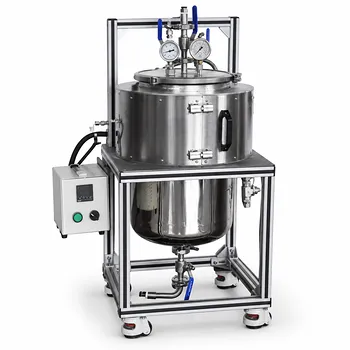
- Hot Filtration Educational Unit Operations Pilot Plant Laboratory System
- Rising and Falling Film Evaporation Educational Unit Operations Pilot Plant
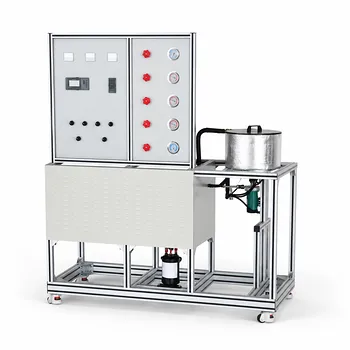
- Educational Compression Refrigeration Performance Determination Unit Operations Pilot Plant
People Also Ask
- When is ε-NTU preferred over LMTD in pilot plants? Predict heat exchanger performance without iteration.
- How to Verify Air-Side Heat Transfer Coefficient with a Pilot Plant? Practical Lab Guide
- How does thermal conductivity affect pilot plant performance? Optimize heat transfer & accuracy
- Why is emissivity critical in heat transfer pilot plants? Bridge the Gap Between Theory & Industrial Design
- How does cascade control achieve superior disturbance rejection in heat transfer pilot plants?