Knowledge Chemical Engineering Education Why is volumetric glassware calibration critical? Ensure precise mass balance & concentration control in pilot plants.
Author avatar

Tech Team · LABPARK

Updated 1 month ago

Why is volumetric glassware calibration critical? Ensure precise mass balance & concentration control in pilot plants.


The integrity of your pilot plant’s mass balance and concentration control hinges on a single, often underestimated step: the calibration of your volumetric glassware.
Pipettes and volumetric flasks are never perfectly precise as manufactured—their actual internal volumes deviate from nominal markings due to tolerances and wear. Calibration, typically via the gravimetric method, quantifies this deviation, eliminating a major source of systematic error. Without it, every downstream calculation of reaction yield, separation efficiency, or effluent concentration is built on a foundation of assumed—not verified—volume.

Pilot plant experiments demand closed-loop accountability for every gram of material. Uncalibrated glassware introduces a hidden, systematic bias into volume measurements that directly invalidates mass balance closure and renders concentration control speculative. Calibration converts an unknown instrument error into a known correction, transforming your glassware from a source of uncertainty into a tool of metrological traceability.

The Hidden Cost of Nominal Volumes

How Systematic Error Destroys Mass Balance Integrity

Mass balance calculations—accounting for all mass entering and leaving a process—require true volumetric information. If a 100 mL volumetric flask actually holds 100.15 mL, every “100 mL” sample or standard prepared with it contains 0.15% more mass than assumed. This error propagates arithmetically: when you measure concentrations via titration or spectroscopy, the systematic offset persists, causing a phantom loss or gain of mass in your final balance.

In pilot plants, small percentage errors compound over multiple unit operations. A 0.2% volume error repeated across feed preparation, reaction quenching, and sampling can easily exceed 1% in a closed loop, making it impossible to distinguish real process losses from measurement artifacts.

Why Concentration Control Becomes Guesswork

Concentration control relies on accurate dilution factors and precise reactant feed ratios. If you use an uncalibrated 10 mL pipette that actually delivers 10.03 mL for one reagent and a different 5 mL pipette that delivers 4.97 mL for another, the stoichiometric ratio is no longer what your protocol prescribes. In kinetic studies or catalyst testing, this drift can shift reaction pathways, alter selectivity, and cloud the true performance of the process.

Even when all glassware is from the same batch, tolerance stacking remains a threat. The nominal accuracy of Class A glassware is already ±0.1% or worse; without calibration, you are betting that these tolerances align favorably—a gamble that rarely pays off over the long term.

The Calibration Process: Turning Uncertainty into Certainty

The Gravimetric Standard and Environmental Corrections

The authoritative method—codified in standards like GB/T 12810-2021—uses the mass of pure water contained or delivered by the vessel to calculate its true volume. However, simply dividing mass by density is insufficient. You must correct for:

  • Water density variation with temperature: A 1°C change in water temperature alters density by ~0.02%, directly skewing the volume calculation.
  • Air buoyancy: The balance measures mass in air, not vacuum. Buoyancy effects on both the water and the balance weights (or internal adjustment) must be compensated, typically using standard $K(t)$ correction factor tables.
  • Thermal expansion of the glass: Borosilicate glass expands with temperature (coefficient ~$2.5 \times 10^{-5} \text{°C}^{-1}$). When calibrating at a temperature different from the reference (usually 20°C), the vessel’s internal volume is not exactly what it will be at process conditions—unless corrected.

These three corrections, applied simultaneously through the $K(t)$ factor, transform a simple weighing into a metrologically rigorous volume determination.

Traceability and Data Integrity

Once calibrated, each piece of glassware carries a known, documented deviation from nominal. This traceability is the backbone of pilot plant data integrity. When a mass balance fails to close, you can immediately rule out volume errors—or, if the calibrated values were applied correctly, pinpoint other sources. Without this, troubleshooting becomes a game of blind guesswork, eroding confidence in your entire experimental campaign.

Understanding the Trade-offs and Pitfalls

Calibration Demands Rigor—But Sloppy Execution Creates New Errors

Calibration is only as good as its execution. Common pitfalls include:

  • Insufficient temperature equilibration: Both the water and the glassware must be at a stable, uniform temperature. Measuring water temperature in the reservoir is not enough; the water inside the vessel itself must be known.
  • Evaporation during weighing: For pipettes that deliver, the time between delivery and the final weight must be minimized. Even a few milligrams of evaporation can represent a significant percentage error for small volumes.
  • Dirty or scratched glassware: Contaminants or micro-scratches alter the meniscus shape and effective volume. Calibration cannot compensate for a damaged surface—it only records the current effective volume, which may not be reproducible.

The Time Investment vs. Process Certainty

Calibrating a full set of glassware for a pilot plant requires hours of meticulous work. However, this upfront investment is trivial compared to the cost of erroneous data that might lead to incorrect scale-up decisions or regulatory failures. The trade-off is not between time and accuracy; it is between proactive quality assurance and reactive trouble-shooting of unknowable errors.

Making the Right Choice for Your Experimental Goals

How you prioritize calibration depends on your primary objective in the pilot plant.

  • If your primary focus is closing the mass balance to within 1%: Calibrate every piece of volumetric glassware used for feed preparation, sampling, and product quantification. Use the gravimetric method with full temperature and buoyancy corrections, and maintain a calibration log to track any drift over time.
  • If your primary focus is precise concentration control for kinetic or catalytic studies: Calibrate the specific pipettes and flasks that define the stoichiometric ratios. Pair this with verifications of the final mixture concentration via an independent analytical technique to confirm the corrected volumes achieved the target composition.
  • If your primary focus is rapid prototyping where trend data suffices: Use Class A glassware and rely on nominal tolerances, but always note this assumption. At key decision points, perform spot calibrations on the most critical vessels to validate that no gross error has crept in.

Treat calibration not as a chore, but as the first fundamental measurement of your experiment—one that determines the credibility of every number that follows.

Summary Table:

Measurement Challenge Source of Error Calibration Correction Operational Impact
Mass Balance Deviations Flask nominal volume tolerance (Class A ~0.1%) Gravimetric measurement & $K(t)$ factor Prevents cumulative mass loss/gain
Concentration Drift Pipette delivery volume variations Air buoyancy & water density correction Secures stoichiometric ratio accuracy
Thermal Expansion Borosilicate glass dimensional changes Reference temp calibration (normally 20°C) Ensures accuracy at process conditions

Ensure Process Accuracy with LABPARK Pilot Plants

Precise data is the foundation of successful chemical engineering education, research, and scale-up. LABPARK provides state-of-the-art Educational and Vocational Unit Operations Pilot Plants in chemical engineering, bioprocess & biotech, and environmental & water treatment designed specifically for universities, research institutes, and enterprises.

Ready to eliminate measurement uncertainty and elevate your experimental reliability? Contact LABPARK today to explore our custom pilot plant solutions and engineering support!

Related Products

People Also Ask

Related Products

Multi-Functional Special Distillation Educational Pilot Plant

Multi-Functional Special Distillation Educational Pilot Plant

Versatile multi-functional special distillation pilot plant for chemical engineering education. Supports continuous, vacuum, azeotropic, reactive, extractive distillation. Transparent glass columns enable real-time visual observation of hydrodynamics and separation processes.

Orifice and Venturi Flowmeter Calibration Educational Pilot Plant for Fluid Mechanics Laboratory

Orifice and Venturi Flowmeter Calibration Educational Pilot Plant for Fluid Mechanics Laboratory

Enhance fluid dynamics education with the Orifice and Venturi Flowmeter Calibration Educational Unit Operations Pilot Plant, featuring transparent orifice and Venturi meters, industrial sensors, touchscreen interface for real-time data analysis and automatic coefficient calculations in engineering student laboratories.

Cavitation Phenomenon Demonstration and Analysis Educational Unit Operations Pilot Plant

Cavitation Phenomenon Demonstration and Analysis Educational Unit Operations Pilot Plant

Advanced educational pilot plant for demonstrating and analyzing cavitation phenomena in fluid systems. Features a transparent acrylic Venturi test section, high-precision pressure and flow sensors, digital data acquisition, and integrated safety relief valves for engineering curricula.

Bernoulli Equation Demonstration Unit Operations Pilot Plant

Bernoulli Equation Demonstration Unit Operations Pilot Plant

Laboratory pilot plant for Bernoulli's equation demonstration with transparent PVC pipes, 23 piezometer tubes for pressure measurement, and hands-on experiments. Designed for engineering education to study energy conservation, hydraulic grade line, and localized losses in fluid steady-flow systems.

Continuous Batch Extractive Distillation Educational Pilot Plant

Continuous Batch Extractive Distillation Educational Pilot Plant

Versatile pilot plant for continuous, batch, and extractive distillation training. High-borosilicate glass column for visualizing hydraulics, 15.6-inch touchscreen with data logging, precise reflux ratio control 1-99, and durable corrosion-resistant frame. Ideal for chemical engineering education and process research.

Rising and Falling Film Evaporation Educational Unit Operations Pilot Plant

Rising and Falling Film Evaporation Educational Unit Operations Pilot Plant

Hands-on educational pilot plant for studying rising and falling film evaporation, flow regimes, and heat transfer. Customizable for university labs with industrial instrumentation and data acquisition. Enables comparative evaluation of evaporation modes and energy efficiency.

Carbon Dioxide PVT Curve Determination Educational Unit Operations Pilot Plant

Carbon Dioxide PVT Curve Determination Educational Unit Operations Pilot Plant

Enable hands-on learning of thermodynamic principles with this carbon dioxide PVT curve determination pilot plant. Students visualize critical opalescence, phase transitions, and generate P-V isotherms across liquid, gas, and supercritical regions. Robust safety features, adaptable for university engineering labs.

Two Phase Flow Pattern Velocity Resistance Measurement Educational Pilot Plant

Two Phase Flow Pattern Velocity Resistance Measurement Educational Pilot Plant

Benchtop educational pilot plant for university labs studying gas-liquid two-phase flow patterns, velocity, and resistance across circular, square, and rectangular conduits. Features 15.6-inch touchscreen, 5G connectivity, differential pressure sensors, safe water-air operation. Supports chemical engineering curricula.

Centrifugal Pump Performance and Orifice Flowmeter Calibration Educational Pilot Plant

Centrifugal Pump Performance and Orifice Flowmeter Calibration Educational Pilot Plant

This versatile educational pilot plant enables engineering students to conduct centrifugal pump performance tests, orifice flowmeter calibration, and fluid mechanics experiments using a transparent flow loop, industrial HMI, and 3D virtual simulation for a comprehensive hands-on learning experience.

Fluid Friction Resistance Determination Educational Unit Operations Pilot Plant

Fluid Friction Resistance Determination Educational Unit Operations Pilot Plant

Engineered bench-scale system for university engineering labs. Provides hands-on fluid mechanics experience: quantitative energy loss analysis, flow regime observation, friction coefficient determination. Features four-point pressure measurement, transparent sections, industrial touchscreen PLC, 3D virtual simulation. Ideal for chemical, mechanical, civil engineering.

Plate Column Hydrodynamics Tray Demonstration Educational Pilot Plant

Plate Column Hydrodynamics Tray Demonstration Educational Pilot Plant

Advanced transparent educational pilot plant for chemical engineering labs demonstrates plate column hydrodynamics with industrial sieve bubble cap serrated valve trays for visual observation of gas-liquid contact pressure drop measurement and operational limit analysis including flooding weeping entrainment

Multi Functional Catalytic Reaction and Reactor Evaluation Educational Unit Operations Pilot Plant

Multi Functional Catalytic Reaction and Reactor Evaluation Educational Unit Operations Pilot Plant

Bench-scale educational pilot plant for catalytic reaction and reactor evaluation, integrating fixed bed, fluidized bed, and stirred tank reactors. Students compare reactor designs, evaluate catalysts, and study reaction kinetics and hydrodynamics. Perfect for unit operations labs in chemical engineering curricula.

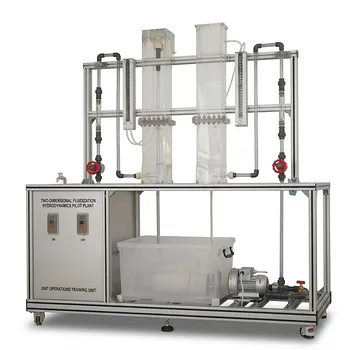
Two-Dimensional Fluidization Hydrodynamics Educational Pilot Plant for Unit Operations Training

Two-Dimensional Fluidization Hydrodynamics Educational Pilot Plant for Unit Operations Training

Explore gas-solid and liquid-solid fluidization hydrodynamics with our transparent 2D educational pilot plant. Ideal for chemical engineering unit operations labs, it demonstrates fixed to fluidized bed regimes, measures pressure drop, and integrates QR-code digital learning for enhanced student training.

Multi-Functional Membrane Separation Educational Pilot Plant for Unit Operations Lab

Multi-Functional Membrane Separation Educational Pilot Plant for Unit Operations Lab

The Multi-functional Membrane Separation Educational Unit Operations Pilot Plant is an integrated bench-scale laboratory system designed for teaching undergraduate engineering education. It features Ultrafiltration, Nanofiltration, and Reverse Osmosis modules in a compact, mobile unit for practical hands-on learning.

Tubular Reactor Flow Characteristics Determination Educational Unit Operations Pilot Plant

Tubular Reactor Flow Characteristics Determination Educational Unit Operations Pilot Plant

Educational pilot plant for investigating tubular reactor flow characteristics and residence time distribution Features adjustable recycle for plug flow and backmixing studies industrial touchscreen interface and real-time data acquisition Ideal for chemical engineering unit operations laboratory training and education

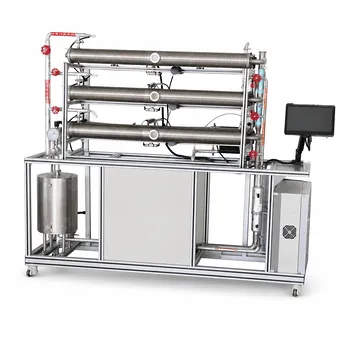
Three-Tube Heat Transfer Educational Pilot Plant for Unit Operations Training

Three-Tube Heat Transfer Educational Pilot Plant for Unit Operations Training

Three-tube heat transfer pilot plant for studying convective heat transfer enhancement and condensation. Allows comparison of smooth, corrugated, turbulent tubes, verifying empirical correlations. Ideal for chemical engineering education with safety and closed-loop steam recovery.

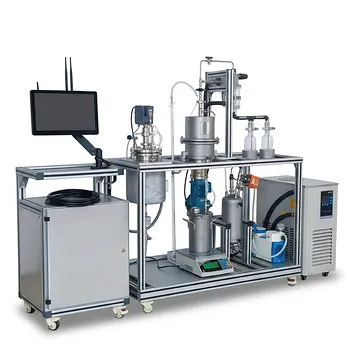
Supercritical High-Gravity Flash Evaporation Educational Unit Operations Pilot Plant

Supercritical High-Gravity Flash Evaporation Educational Unit Operations Pilot Plant

Bench-scale integrated teaching system for advanced separation and mass transfer, combining supercritical high-gravity flash evaporation with heating, chemical reaction, and material collection, featuring modular design, Stainless Steel 316L construction, transparent visualization, touchscreen control, and safety systems for chemical engineering education.

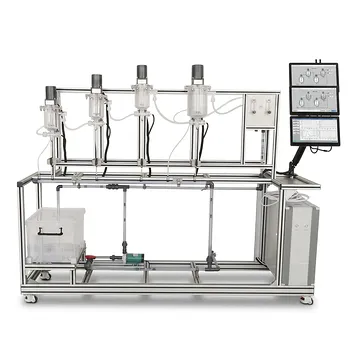
Multi-Stage Stirred Tanks in Series Residence Time Distribution and Mixing Performance Determination Educational Pilot Plant

Multi-Stage Stirred Tanks in Series Residence Time Distribution and Mixing Performance Determination Educational Pilot Plant

Explore residence time distribution and mixing performance in series stirred tanks with this educational pilot plant. Real-time conductivity sensors, interactive 3D simulation, and industrial-grade PC for chemical engineering lab training. Customizable to curricula.

Constant Pressure Filtration Educational Unit Operations Pilot Plant

Constant Pressure Filtration Educational Unit Operations Pilot Plant

Hands-on educational pilot plant for constant pressure filtration. Classic plate and frame filter press allows students to study kinetics, determine specific cake resistance, perform cake washing and evaluate washing rates. Ideal for chemical engineering curriculum. Mobile, customizable, safety-compliant design.

Shell and Tube Heat Exchanger Heat Transfer Coefficient Determination Educational Pilot Plant

Shell and Tube Heat Exchanger Heat Transfer Coefficient Determination Educational Pilot Plant

LABPARK's shell and tube heat exchanger pilot plant enables students to investigate heat transfer coefficients, LMTD, co-current vs counter-current flow, bridging theory and industrial practice. Customizable for chemical, mechanical, environmental engineering curricula. Ideal for unit operations and process engineering labs.


Leave Your Message