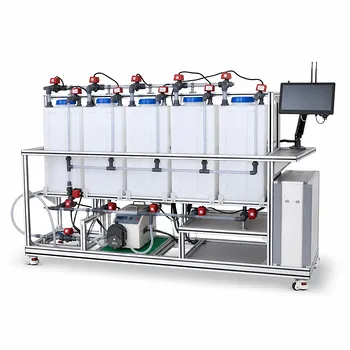
Even trace amounts of moisture can transform a chlorination pilot plant from a valuable learning tool into a dangerously corroded safety hazard. Moisture control is critical because water reacts with chlorine gas or dissolves hydrogen chloride (HCl) vapor to form highly corrosive hydrochloric acid, which rapidly attacks standard steel. In processes like ethylene oxychlorination, water formed as a reaction byproduct will condense on any surface below the dew point, creating localized pools of concentrated acid that eat through piping and reactors. To prevent this, pilot plant designs must focus on eliminating water ingress, preventing condensation, and selecting materials that can withstand an inevitably aggressive environment.
Moisture is the primary enabler of corrosion in chlorination units because it transforms process gases into hydrochloric acid, which aggressively attacks common metals. A safe, durable pilot plant design must treat water as an enemy at every stage—drying feed gases, insulating against cold spots, and using inherently corrosion-resistant, iron-free materials—not just to protect the equipment but to ensure product purity and teach proper material selection.
Why Even a Drop of Water Spells Disaster
Moisture triggers a chain of corrosion and contamination that undermines both safety and experimental integrity. The following three mechanisms explain why absolute dryness is non-negotiable.
The Acid Formation Chain Reaction
Chlorine gas reacts with trace water to form hydrochloric acid (HCl) and hypochlorous acid. More directly, if the process generates gaseous HCl—common in oxychlorination or hydrofluorination—it will instantly dissolve into any condensed water, creating a highly concentrated acid film. This acid then initiates rapid hydrogen evolution corrosion on steel, pitting the metal in hours. The only way to interrupt this cycle is to break the water-acid link by maintaining a strictly anhydrous environment.
Byproduct Water and the Dew Point Danger
In reactions like ethylene oxychlorination, water is a major stoichiometric byproduct. As the hot, wet effluent leaves the reactor, any section of downstream piping or equipment that cools below the dew point will cause water to condense. That liquid immediately absorbs HCl gas flowing with it, becoming a stream of corrosive acid that attacks the inside of the vessel. The fix is not just drying the feed; you must keep the entire process flow path above the dew point through robust thermal insulation and heat tracing.
The Hidden Catalytic Threat of Iron
Corrosion is not the only risk. When hydrochloric acid attacks steel, it releases iron ions and iron oxide particles. In chlorination chemistry, iron acts as an unwanted catalyst, promoting side reactions such as the additive chlorination of ethylene, which creates off-spec byproducts. Even minor rust formation on a valve body can compromise product purity. Therefore, iron-free materials are mandatory in the reaction zone not only to prevent corrosion but also to preserve the true kinetics you are trying to study or demonstrate.
Designing a Moisture-Proof Pilot Plant
Protecting a pilot plant, especially one used for vocational training, requires embedding moisture control into every layer of the design. These precautions are the practical embodiment of the chemistry discussed above.
First Line of Defense: Drying Feed Streams
Assume all inlet gases—chlorine, ethylene, nitrogen, and especially air—are wet until proven dry. Install feed gas drying units packed with desiccants like molecular sieves or silica gel directly upstream of the reactor. These units strip out the parts-per-million of water that would otherwise react with chlorine long before a heater is ever lit. In an educational setting, this also provides a tangible lesson in the cost of raw material quality control.
Thermal Insulation and Heat Tracing
Cold spots are condensation traps. Every flange, instrument tap, and pipe segment that could drop below the dew point must be wrapped with high-performance insulation and, where necessary, heat traced. The goal is to maintain a uniform temperature profile from the reactor outlet all the way through the product separation train. Start-up and shutdown procedures should include pre-heating these lines to avoid transient condensation, which is often when the worst corrosion occurs.
Material Selection: A Lesson in Compatibility
No amount of drying will create a perfectly water-free plant over months of operation. You must specify materials that can survive the inevitable upset. Glass-lined steel offers near-universal acid resistance and is ideal for reactor vessels. For piping, PTFE-lined sections or specialty alloys like Hastelloy C-276 are preferred. The cardinal rule: eliminate all iron-containing alloys from the wetted flow path. This protects the equipment and prevents metallic catalysis, turning a potential failure into a direct demonstration of why material science is fundamental to process engineering.
Atmosphere Isolation: Blanketing and Purging
When preparing moisture-sensitive materials like the anhydrous copper catalysts used in some oxychlorination processes, even atmospheric humidity is a threat. A pilot plant designed for such work must include sealed reactor systems with integrated dry-gas purging. A simple nitrogen blanketing loop allows students and researchers to load, react, and quench under a protective, moisture-free atmosphere. This design feature isolates the chemistry from environmental humidity and teaches the necessity of solvent dehydration and good glovebox technique at an industrial scale.
Understanding the Trade-offs in Pilot Plant Design
Every design decision involves a compromise. Recognizing these trade-offs is essential for building a plant that is safe, functional, and a good educational tool.
- Cost vs. Lifespan: Glass-lined equipment and Hastelloy alloys dramatically increase upfront capital costs compared to stainless steel. However, they eliminate rapid catastrophic corrosion, making them cheaper over a plant’s training lifecycle. The lesson: process conditions must dictate the material budget.
- Complexity for Education: Adding a gas drying skid, heat tracing controls, and a nitrogen blanketing system increases the number of unit operations a student must understand. While this raises the learning curve, it faithfully mirrors industrial reality and teaches advanced process safety concepts like dew point management and inerting.
- Physical Robustness: Glass-lined steel offers superb chemical resistance but is fragile; a single impact can crack the lining and compromise the part. PTFE is flexible but can be permeated by some gases over time. Maintenance and inspection routines must be built into the curriculum so that the next generation of engineers learns to value material limitations alongside their benefits.
Making the Right Choice for Your Pilot Plant Goal
The specific design precautions you prioritize should align with the primary mission of your facility. Use these goal-driven recommendations to guide your final decisions.
- If your primary focus is maximizing equipment longevity in a harsh chlorine environment: Invest heavily in glass-lined reactors and PTFE or alloy piping, and pair them with a rigorous commissioning procedure that includes heat tracing and dew point mapping.
- If your primary focus is ensuring pure product streams and true kinetic data: Prioritize iron-free materials throughout the reaction zone and install a high-capacity feed gas drying system with dew point analyzers to remove all catalytic contaminants.
- If your primary focus is creating a robust, hands-on teaching platform: Design a system that makes moisture control explicit—include sight glasses on the drying units, label all heat-traced segments, and create a procedure that has students calculate dew points and verify them with measurements. This turns corrosion prevention from an abstract concept into an interactive lesson.
Designing moisture out of a chlorination pilot plant is a masterclass in applied chemistry; every precaution, from a desiccant bed to a PTFE gasket, teaches that safety and scientific accuracy are built on a foundation of meticulous material and process control.
Summary Table:
| Threat / Mechanism | Impact on Pilot Plant | Design Prevention / Solution |
|---|---|---|
| Acid Formation | Water + chlorine/HCl forms hydrochloric acid, rapidly corroding steel. | Install feed gas drying units (molecular sieves/silica gel) upstream. |
| Condensation | Byproduct water cools below the dew point, creating localized acid pools. | Implement high-performance insulation, heat tracing, and pre-heating. |
| Iron Catalysis | Acid attacks steel, releasing iron ions that trigger unwanted side reactions. | Use strictly iron-free materials like glass-lined steel, PTFE, and Hastelloy. |
| Atmospheric Humidity | Ambient moisture degrades sensitive catalysts during loading or operation. | Design sealed systems featuring nitrogen blanketing and dry-gas purging loops. |
Safeguard Your Research with LABPARK's Corrosion-Resistant Pilot Plants
Designing safe and durable pilot plants for harsh chemical processes requires specialized engineering expertise. LABPARK provides state-of-the-art Educational and Vocational Unit Operations Pilot Plants in chemical engineering, bioprocess & biotech, and environmental & water treatment for universities, research institutes, and enterprises.
Whether you need to manage corrosive chlorination chemistry, implement advanced dew point controls, or teach industrial safety, our systems are built with high-quality, corrosion-resistant materials to ensure long-term durability and student safety.
Ready to elevate your lab's capabilities? Contact the LABPARK expert team today to discuss your custom pilot plant requirements and get a tailored solution!
Related Products
- Multi-Modal Distillation Unit Operations Training Pilot Plant
- Multi-Functional Special Distillation Educational Pilot Plant
- Carbon Dioxide Hydrogen Methanol Synthesis Educational Unit Operations Pilot Plant
- Dual-Mode Rectification Pilot Plant for Practical Training Unit Operations
- Methane Cracking Educational Unit Operations Pilot Plant
People Also Ask
- How can energy balance equations for condensers & reboilers be validated experimentally? Guide
- What are the primary reflux ratio control strategies? Master Distillation Unit Operations
- Why is vacuum operation capability an essential feature for a distillation unit operations pilot plant? Unlock Efficiency
- How does catalyst water concentration affect distillation pilot plant design? Key separation train choices.
- How can real-time carbon number prediction improve distillation pilot plants? Optimize control.