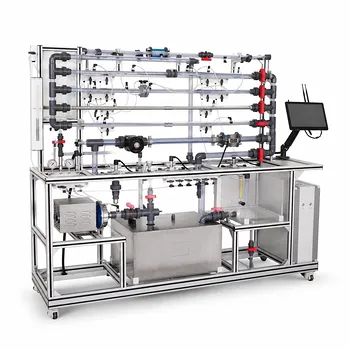
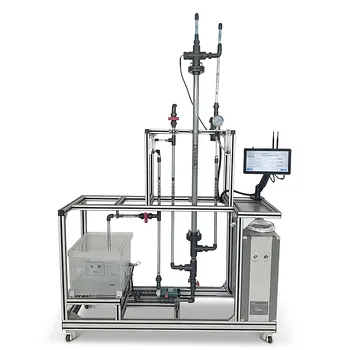
Aluminum in your softener’s effluent is not just a trace contaminant—it’s a direct precursor to catastrophic boiler scaling. Even at low concentrations, residual aluminum from clarification processes can pass through softening units and enter boiler feedwater. Once there, it combines with silica and calcium to create glass-hard, highly adherent deposits that drastically reduce heat transfer, block tubes, and shut down steam-generating systems. That’s why monitoring it is a non-negotiable control in any water treatment unit operations pilot plant.
In pilot plants, measuring aluminum in softener effluent bridges the gap between upstream coagulation and downstream thermal systems. It prevents the formation of intractable minerals like analcite and gehlenite—scales so tenacious that mechanical and chemical cleaning often fail.
The Hidden Threat: Aluminum Carryover in Lime‑Soda Softening
Why Aluminum Appears in the Softener
In most pilot or full-scale plants, aluminum salts are intentionally added during clarification to remove turbidity, oil, and organic matter. However, the subsequent lime‑soda softening process is not designed to strip out this aluminum. If coagulant dosing is excessive, pH control is poor, or solids carryover occurs, aluminum ions or colloidal species can slip right through the softener and end up in the polished feedwater.
The Downstream Chain Reaction
The moment that aluminum‑laden water enters a boiler, severe chemistry kicks in. High temperatures and concentrated solutions drive the precipitation of complex aluminosilicates. The most infamous of these are analcite (Na₂O·Al₂O₃·4SiO₂·2H₂O) and gehlenite (3CaO·Al₂O₃·2SiO₂).
These are not ordinary hardness scales. They are extremely hard, thermally insulating, and chemically resistant. Once formed, they bond tightly to tube walls, creating a permanent insulating layer that forces operators to increase fuel input just to maintain steam output. Over time, tube metal temperatures soar, leading to creep, sagging, and catastrophic failure.
Why the Scale Is So Difficult to Remove
Unlike porous calcium carbonate that can be acid‑cleaned, analcite and gehlenite scales laugh at conventional chemical treatments. Their dense glass‑like matrix requires aggressive hydro‑blasting or even mechanical drilling. In a pilot plant that simulates real‑world operations, preventing these scales is infinitely cheaper than removing them. The only realistic solution is source control: keep aluminum out of the boiler in the first place.
The Educational Role of Aluminum Monitoring in a Pilot Plant
Connecting Theory to High‑Stakes Practice
In vocational training and research settings, the pilot plant is the bridge between textbook solubility products and industrial risk. Students learn that each coagulant decision in the clarifier has a direct, measurable consequence at the boiler. By routinely testing softener effluent for aluminum, they internalize the concept of whole‑plant integration—no unit operation stands alone.
The Analytical Method as a Learning Tool
Primary references highlight a common colorimetric technique: the reaction of aluminum with ammonium aurintricarboxylate to produce a red complex. This method is sensitive enough to quantify aluminum in the 0.005 to 0.020 mg range (often expressed as µg/L in practice). For a trainee, running this test turns an invisible hazard into a tangible data point. It reinforces that safety margins are razor‑thin: just a few micrograms per liter can begin seeding scale nuclei inside a heat exchanger.
Understanding the Trade‑offs and Pitfalls
The Over‑Dosing Dilemma
Aluminum coagulants are highly effective, but they must be tuned. Under‑dosing leaves turbidity and oils in the water; over‑dosing creates a different problem—residual aluminum slip. Monitoring softener effluent gives operators direct feedback on whether they’ve walked the tightrope correctly. It forces a critical question: Are we sacrificing boiler reliability for perfect clarifier performance?
pH and Alkalinity Interplay
While primary references focus on the aluminum‑to‑scale pathway, supplementary knowledge reveals that alkalinity measurements (P‑alkalinity and M‑alkalinity) are essential to understand why aluminum precipitates as aluminosilicates rather than a simple oxide. The high‑pH environment of a lime‑soda softener can also reprecipitate aluminum species if not managed. So, aluminum monitoring doesn’t stand alone; it pairs with pH profiling and alkalinity titration to paint the full picture of scale-forming potential.
The Risk of False Security
A clear softener effluent doesn’t mean zero aluminum. Many aluminum compounds are colorless and soluble at certain pH ranges. Only a deliberate monitoring program—using a sensitive analytical method—can catch the threat before it becomes a baked‑on deposit. Relying on visual clarity alone is a recipe for a shutdown.
Making the Right Choice for Your Pilot Plant Operation
Whether you’re running a teaching lab or a research campaign, the decision to monitor aluminum is clear. Here’s how to tailor the information to your primary objective.
- If your primary focus is boiler protection: Keep aluminum in the softener effluent below the detection limit of your colorimetric method. Any measurable value signals an immediate coagulant or pH adjustment upstream.
- If your primary focus is student education: Use the aluminum test as a capstone exercise that links coagulant chemistry, softener design, and thermal system metallurgy into one cohesive lesson.
- If your primary focus is process optimization: Map aluminum carryover against coagulant dose, softening pH, and boiler blowdown frequency to find the economic sweet spot where both clarification and thermal efficiency are maximized.
Monitoring aluminum in softening effluent is the difference between a pilot plant that teaches a lesson and one that creates a disaster—don’t let an invisible ion write your next high‑cost report.
Summary Table:
| Threat / Parameter | Downstream Impact | Prevention & Control Strategy |
|---|---|---|
| Aluminum Carryover | Forms glass-hard analcite & gehlenite scales | Optimize coagulant dosing and pH profiling |
| Scale Accumulation | Insulates tubes, causes overheating & rupture | Monitor softener effluent using colorimetric testing |
| Conventional Acid Wash | Ineffective (requires mechanical drilling) | Source control; keep aluminum below detection limits |
Equip Your Lab for Real-World Water Treatment Training
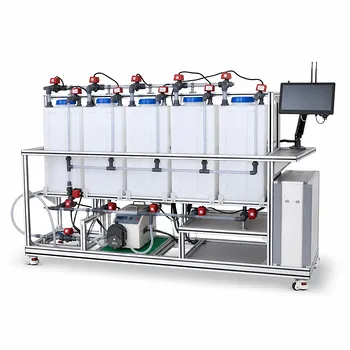
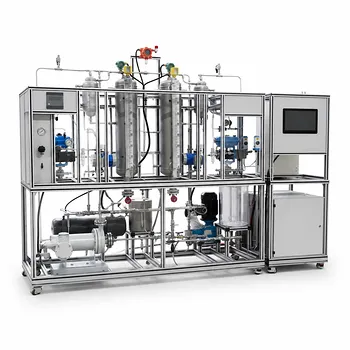
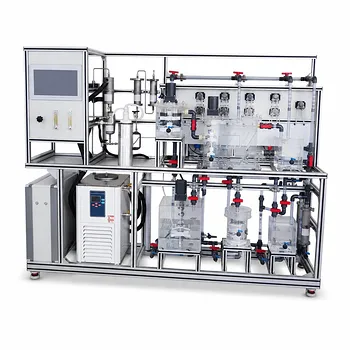
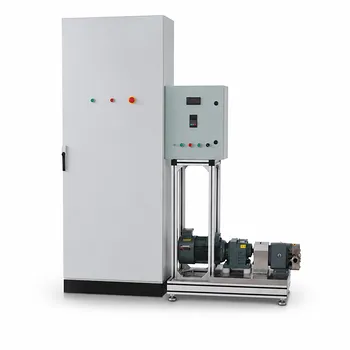
Are you looking to bridge the gap between water chemistry theory and industrial practice? LABPARK provides state-of-the-art Educational and Vocational Unit Operations Pilot Plants in chemical engineering, bioprocess & biotech, and environmental & water treatment.
Designed for universities, research institutes, and enterprises, our pilot plants empower students and researchers to master crucial skills like coagulation control, softener monitoring, and scale prevention.
Optimize your training programs and safeguard downstream systems—contact our experts today to find the perfect pilot plant solution for your institution!
Related Products
- Electrochemical Water Treatment Educational Unit Operations Pilot Plant
- Ion Exchange Water Purification Educational Pilot Plant for Engineering Unit Operations
- Dual-Mode Rectification Pilot Plant for Practical Training Unit Operations
- Multi-Functional Membrane Separation Educational Pilot Plant for Unit Operations Lab
- Alkaline Membrane Water Electrolysis Educational Pilot Plant Unit Operations Training System
People Also Ask
- What design features do educational electrochemical pilot plants utilize to manage gas liberation and water loss?
- How can unit operations pilot plants show lead-acid concentration vs state of charge? Real-time monitoring guide.
- How do educational electrochemical pilot plants scale up electrolysis? Master industrial engineering.
- How to Estimate Sulfate in Water Treatment Pilot Plant Deposits: Gravimetric Guide
- How can foaming be managed during steam generation experiments in water treatment unit operations pilot plants? Tips