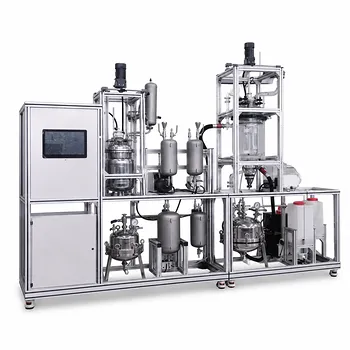
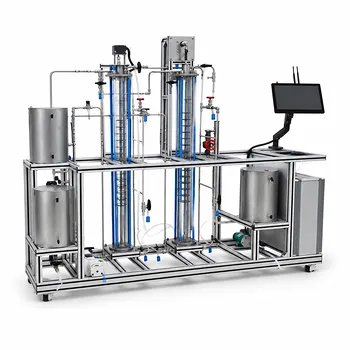
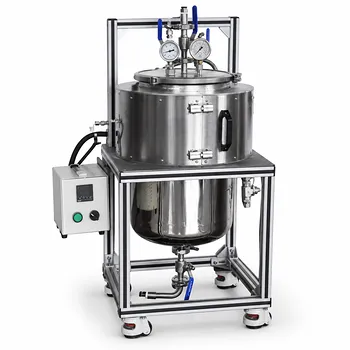
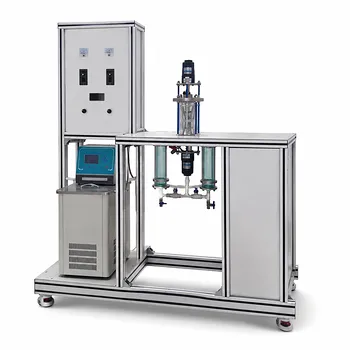
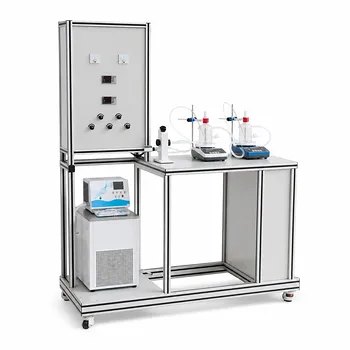
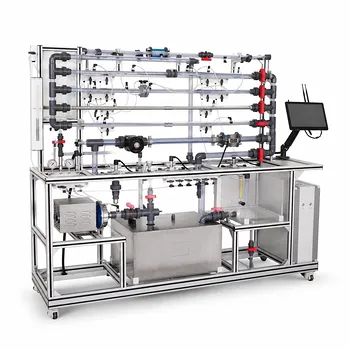
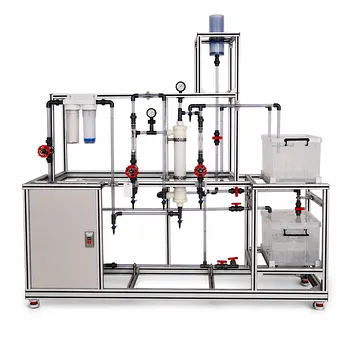
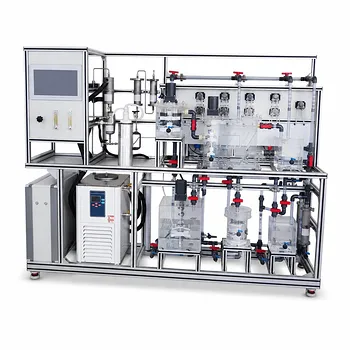
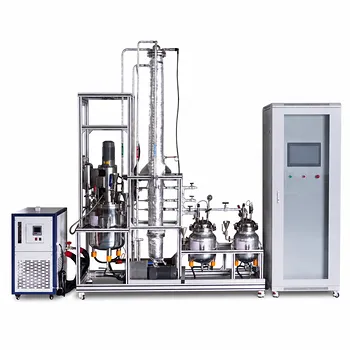
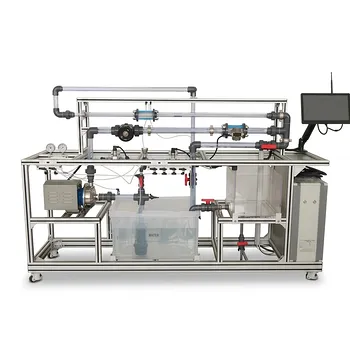
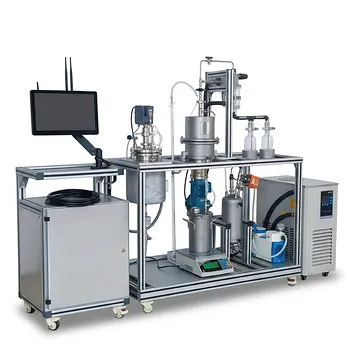
High selectivity and robust material construction are the twin pillars that transform a liquid effluent separation pilot plant from a vulnerable, energy-guzzling experiment into a reliable, scalable research tool. High selectivity allows you to efficiently extract trace products or solvents from predominantly aqueous streams without boiling off oceans of water—historically an economic dead end. Robust materials ensure the plant can withstand the corrosive, fouling, and often unpredictable chemical cocktails you’ll throw at it, safeguarding both your data and your researchers over countless experimental runs.
Aqueous waste streams present a dual threat: dilute valuables that are staggeringly energy-intensive to recover and aggressive chemistries that can eat through standard equipment. Selectivity solves the thermodynamic riddle, while meticulous material choice turns a fragile apparatus into a safe, durable research platform capable of delivering transferable data.
The Fundamental Challenge of Liquid Effluent Separation
The Dilution Problem and Energy Penalty
Liquid effluents in chemical engineering research often consist of highly dilute products, solvents, or contaminants dispersed in water. Separating these trace components via blunt-force methods—like distillation that vaporizes the bulk water—imposes an enormous energy penalty that can render a process economically and environmentally unviable.
Why Non-Selective Methods Fail at Pilot Scale
A pilot plant’s job is to generate scalable data. If you rely on non-selective separation (e.g., simple evaporation), you’re not only wasting energy but also masking the true yield, purity, and cost metrics of your final process. The data becomes a distorted reflection of industrial reality, making the pilot exercise pointless.
Why High Selectivity is Non-Negotiable
Enabling Practical Recovery of Valuables
Selectivity is the difference between concentrating a product and throwing away the water. Technologies like membrane reactors, reactive distillation columns, and supercritical fluid systems thrive precisely because they discriminate at a molecular level. A membrane that passes the target solute while rejecting water makes recovery feasible at ambient temperatures, bypassing the latent heat of vaporization.
Selectivity as the Foundation for Techno-Economic Validation
Pilot plants are, above all, a tool for techno-economic evaluation. When you can compare separation methods—distillation, extraction, crystallization, or membrane separation—under real conditions, selectivity becomes the linchpin of energy consumption, throughput, and final product quality. A highly selective unit operation shrinks downstream polishing steps, reduces solvent usage, and often dictates the entire cost structure of a commercial plant.
Pairing Selectivity with Flux for Real-World Viability
High selectivity alone isn’t enough; it must be matched with adequate high-flux capability. A hyper-selective membrane that processes a trickle is useless. The pilot plant must demonstrate that selective technologies can operate at industrially relevant rates, which is why integrated systems like membrane reactors or supercritical fluid extractors—engineered for both selectivity and throughput—are becoming the standard for liquid recovery research.
The Critical Role of Robust Material Construction
Corrosion: The Silent Experiment Killer
Aqueous waste streams are rarely benign. They may contain chlorides, organic acids, or oxidizing agents that rapidly corrode standard carbon steel. Corrosion-resistant materials—such as 300-series austenitic stainless steels, glass-lined vessels, or PTFE components—provide broad chemical compatibility, ensuring that the equipment itself doesn’t contaminate your samples or leak hazardous fluids mid-experiment.
Safety in a Chemically Unpredictable Environment
Research pilot plants routinely handle a rotating portfolio of chemistries. Robust material construction is your first line of defense against catastrophic failure. Materials with high ductility and toughness—like face-centered cubic (FCC) stainless steels—absorb stress and resist brittle fracture, even under sudden pressure fluctuations or physical impact. For low-temperature separation tasks, the ductile-to-brittle transition of BCC metals like carbon steel makes them dangerously unsuitable; only FCC alloys or high-grade aluminum can maintain structural integrity.
Durability, Fouling, and Long-Term Reproducibility
Fouling is inevitable in liquid effluent streams. Robust, non-reactive surfaces not only resist initial chemical attack but also withstand aggressive cleaning protocols between runs. This durability prevents cross-contamination, preserves the integrity of long-term research, and teaches best practices in industrial hygiene—a lesson especially valuable in educational and vocational pilot-plant settings.
Understanding the Trade-offs
The Cost-Complexity Conundrum
Highly selective, corrosion-resistant pilot plants come with a higher initial price tag. Specialized alloys, supercritical fluid systems, and membrane skids demand both capital investment and skilled operation. The trade-off is between upfront cost and the cost of bad data or a safety incident later. For a research platform that must last years and serve multiple projects, the premium is almost always justified.
Selectivity vs. Throughput and Operability
Ultra-selective membranes often face flux limitations or require extensive pretreatment, adding complexity. Reactive distillation columns, while elegantly combining reaction and separation, can be notoriously sensitive to feed composition disturbances. Your selection must balance peak selectivity with the robustness and turndown ratio needed for academic or industrial research workflows.
Material Limitations in Extreme Conditions
Even the best stainless steel has its limits—high chloride levels at elevated temperatures can induce stress-corrosion cracking. Glass offers near-universal chemical resistance but sacrifices mechanical strength. The pilot plant designer must therefore match the material to the most aggressive expected condition, rather than to the average one, often meaning partial use of exotic materials only where strictly needed.
Making the Right Choice for Your Research Goal
Your pilot plant must reflect the specific demands of your chemical engineering research portfolio. Use the following goal-oriented guidelines to anchor your selection.
- If your primary focus is recovering high-value dilute products: Prioritize the highest selectivity technology (e.g., nanofiltration, pervaporation, or reactive distillation) that still delivers viable flux, and clad all wetted parts in the most chemically inert materials you can afford.
- If your primary focus is versatile teaching or broad method comparison: Select a multi-material platform (glass, glass-lined steel, PTFE) that can safely run corrosive, acidic, and caustic feeds without compromising the integrity of future experiments.
- If your primary focus is scaling up a specific industrial process: Mirror the exact materials of construction and separation principle you intend to use at full scale, even if it means a less flexible system, to generate directly transferable engineering data.
- If your primary focus is safety and compliance in a shared facility: Invest in robust, high-toughness materials with documented Charpy V-notch impact testing, and pair the pilot plant with engineering controls (containment, down-flow booths) rather than relying on PPE alone.
A liquid effluent separation pilot plant is not a commodity—it is a long-term investment in research credibility, safety, and translational data that will pay out only if you demand both molecular discrimination and metallurgical resilience from the very start.
Summary Table:
| Key Criterion | Primary Benefit | Recommended Solutions |
|---|---|---|
| High Selectivity | Lowers energy consumption; avoids boiling bulk water; ensures techno-economic validity. | Membrane separation, reactive distillation, supercritical fluid extraction |
| Robust Construction | Resists corrosive effluent chemistries; ensures safety; prevents contamination. | 300-series stainless steel, PTFE, glass-lined vessels |
Scale Your Research Safely with LABPARK
At LABPARK, we help universities, research institutes, and enterprises bridge the gap between lab scale and industrial reality. We provide high-quality Educational and Vocational Unit Operations Pilot Plants in chemical engineering, bioprocess & biotech, and environmental & water treatment.
Whether you need highly selective separation technologies or corrosion-resistant material construction, our plants are engineered to deliver reliable, scalable data safely. Contact us today to find the perfect pilot plant solution for your lab!
Related Products
- Gallium and Indium Selective Extraction Educational Pilot Plant
- Comprehensive Liquid-Liquid Extraction Pilot Plant for Engineering Education
- Gas-Solid Heterogeneous Separation Demonstration Educational Unit Operations Pilot Plant
- Hot Filtration Educational Unit Operations Pilot Plant Laboratory System
- Liquid-Liquid Mass Transfer Coefficient Determination Educational Pilot Plant
People Also Ask
- How do pilot plants differentiate physical vs chemical extraction? Enhance Chemical Engineering Training
- What is the significance of the isopycnic line in liquid-liquid extraction? Avoid Column Flooding
- How do droplet motion states affect kD in extraction pilot plants? Optimize Mass Transfer
- Why is predicting multicomponent LLE from binary data more challenging than VLE? Master your pilot plant design.
- How to Validate BIPs for LLE Pilot Plants? Steps to Align Simulations with Reality