Your process analyzer project is probably failing before it's even installed. Hands-on training with process-grade unit operations pilot plants is crucial because it directly addresses the single biggest root cause of implementation failure: a workforce educated only on univariate sensors (pressure, temperature, pH) and left unprepared for the real-world complexity of multivariate spectroscopic analyzers. These pilot plants provide the venue where engineers and operators can, for the first time, practice hardware installation, on-site method qualification, and long-term maintenance in a live process loop—turning a black-box project into a transparent, manageable business asset.
The fundamental problem is an educational blind spot. Traditional chemical engineering curricula rarely include process analytical chemistry and chemometrics, leaving teams to learn on full-scale production lines where mistakes cost millions. A process-grade pilot plant replicates this missing apprenticeship; it forces trainees to manage the entire analyzer lifecycle under realistic fluid, temperature, and fouling conditions, so they enter the plant floor with proven, hands-on competence rather than theoretical hope.
The Hidden Skill Gap That Sabotages Analyzer Projects
The skills that make an engineer excellent at designing a distillation column do not automatically translate to sustaining a Raman or NIR analyzer on a corrosive process stream. Without specific training, the implementation team falls back on the univariate mindset they were taught.
The Univariate Mindset That Dooms Projects
Most plant personnel are trained to trust simple, direct sensors. A thermocouple gives one temperature; a pressure transmitter gives one value. There is little ambiguity.
A process analyzer, however, delivers a rich spectrum that must be interpreted through a multivariate chemometric model. If the team treats it like just another 4‑20 mA instrument, they will ignore spectral artifacts, drift, and sample conditioning failures until the readings become dangerously misleading.
What Traditional Curricula Miss Completely
Standard degree programs cover unit operations, thermodynamics, and simple control loops in depth. They almost never teach how to:
- Specify an analyzer’s technical requirements in a specific process loop (e.g., measuring moisture in a hot, solids-laden stream with ±0.1% precision).
- Conduct a feasibility assessment by testing candidate methods under flowing conditions with real process fluids.
- Validate a chemometric model for speed, accuracy, and precision directly at the sample point, not just on a benchtop.
This missing skill set is not a minor gap. It is the reason qualification protocols are often copied from a lab application and fail immediately when confronted with plant vibrations, ambient temperature swings, and varying particle sizes.
How Pilot Plants Bridge Theory and Real-World Implementation
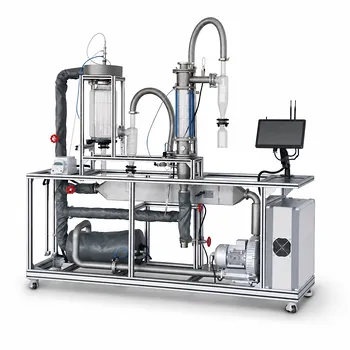
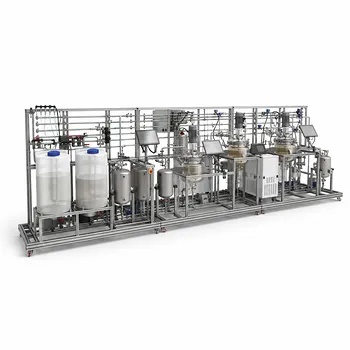
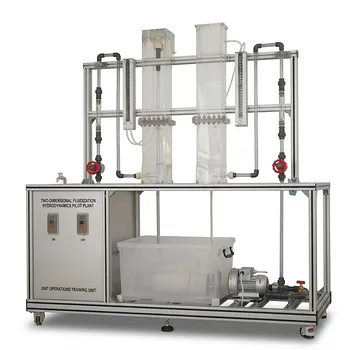
A unit operations pilot plant is not a benchtop demo. It is a scaled-down industrial process with real pumps, heat exchangers, control valves, and deliberate upsets. For an analyzer trainee, it becomes the critical bridge.
Hardware Installation in a Real Process Loop
In a university lecture, "install the probe" sounds trivial. In a pilot plant, the trainee confronts the reality. They must select the correct insertion depth to avoid dead zones, fit the probe into a bypass loop to allow hot-swapping, and choose materials that survive a corrosive stream at process temperature.
They also learn what happens when they neglect sample conditioning. A poorly located probe that fouls every four hours will never sustain an analyzer project. Hands-on installation teaches the design of automated wash systems and parallel standby configurations—skills that translate directly to preventing unplanned shutdowns.
Method Qualification Under Process Conditions
A calibration built with clean solvents in a cuvette has no relationship to a plant’s reality. A pilot plant forces the trainee to perform qualification where it matters: on a moving, multi-component stream with real temperature fluctuations.
Trainees collect reference samples while the plant is running, build calibration models that account for matrix effects, and then verify the analyzer’s accuracy against a gold-standard method on site. This is where they learn that a method with a great laboratory (R^2) can show an unacceptable prediction error when a trace interferent appears—a lesson that, if learned on the commercial line, would have already caused billions in off-spec product.
Designing Sustainable Maintenance Systems
The silent killer of successful analyzer installations is the lack of an ongoing maintenance strategy. Once the vendor leaves, the signal drifts and the plant operator loses trust.
A pilot plant exercise teaches that maintenance is not an afterthought. Trainees set up control charts to monitor spectral quality indicators, establish a frequency for model updates when a raw material changes, and write a simple, robust standard operating procedure that an operator can follow on shift. This turns the analyzer from a fragile research tool into a rugged process sensor that yields long-term business value.
Understanding the Limitations of Pilot Plant Training
Objectively, a pilot plant cannot replicate every nuance of a 1,000-ton-per-day facility. The concern is valid, but understanding the limits makes the training more powerful.
When a Pilot Plant Fails as a Training Proxy
If the pilot unit is operated only with clean, well-behaved fluids and never suffers the common operational failures—pump blockages, heat exchanger fouling, or control valve hysteresis—the training environment is itself univariate. The trainee will never experience the spectral artifacts created by emulsified water or the sudden baseline shifts from a fouled sight glass.
The value of hands-on training collapses unless the pilot plant curriculum deliberately introduces these real-world faults. A training program that does not force learners to troubleshoot a clogged sample loop or revalidate a model after a tube rupture is merely a demonstration, not a preparation.
The Scale-Up Trap
A method that works flawlessly at the 10-liter-per-hour pilot scale can still encounter unpredictable scaling effects on a commercial reactive system. The mixing times and thermal gradients change, which can alter the correlation between the spectrum and the true quality attribute.
Effective training therefore emphasizes that the pilot plant teaches the workflow of qualification and maintenance, not a universal recipe. The ability to run a structured feasibility assessment and recognize model failure is the enduring skill. This mindset, once forged in the pilot plant, survives the specific scale-up challenges that no single unit can fully imitate.
Beyond the Analyzer: Building Broader Operational Resilience
Ironically, the same hands-on training that prevents analyzer failures also strengthens a team’s ability to handle the process itself. This is crucial because an analyzer installation rarely fails in isolation; it fails because the process environment defeats it.
Troubleshooting Real-World Failures
A pump blockage or a heat exchanger foul is not just a maintenance task—it instantly invalidates the analyzer’s baseline. Trainees on a process-grade pilot plant learn to recognize these events in the data and adjust. They configure parallel standby equipment (like redundant pumps) to maintain steady flow past the analyzer, and they design interlocks that put the analyzer into a safe holding mode during an upset.
This is the difference between blaming the instrument and fixing the process. A workforce that can do both eliminates the finger-pointing that stalls diagnostics and keeps an analyzer offline for months.
Data-Driven Retrofitting Skills
Industrial plants are rarely static. Retrofitting with a new heat exchanger or increasing throughput requires verifying that the existing analyzer will still meet its technical specification.
With a fully sensorized pilot plant, trainees build the exact data-driven workflow needed. They collect real mass and energy balances, build a simulation model, and simulate the new operating condition—calculating the pressure drop or residence time change and its impact on measurement lag. This ability to answer “will my analyzer still work after the revamp?” based on real data, not assumptions, is a direct product of pilot-plant training. It aligns the analytical investment with the plant’s long-term evolution.
Making the Right Choice for Your Training Program
The effectiveness of pilot-plant training hinges entirely on matching the program’s intensity to your organization’s actual pain points. The goal is not to build a miniature plant for its own sake but to replicate the conditions that have historically caused your projects to fail.
- If your primary focus is reducing startup failures and unplanned downtime: Insist on training modules that deliberately introduce common faults—pump cavitation, filter blinding, steam tracing failures—so your team practices analyzer recovery, not just normal operation.
- If your primary focus is ensuring long-term method reliability and regulatory compliance: Ensure the pilot plant curriculum mandates that trainees define technical requirements, perform feasibility assessments, and set up control charts and maintenance schedules with the same rigor they will need on the commercial line.
- If your primary focus is integrating analyzers into upcoming plant retrofits: Choose a program that incorporates comprehensive data acquisition and mass/energy balancing, forcing your engineers to run “what-if” scenarios on the analyzer’s performance under new operating conditions before any capital is committed.
Your process analyzer will only deliver on its economic promise when the people responsible for it have already failed, debugged, and succeeded in an environment where failure is free. That is the irreplaceable gift of the process-grade pilot plant.
Summary Table:
| Traditional Training Gaps | Pilot Plant Training Solutions |
|---|---|
| Focuses only on univariate sensors (temp, pressure) | Hands-on practice with multivariate spectroscopic analyzers |
| Lacks practical hardware installation experience | Direct experience with probe placement and sample conditioning |
| Calibration taught in static laboratory settings | Method qualification under realistic, flowing process conditions |
| Ignores long-term maintenance & troubleshooting | Building sustainable SOPs, control charts, and fault diagnostics |
Equip Your Team for Real-World Success with LABPARK
Don't let process analyzer projects fail due to educational gaps. LABPARK provides state-of-the-art Educational and Vocational Unit Operations Pilot Plants in chemical engineering, bioprocess & biotech, and environmental & water treatment. Designed specifically for universities, research institutes, and enterprises, our pilot plants empower your engineers and students to master hardware installation, calibration, and troubleshooting in a controlled, realistic environment.
Contact LABPARK today to discover how we can help you build operational resilience and bridge the practical skills gap!
Related Products
- Multi-Functional Drying Educational Unit Operations Pilot Plant
- General Purpose Cosmetics Production Unit Operations Training Pilot Plant
- Dual-Mode Rectification Pilot Plant for Practical Training Unit Operations
- Multi-Reactor Educational Pilot Plant for Reaction Engineering Unit Operations
- Multimodal Absorption and Desorption Pilot Plant for Unit Operations Training
People Also Ask
- How do deviations in estimating latent heat impact pilot plant thermal systems? Avoid hardware mis-sizing.
- Why Use PTFE & Hastelloy in Chemical Pilot Plants? Prevent Corrosion & Ensure Safety
- Why is the chemical plant startup schedule crucial? De-risk scale-up with pilot plants.
- How to study gasification in pilot plants? Compare exit gas composition & efficiency
- When to transition from PID to adaptive control in pilot plants? Key process indicators.