Standard level control fights every disturbance to hold a fixed setpoint—and for a buffer tank feeding a distillation column, that fight creates the very surges it’s trying to prevent. In pilot plants where vessels run in series, even (equalizing) control deliberately relaxes the level loop so the tank itself absorbs flow upsets. The result is a slow, gentle discharge that keeps downstream units running in steady‑state, while the level floats safely between high and low limits.
The problem is not level—it’s flow stability. Tight level control on a surge vessel forces the outlet flow to swing violently every time the inlet changes. Even control solves this by turning the vessel into a true hydraulic buffer: the controller uses a wide proportional band and a slow integral action, letting the level “breathe” and releasing flow gradually to protect sensitive downstream equipment.
The Hidden Downside of Tight Level Control in a Series Process
How a Standard Level Loop Destabilizes a Distillation Sump
A conventional level controller is tuned to act fast. When it sees a small deviation from setpoint, it commands a large, immediate change in the discharge flow. In a distillation column sump, this means any momentary upset in bottoms level—a slug of feed, a condenser hiccup—becomes an abrupt flow spike to the reboiler or to the next column in the train.
Those spikes travel downstream and hit the next unit as a disturbance. The next level controller then reacts just as aggressively, and the oscillation can amplify. What started as a minor upset turns into a plant‑wide cycling problem that destroys mass balance and ruins separation performance.
The Fundamental Mismatch: Inventory vs. Throughput Control
A buffer tank or distillation sump exists to decouple two sections of the plant. Its job is inventory management, not throughput regulation. When you apply tight level control, you force the vessel to act like a flow controller—sacrificing its buffering capability entirely.
In a pilot plant, where flows are often small and units are tightly thermally integrated, that decoupling is non‑negotiable. A surge in reboiler duty caused by a level swing can shift column profiles in seconds, making it impossible to obtain steady‑state data or to teach students how a real process should behave.
How Even (Equalizing) Control Transforms a Vessel into a True Buffer
Tuning the Controller to Ignore Small, Slow–Moving Errors
Even control achieves buffering by drastically reducing the controller’s sensitivity. The key tuning parameters are:
- A wide proportional band (low gain). A large level change is required to produce a moderate output change. The controller does not “see” small level deviations as emergencies.
- A slow integral action (long reset time). The control output moves only gradually to correct sustained offset. This prevents the outlet flow from overshooting in response to an inlet trend.
The combination allows the level to drift freely within an allowable band, while the discharge flow changes at a rate the downstream process can easily tolerate.
The Vessel Volume Becomes a Hydraulic Damping Element
Under even control, the buffer tank effectively uses its own volume to smooth flow transients. When inlet flow increases, the level rises slowly; the outflow ramps up over minutes, not seconds. When inlet drops, the level falls while the outflow decays gently.
For a distillation sump, this means the bottom product flow to a reboiler or a downstream column changes only as fast as the sump level can rise or fall within safe limits. The column’s material balance remains stable, and tray hydraulics stay in their design range. The pilot plant operator sees steady temperatures, steady pressures, and repeatable results—everything a research run demands.
Understanding the trade‑offs
Safety Bounds Are Now the Real Constraint
Even control surrenders tight level regulation. The level will move, and it could move close to a high‑ or low‑level trip if the plant runs at the edge of its design envelope. This demands careful design of the vessel’s normal operating range and properly set alarm/trip limits.
You also give up the ability to control level to a precise value for small‑scale volumetric measurements. If a pilot experiment requires exact inventory quantification, you may need a separate metering strategy—because the level is deliberately allowed to float.
Not Every Vessel Should Be Equalized
This philosophy only works where the downstream process can absorb slow flow variations and where the vessel genuinely serves as a surge buffer. A reactor with a critical residence time or a vessel feeding a flow‑sensitive catalyst bed may still need tight level control. The decision must always trace back to the real objective: protect the next unit’s stability, not the level reading.
Applying Even Control to Your Pilot Plant
The right strategy depends on what you are optimizing for.
- If your primary focus is steady‑state data quality across serial units: Implement even control on every buffer tank and distillation sump. Tune the level controllers with a proportional band of 100‑250% and an integral time measured in minutes—and size the vessel’s normal working volume to accommodate the slow swings.
- If your primary focus is safety and you have narrow level margins: First widen the alarm interlocks, then apply even control. A two‑stage strategy—tight control near trip points, even control inside a safe zone—can offer a compromise.
- If your primary focus is teaching realistic industrial practice: Show students the difference firsthand. Run the same column with tight level control and with even control, and let them observe the downstream temperature profiles. That lesson sticks longer than any lecture.
The goal is not to keep the level needle perfectly still. It is to make the whole plant run steadily as one coherent system. Even control gives you the stable flows that pilot plant research cannot afford to do without.
Summary Table:
| Feature | Standard Level Control | Even (Equalizing) Control |
|---|---|---|
| Primary Goal | Maintain a strict level setpoint | Smooth outlet flow deviations |
| Tuning Method | Narrow proportional band, fast reset | Wide proportional band, slow reset |
| Level Behavior | Fixed (needle stays still) | Floating (allowed to "breathe") |
| Downstream Flow | Erratic flow surges and spikes | Gentle, slow-moving adjustments |
| Best Used For | Critical reactor inventory control | Buffer tanks & distillation sumps |
Optimize Your Process Control with LABPARK Pilot Plants
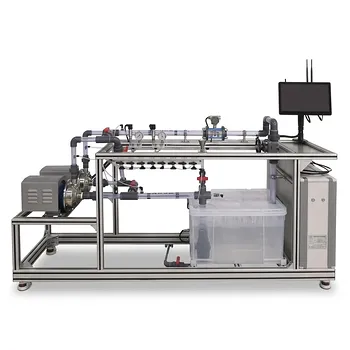
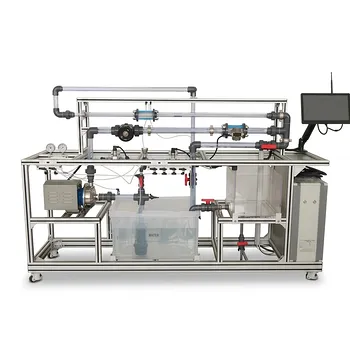
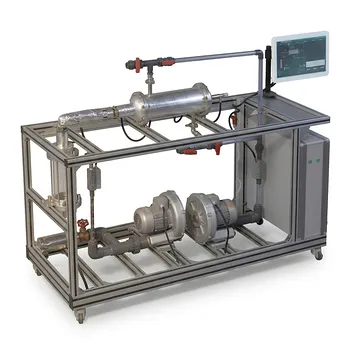
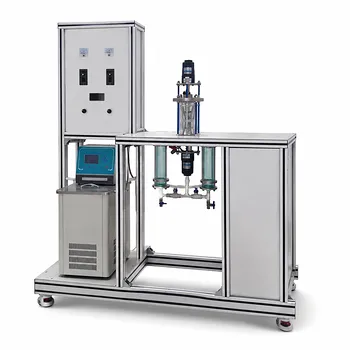
Achieving reliable steady-state data requires precision-engineered hardware and realistic control environments. LABPARK provides state-of-the-art Educational and Vocational Unit Operations Pilot Plants in chemical engineering, bioprocess & biotech, and environmental & water treatment.
Designed specifically for universities, research institutes, and enterprises, our pilot plants allow you to demonstrate advanced control strategies like even control, ensuring stable operations and repeatable research results.
Ready to elevate your research and training capabilities? Contact LABPARK today to explore our customizable pilot plant solutions!
Related Products
- Orifice and Venturi Flowmeter Calibration Educational Pilot Plant for Fluid Mechanics Laboratory
- Quantitative Dosing and Liquid Flow Control Educational Unit Operations Pilot Plant
- Tubular Reactor Flow Characteristics Determination Educational Unit Operations Pilot Plant
- Fluid Friction Resistance Determination Educational Unit Operations Pilot Plant
- Bernoulli Equation Demonstration Unit Operations Pilot Plant
People Also Ask
- What is the difference between static and stagnation pressure? Master Pilot Plant Flow Measurement
- How do pilot plants demonstrate siphon pressure variations? Visualizing Bernoulli's Energy Balance
- How do fluid mechanics training pilot plants facilitate the visualization and calculation of laminar and turbulent flows?
- How to update chemometric calibration models in pilot plants? Best practices for process engineers.
- Why are the laws of similitude critical in fluid flow pilot plants? Scale Up Safely