The core reason vibrating feeders fail with fine powders is physics. Vibration—the very mechanism that drives these feeders—unintentionally transforms the powder's internal state. This leads to compaction, segregation, and sudden loss of air, causing the mass flow to either seize up in an arch or collapse into an uncontrollable flood. The reliable alternative for these materials is a rotary valve, which uses a vaned rotor to deliver positive displacement and a consistent seal, isolating the delicate powder from the disruptive effects of vibration.
Fine powders are uniquely sensitive to mechanical energy; what a vibrating feeder treats as motion, the powder “interprets” as a compactive force. A rotary valve solves this by replacing agitation with precise, enclosed metering—making it the definitive choice when controlled feeding of aerated or cohesive solids is the goal.
The Hidden Dangers of Vibration for Fine Powders
The principle of a vibrating feeder is simple: oscillating motion moves material forward. But for a fine powder, that same motion sets off a cascade of unintended physical changes that defeat the purpose of the feeder.
Why Fine Powders Behave Differently
Unlike coarse granules that tumble freely, fine powders have an extremely high surface-area-to-mass ratio. Interparticle forces—van der Waals, electrostatic, and capillary—become dominant, making the powder cohesive. Vibration energy works against the powder’s natural tendency to remain aerated and loosely packed.
The Problem of Compaction and De-aeration
Vibration forces particles into closer contact, expelling the interstitial air that gives a fine powder its fluid-like character. As the powder de-aerates, its bulk density increases dramatically. The material transforms from a light, flowable solid into a dense, cohesive mass that mechanically bridges over the outlet. This is flow blockage in its purest form.
Uncontrolled Flow: From Blockage to Flooding
The opposite failure is equally dangerous. If the powder retains enough air or if the vibration pattern creates a resonant channel, the structure can suddenly collapse. The material then exits in an un-metered, high-velocity surge—flooding the downstream process. Vibrating feeders inherently lack the positive shut-off needed to arrest this kind of runaway behavior.
The Rotary Valve: Precision and Control for Fine Powders
A rotary valve, also called a star feeder or rotary vane feeder, operates on a fundamentally different principle. A multi-vaned rotor turns inside a close-tolerance housing, creating pockets that each capture a fixed volume of material.
Positive Displacement: The Heart of Reliable Feeding
As the rotor turns, pockets fill under gravity at the inlet and discharge at the outlet. The geometric volume of each pocket, combined with the rotational speed, provides a predictable, linear feed rate. This positive displacement cuts vibration out of the equation entirely.
Superior Sealing for Air-Sensitive Materials
The tight clearance between the rotor vanes and the housing creates a near-continuous seal between the inlet and outlet. This prevents ambient air from disturbing the powder and, critically, stops process gases from migrating. For air-sensitive, hygroscopic, or toxic fine powders, that seal is a safety and quality requirement.
Real-World Insights: Lessons from Pilot Plant Testing
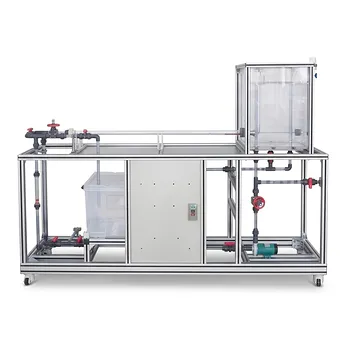
In laboratory pilot plants, side-by-side comparisons reveal the stark difference. Students observe that the same fine powder chokes a vibrating feeder within minutes while the rotary valve maintains a steady, dust-free discharge. These tests underscore a fundamental lesson: equipment selection must start with the powder’s physical properties, not with generic handling assumptions.
Understanding the Trade-offs
Rotary valves are not a universal solution. Their design introduces its own set of challenges that must be managed.
Potential Limitations of Rotary Valves
- Shear sensitivity: Some powders degrade under the mechanical shear between the rotor tip and housing, altering particle size or generating heat.
- Sticky or cohesive extremes: Highly cohesive powders can adhere to the vane surfaces, reducing pocket filling and causing feed rate inconsistencies.
- Clearance-dependent performance: The tight gaps that provide sealing can wear over time, requiring maintenance to maintain accuracy.
- Capital cost: A precision-engineered rotary valve with high-grade seals is more expensive than a simple vibrating tray, though downtime costs often reverse that comparison.
Making the Right Choice for Your Goal
Selecting feeder technology is about matching the device to the material’s behavior under stress. Use the following priorities to guide your decision.
- If your primary focus is handling a fine, aerated, or air-sensitive powder: Choose a rotary valve. Its positive displacement and sealing capabilities directly overcome the flooding and compaction risks that vibration creates.
- If your primary focus is feeding a coarse, free-flowing granular material: A vibrating feeder remains a simple, cost-effective option where the material’s inherent flowability is an asset, not a liability.
- If your primary focus is educating a team on solids handling principles: Use pilot-plant trials with both feeder types. The visual contrast cementes the concept that a powder’s physical state dictates the hardware.
By choosing the feeder that respects the physics of your powder, you turn a potential process bottleneck into a quiet, predictable, and safe operation.
Summary Table:
| Feature / Parameter | Vibrating Feeder | Rotary Valve |
|---|---|---|
| Operating Principle | Oscillation/Vibration | Positive displacement via rotating vanes |
| Effect on Fine Powders | Compaction, de-aeration, and flooding | Uniform, volumetric pocket feeding |
| Sealing Capability | None (risk of runaway flooding) | High (seals against air/process gas) |
| Primary Application | Coarse, free-flowing materials | Fine, cohesive, or air-sensitive powders |
Enhance Your Chemical Engineering Labs with LABPARK
Demonstrating the physics of solids handling requires reliable, industry-grade hardware. LABPARK designs and provides premium Educational and Vocational Unit Operations Pilot Plants in chemical engineering, bioprocess & biotech, and environmental & water treatment. We help universities, research institutes, and enterprises build interactive training systems that bridge classroom theory and industrial reality.
Ready to elevate your practical training capabilities? Contact LABPARK today to explore our custom pilot plant solutions!
Related Products
- Centrifugal Pump Performance and Orifice Flowmeter Calibration Educational Pilot Plant
- Orifice and Venturi Flowmeter Calibration Educational Pilot Plant for Fluid Mechanics Laboratory
- Educational Rotary Disc Liquid-Liquid Extraction Pilot Plant
- High-Gravity Emulsification and Mass Transfer Educational Pilot Plant
- Constant Pressure Filtration Educational Unit Operations Pilot Plant
People Also Ask
- What features should instructors look for in pump & flowmeter pilot plants? Key Selection Guide
- Why start a centrifugal pump with a closed outlet valve? Protect your pilot plant motors.
- How to update chemometric calibration models in pilot plants? Best practices for process engineers.
- Why is continuous measurement preferred over manual sampling in pilot plants? Get real-time kinetic insights.
- Why is Peng-Robinson preferred over SRK? Enhance thermodynamic modeling in educational pilot plants.