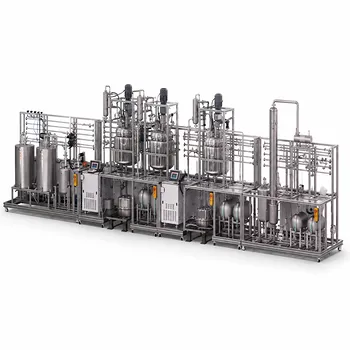
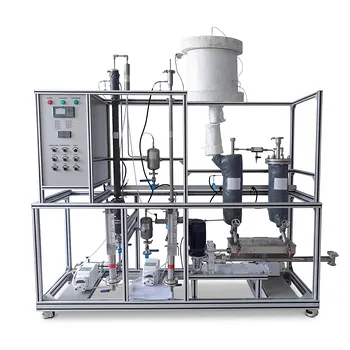
At the heart of every safe and adaptable pilot plant lies the material’s ability to bend without breaking and to absorb sudden shocks without shattering. Ductility is what allows a custom pipe to be formed into a tight radius without cracking during fabrication, while toughness is the property that prevents a vessel from failing catastrophically when it is accidentally struck by a forklift, dropped tool, or pressure surge. In a pilot plant—where configurations are frequently modified and where unexpected impacts are an occupational reality—these two properties distinguish a forgiving, warning-before-failure system from one that fails without notice.
Ductility enables the plastic deformation required to shape custom pipe configurations without fracturing during manufacturing or modification. Toughness prevents brittle, catastrophic failures when components experience sudden impact stresses during operation, maintenance, or handling. Together, they ensure that a pilot plant material gives a visible warning (bending, stretching) rather than snapping silently.
Why Ductility Is Non‑Negotiable for Custom Pipe Configurations
The Physics of Installing a Custom Bend
When you bend a pipe to fit a non‑standard layout, the outer surface stretches and the inner surface compresses. A material with sufficient ductility can accommodate this strain by deforming plastically, redistributing the stress without initiating a crack. Without this ability, even a modest bend can cause a fracture that starts deep inside the metal and propagates abruptly.
Ductility is thereby the difference between a pipe that forms smoothly into the required shape and one that breaks during the fitting process—often after many hours of preparation work have already been invested.
The Role of Elongation and Reduction of Area
Ductility is not a vague concept; it is quantified by percent elongation and percent reduction in area measured in a tensile test. Elongation tells you how much a sample can stretch before failure, while reduction in area indicates how much the cross‑section can neck down. In a pilot plant, these numbers directly predict whether a particular alloy can survive the local strains of flaring, swaging, or tight‑radius bending without rupturing.
For example, a material with less than 10 % elongation may be impossible to bend safely into a custom configuration. The fabricator would be forced to use multiple welded joints, creating additional potential leak paths and driving up cost.
Why Pilot Plants Demand This Flexibility
Educational and research pilot plants are not fixed‑in‑place production lines. They are reconfigured constantly to test new chemistries, reactors, and separation sequences. Materials that are difficult to bend or reshape force compromises in experimental design or lead to brittle breakage during reworking. Ductility, therefore, is an enabler of operational flexibility—it keeps the plant modular and adaptable without an ever‑growing scrap pile.
Why Toughness Is the Ultimate Safeguard Against Impact Stresses
The Hidden Danger of Brittle Fracture
Toughness is a material’s ability to absorb energy and plastically deform before fracturing. It is the property that stands between a minor operational mishap and a catastrophic pressure release. In a tightly packed pilot‑plant bay, collisions between lifting equipment and pipework are not rare; a brittle material would crack like glass, while a tough material dents visibly, giving operators time to shut down safely.
This property is measured by an impact test, most commonly the Charpy V‑notch test. A low Charpy value indicates that the material is sensitive to notches and sudden loads, making it unsafe for any component that could see an accidental strike.
The Thermal Dimension of Impact Safety
Toughness is not a constant; it can plummet as temperature drops. Many carbon steels with a body‑centered cubic (BCC) crystal structure undergo a ductile‑to‑brittle transition at temperatures that a pilot plant might encounter when handling chilled solvents or cryogenic fluids. Under those conditions, even a modest impact can trigger a fast‑running crack.
Selecting a material with an inherently tough face‑centered cubic (FCC) structure—such as austenitic stainless steel (e.g., 304 or 316)—ensures that the plant does not become fragile simply because a process is running cold. The supplementary reference’s emphasis on this transition highlights why toughness must be evaluated across the full anticipated operating window, not just at room temperature.
Impact Stresses Beyond Foreign‑Object Damage
Impact does not only come from forklifts. Water hammer events, sudden valve closures, or unexpected pressure oscillations can hit a system with high‑speed dynamic loads. A tough material dissipates that energy through small‑scale plastic deformation, blunting any microscopic cracks that might otherwise grow to failure. This is why toughness is a life‑safety property, not a convenience.
The Deeper Need: Safety, Warning Signs, and Long‑Term Reliability
The Warning Before the Break
The ultimate deep need behind asking about ductility and toughness is the desire for a graceful failure mode. A ductile, tough pipe will bulge, leak, or visibly deform well before it bursts, giving operators time to depressurize and isolate the section. A brittle, low‑toughness component, by contrast, can liberate all its stored energy instantly, turning a pressure‑containing boundary into shrapnel.
In an educational or R&D environment, where the people around the pilot plant may be students or researchers rather than seasoned operators, this warning period is the most critical safety net you can embed in the material itself.
Cross‑Compatibility with Other Selection Drivers
These properties do not exist in a vacuum. The supplementary references remind us that pilot plant materials must also resist corrosion, handle cyclic fatigue, and withstand pressure. A material with high ductility but poor strength might need thicker walls, which makes it heavier and harder to bend. A material with high toughness but low hardness might wear quickly in the presence of slurries. The real art is finding the intersection that satisfies the most likely failure modes without over‑engineering.
Understanding the Trade‑offs
The Ductility‑Strength Paradox
Highly ductile materials, such as annealed copper or unalloyed aluminum, often have low yield strengths. While they will bend effortlessly, they may not contain the operating pressure safely without impractically thick walls. Conversely, a high‑strength quenched‑and‑tempered steel can be strong enough to hold high pressure but may have such limited ductility that it cannot be cold‑formed and might crack during a certification hydrotest if the smallest flaw is present.
Toughness vs. Hardness and Cost
Improving toughness often requires careful control of alloy composition and heat treatment, which increases material cost. For a pilot plant that will never see sub‑zero temperatures or heavy traffic, specifying an exotic, high‑toughness nickel alloy may be unnecessary. However, in a multi‑user facility where impact risks are real and operations can span from cryogenic separations to high‑temperature hydrogenations, the upfront cost of a material with reliable toughness is tiny compared to the cost of a brittle‑failure event.
The Fabrication Difficulty of Ultra‑Tough Materials
Some of the toughest austenitic stainless steels work‑harden rapidly during bending. While they possess ample ductility, the force required to form a custom pipe rises steeply, requiring more powerful equipment and potentially leading to distortions if not managed carefully. The selection thus must also consider whether the workshop supporting the pilot plant has the capability to handle the chosen material.
How to Apply This to Your Plant’s Material Selection
After decades of seeing pilot plants succeed and fail, the rule is simple: make ductility and toughness non‑negotiable gate criteria for any component that will be custom‑formed or exposed to impact. Use the following goal‑based framework.
- If your primary focus is custom pipe configurations: Choose a material with a percent elongation above 20–25 % (e.g., annealed 304 or 316 stainless steel) and verify that it can be safely bent using the shop’s equipment. Avoid high‑strength, low‑ductility alloys that require hot forming unless you have the necessary infrastructure.
- If your primary focus is impact resistance in a high‑traffic or cryogenic environment: Demand Charpy V‑notch values that meet the lowest expected operating temperature, and prefer FCC‑structure alloys (austenitic stainless steels, high‑nickel alloys) that do not exhibit a ductile‑to‑brittle transition.
- If your plant will see both impacts and pressure cycling: Look for materials that offer a balance of yield strength and toughness, such as 316L stainless steel, and always perform a hydrostatic test after any significant modification to confirm that the bent or welded areas have not been compromised.
- If you are operating in a teaching or R&D environment where mistakes are likely: Err on the side of higher ductility and toughness. The material should be the last line of defense that forgives an error—not the component that punishes it.
When you demand both ductility and toughness from your pilot‑plant materials, you are not just ticking a specification sheet; you are embedding a safety philosophy into every flange, elbow, and reaction vessel. That philosophy—that a failure should be seen and not felt—is what keeps people safe and research uninterrupted.
Summary Table:
| Property | Key Definition | Critical Metrics | Role in Pilot Plants | Recommended Alloys |
|---|---|---|---|---|
| Ductility | Ability to deform plastically without cracking | % Elongation, % Reduction in Area | Facilitates custom pipe bending and layout modifications | Austenitic Stainless Steels (e.g., 304, 316) |
| Toughness | Ability to absorb energy and resist sudden impact | Charpy V-notch value | Prevents catastrophic brittle failure from impacts or thermal shocks | FCC-structure alloys (e.g., high-nickel alloys) |
Build Safe and Adaptable Pilot Plants with LABPARK
Are you designing a new laboratory or upgrading your research facilities? LABPARK provides state-of-the-art Educational and Vocational Unit Operations Pilot Plants in chemical engineering, bioprocess & biotech, and environmental & water treatment for universities, research institutes, and enterprises.
We ensure your systems are engineered with the highest material standards—balancing ductility, toughness, and chemical resistance for maximum safety, durability, and custom configurability.
Contact LABPARK today to discuss your pilot plant requirements with our engineering experts!
Related Products
- Fixed Bed Gas Solid Catalytic Reaction Educational Pilot Plant
- Multi Pump Fluid Transport Process Piping Unit Operations Training Pilot Plant
- Carbon Dioxide Hydrogen Methanol Synthesis Educational Unit Operations Pilot Plant
- Ethyl Acetate Synthesis Unit Operations Pilot Plant for Practical Training
- Natural Product Extraction Unit Operations Training Pilot Plant
People Also Ask
- How do reactor pilot plants safely study gas-solid reactions? Master kinetics with thermal & flow control.
- How does the Mears criterion evaluate transport resistance? Key Guide to Intrinsic Kinetics
- Fluidized vs. Fixed Bed Reactors: Comparing Heat & Complexity in Pilot Plants
- Why is a multibed configuration necessary for exothermic reactions? Optimize your pilot plant trajectory.
- How is the friction factor determined for fixed-bed pilot plants? Select the best pressure drop correlation.