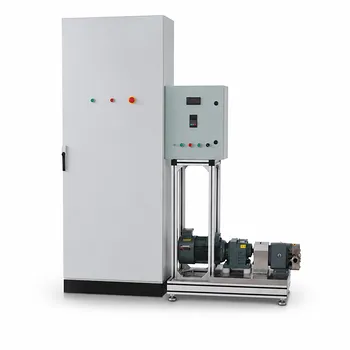
Preventing product loss and coke formation is the core reason rapid quenching and low hydrocarbon partial pressure are essential in steam cracking training equipment. In pilot-scale units, these two requirements faithfully replicate the sub-second control demanded by industrial furnaces. Without them, unstable cracked gas would immediately undergo secondary condensation and cycloaddition reactions, annihilating the very olefins you seek to isolate and fouling the equipment with carbon deposits. The training unit is therefore engineered to make these phenomena tangible, so students can directly manipulate quench intensity and steam dilution and observe the immediate impact on yield and operability.
The central engineering challenge in steam cracking is stopping the reaction at precisely the right moment. Without immediate thermal arrest and dilution to lower hydrocarbon partial pressure, valuable ethylene and propylene are consumed by degradation pathways, and coke accumulation becomes unmanageable. Training units must reproduce these constraints exactly, turning abstract kinetic principles into hands-on lessons about process cause and effect.
Why Precise Reaction Control Defines Steam Cracking
The Race Against Secondary Reactions
Hot cracked gas exiting the furnace at over 1070 K (800 °C) is a reactive mixture teeming with radical species. If allowed to persist for more than a fraction of a second, these radicals recombine through condensation and cycloaddition pathways. The result: heavy aromatic liquids and solid coke, which drastically reduce the yield of light alkenes and physically choke the reactor. In industrial practice, a residence time well under one second is non-negotiable. Training units must replicate this extreme kinetic sensitivity so students learn that yield preservation hinges on arresting the cascade before it begins.
How Rapid Quenching Locks in Product Quality
The primary mechanism to halt those reactions is an integrated transfer-line exchanger (TLE) or direct quench injection. The TLE cools the gas almost instantaneously—from extreme radiant‑zone temperatures down to 200–300 °C—without introducing excessive pressure drop or adding significant residence time. A well‑designed TLE does more than just freeze the chemistry; it also recovers high‑grade energy, generating high‑pressure steam that would drive downstream compressors in a plant. In a pilot unit, students adjust cooling water flow, measure exit temperatures, and correlate those changes with gas‑chromatograph readings of ethylene and propylene purity. They see, in real time, that a delay of even a few tenths of a second degrades the product.
From Bench Scale to Full Process Sequence
After initial quenching, the conditioned mixture moves to pre‑fractionation, water wash, and oil‑water separation steps—just as it would on a commercial site. Training equipment often incorporates miniature quench columns, integrated separators, and wash towers. By manipulating wash water temperature or separator interface levels, students gain practical exposure to the downstream unit operations that depend on a successful thermal arrest. The lesson is holistic: quenching is not a standalone action but the critical initial domino that enables effective separation and heat integration.
The Role of Low Hydrocarbon Partial Pressure
Steam Dilution as a Selectivity Tool
Introducing dilution steam at the furnace inlet lowers the partial pressure of hydrocarbons in the reaction zone. This does two essential things simultaneously. First, it suppresses bimolecular side reactions—the same condensation and cycloaddition events that produce coke and heavy tars simply run into fewer hydrocarbon molecules to collide with. Second, it thermodynamically favors the formation of light olefins, because cracking and dehydrogenation are mole‑increasing reactions. In the pilot plant, a simple change in the steam‑to‑oil ratio lets students observe higher ethylene yields and visually cleaner reactor tubes, reinforcing why this parameter is a frontline defense against fouling and selectivity loss.
Hands‑On Learning of Process Levers
The training unit’s real power comes from the ability to isolate these variables. A student can hold quench conditions constant while ramping steam dilution, then reverse the experiment. The resulting product distribution shifts are immediate and obvious: less coke, lighter liquid products, and a clear improvement in key olefin yields. This cause‑and‑effect transparency is why vocational and university pilot plants insist on having adjustable steam dilution systems and rapid‑response quench exchangers—they convert abstract reaction‑engineering concepts into a lab exercise that mimics industrial operational decision‑making.
Understanding the Trade‑offs in Pilot Plant Design
Inherent Constraints of Compact Systems
Replicating industrial sub‑second quenching in a benchtop unit forces design compromises. Small‑diameter exchangers can increase pressure drop, which slightly shifts reaction equilibria and risks sample bias. Direct water injection quench methods, while simpler, introduce a quench medium that must be thoroughly separated later, complicating the material balance. Teaching these trade‑offs is itself a goal—students learn that scale‑down does not mean perfect scaling, and that they must compensate through careful data interpretation.
Measurement and Control Lag
Rapid thermal gradients create spatial temperature non‑uniformities. If thermocouple placement isn’t extremely close to the reactor exit, the measured temperature can lag the true value by fractions of a second—long enough to misrepresent the quenching effectiveness. Good training units therefore incorporate fast‑response sensors and high‑speed data logging, and instructors use these artifacts to discuss the distinction between the real process and what the instrumentation reports.
Safety Must Always Be Foregrounded
Handling steam‑diluted hydrocarbons at over 800 °C inside a classroom‑scale setup is intrinsically hazardous. The equipment must include pressure relief valves, redundant temperature interlocks, and emergency shutdown sequences that trigger an immediate quench. These safety features are not just administrative; they become a critical part of the training curriculum, reinforcing that operational discipline is inseparable from process performance.
Making the Right Choice for Your Training Goal
The specific configuration of quenching and dilution systems should align with what you need your trainees to master. Use the following guidelines to match equipment to learning outcomes:
- If your primary focus is fundamental reaction engineering: Choose a platform that allows wide, independent variation of the steam dilution ratio and quench temperature, paired with straightforward online analytics. This makes the kinetic effects immediately transparent without distracting complexity.
- If your primary focus is industrial unit operations integration: Opt for a system that includes a full TLE for steam generation, followed by pre‑fractionation, water wash, and three‑phase separation. Here students practice heat integration and sequence control, not just chemistry.
- If your primary focus is process safety and operability: Select a unit with authentic emergency quench buttons, cascade alarm logic, and data historians. Training then centers on alarm management, standard operating procedures, and the correct response to a temperature excursion.
Every successful steam cracking training unit is built on the twin pillars of rapid quenching and low hydrocarbon partial pressure because they encapsulate the core operational tension of the process: maximize olefin yield while outrunning inevitable degradation. With the right equipment choices, you give your students not just formulas but the visceral experience of controlling that delicate balance.
Summary Table:
| Key Requirement | Engineering Mechanism | Primary Benefit | Educational Value |
|---|---|---|---|
| Rapid Quenching | TLE / direct injection cooling (800°C to 200–300°C) | Prevents secondary reactions & coking | Teach thermal arrest & heat recovery |
| Low Partial Pressure | Steam dilution at the furnace inlet | Suppresses bimolecular side reactions; favors olefins | Master yield optimization & selectivity |
Bring Industrial-Scale Realism to Your Chemical Engineering Lab
Ready to bridge the gap between abstract kinetics and practical process control? LABPARK provides state-of-the-art Educational and Vocational Unit Operations Pilot Plants in chemical engineering, bioprocess & biotech, and environmental & water treatment for universities, research institutes, and enterprises.
Our custom-built steam cracking and process training units empower your students and researchers to manipulate steam dilution, manage rapid thermal quench systems, and master process safety firsthand.
Contact LABPARK today to design your pilot plant solution!
Related Products
- Dual Mode Heat Transfer Pilot Plant for Unit Operations Training
- Methane Cracking Educational Unit Operations Pilot Plant
- Three-Tube Heat Transfer Educational Pilot Plant for Unit Operations Training
- Agitation and Mixing Educational Unit Operations Pilot Plant
- Multi-Functional Membrane Separation Educational Pilot Plant for Unit Operations Lab
People Also Ask
- When is ε-NTU preferred over LMTD in pilot plants? Predict heat exchanger performance without iteration.
- Why is the prevention of scale formation on heat exchanger surfaces a critical learning objective? Key Lessons
- How do unit conversions affect pilot plant calibration? Avoid errors in heat transfer data analysis
- How is the thermal resistance of a thick-walled hollow cylinder calculated? Key Equations
- Under what conditions can arithmetic mean replace LMTD in pilot plant calculations?