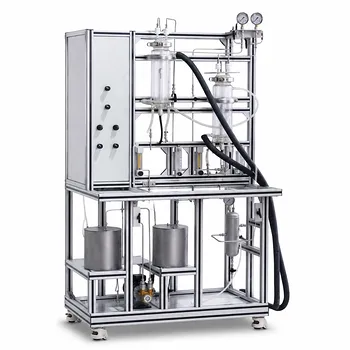
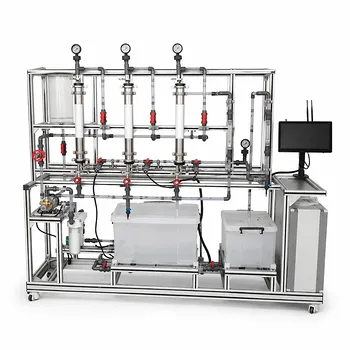
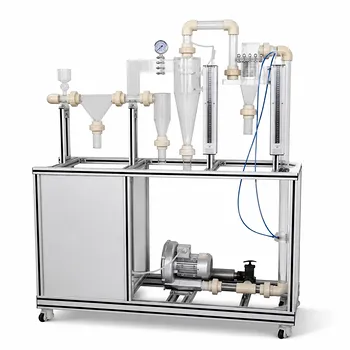
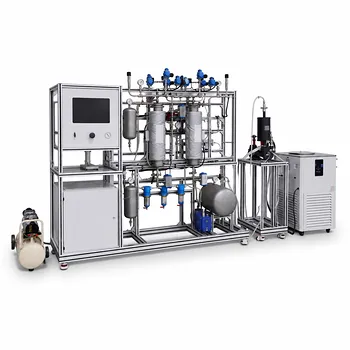
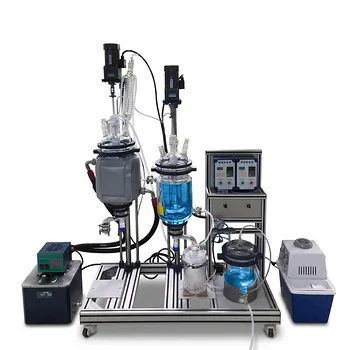
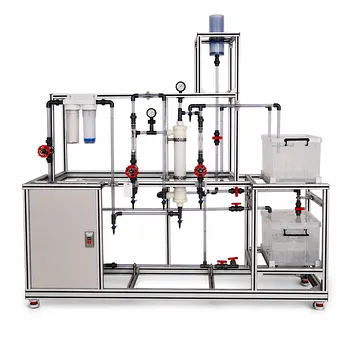
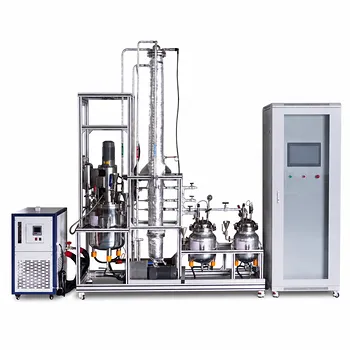
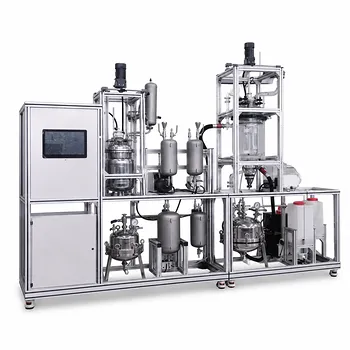
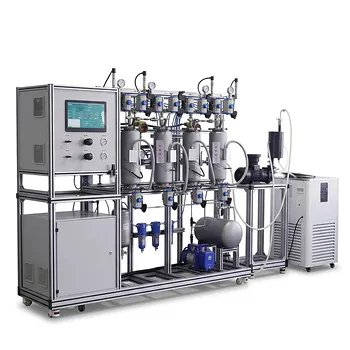
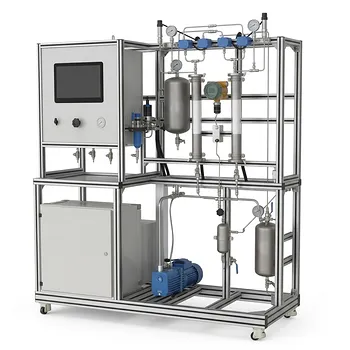
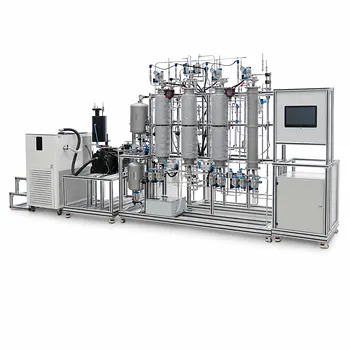
To align training with modern industrial practices, chemical engineering and bioprocess pilot plants must feature membrane separation, supercritical fluid extraction, and molecular distillation. These technologies expose students to the methods now used for high-purity separations, energy-efficient processing, and the handling of heat-sensitive biological products.
While traditional distillation and extraction remain essential, the industrial shift toward gentler, more selective, and automated separations demands that pilot plants go further. Integrating membrane systems, supercritical fluid extraction, and molecular distillation—along with online analytics—bridges the gap between academic fundamentals and the reality of modern manufacturing.
Why Traditional Unit Operations Are No Longer Enough
Classical pilot plants focused on distillation columns and liquid-liquid extraction still teach vital mass transfer and phase equilibrium concepts. But industry has moved on. Companies now prioritize processes that reduce thermal degradation, cut energy costs, and enable continuous, monitorable production. Without hands-on exposure to these advanced methods, graduates enter the workforce with a knowledge gap that pilot-scale training can directly close.
The Hidden Curriculum of Modern Separations
The true value of featuring these technologies isn't just in learning a new equipment diagram. It's in understanding process intensification, material compatibility, and real-time quality control. When a student operates a membrane unit, they aren't just separating components—they're learning how material science (the membrane itself) dictates performance, just as it does in industry.
Membrane Separation: The Scalable Workhorse
Membrane-based processes are now ubiquitous in water treatment, biopharmaceuticals, and solvent recovery. At pilot scale, they teach students how pressure, concentration, and membrane porosity translate into separation efficiency without phase change—a key driver of energy savings.
Pervaporation: A Specialized Membrane Technique
The supplementary references highlight pervaporation as an ideal teaching platform. By configuring a pilot unit with hydrophilic membranes (e.g., PVA) for solvent dehydration or hydrophobic membranes (e.g., silicone rubber) for VOC removal, students directly witness how membrane chemistry dictates application.
Varying parameters like feed temperature and permeate vacuum pressure allows them to calculate mass transfer flux and enrichment factors, then compare energy consumption against traditional distillation. This single unit can demonstrate two completely different industrial problems—biofuel drying and wastewater remediation—making it an exceptionally efficient training tool.
Supercritical Fluid Extraction: Gentle, Green, and Precise
Supercritical CO₂ extraction has become the go-to method for decaffeination, hops extraction, and natural product purification. At pilot scale, it introduces students to tunable solvation power—changing pressure and temperature alters the supercritical fluid’s density and, therefore, its selectivity.
Why This Matters for Bioprocess Education
Heat-sensitive biological materials degrade under the high temperatures of standard distillation. Supercritical fluid extraction operates at moderate temperatures and leaves no toxic solvent residues. Training on this equipment teaches future engineers to design processes that preserve product integrity—a requirement for high-value pharmaceuticals and nutraceuticals.
Molecular Distillation: The Purity Frontier
When products have extremely high boiling points or are thermally fragile, molecular distillation (also called short-path distillation) is the technique of choice. It operates under a high vacuum, reducing the distance between the evaporator and condenser to the molecular mean free path. This minimizes thermal stress and allows separation of components that conventional distillation cannot touch.
Teaching the Principles of Vacuum-Sensitive Processing
A pilot-scale molecular distillation unit lets students explore evaporation rate control, film formation, and condenser design in a way that textbook problems cannot replicate. It is especially relevant for the concentration of omega-3 fatty acids, vitamin purification, and specialty polymers—industries that actively recruit engineers with this specific competency.
The Automation Layer: Online Sensors and Real-Time Analytics
Modern separation isn't just about hardware; it's about data. Integrating online sensors and analytical instruments into these pilot plants reflects the industrial shift toward automated, real-time quality monitoring. Students who learn to optimize a membrane system based on live purity data, rather than just end-of-run samples, develop the analytical mindset expected in cGMP environments.
Understanding the Trade-offs
No single separation technology is a universal solution, and pilot plant design must reflect this. Overemphasizing novelty without teaching the practical limitations can create a false sense of superiority.
- Membrane systems face fouling and require careful pretreatment, which can increase operational complexity and cost.
- Supercritical fluid extraction demands high-pressure equipment, raising capital costs and safety considerations that students must manage.
- Molecular distillation has low throughput and is often reserved for high-value products, not bulk chemicals.
A well-rounded pilot plant curriculum doesn't present these as "better" than distillation. It teaches students to perform a techno-economic analysis and select the right tool for the specific product and production scale.
Making the Right Choice for Your Pilot Plant Design
The specific mix of technologies you install should be guided by the career paths of your students and the industries in your region. After a single introductory sentence, use this guide to prioritize.
- If your primary focus is biopharmaceutical and natural product training: Prioritize molecular distillation and supercritical fluid extraction, as they are directly transferable to the high-value, heat-sensitive separations these industries demand.
- If your primary focus is industrial solvent recovery and green chemistry: Make pervaporation with both hydrophilic and hydrophobic membrane modules a cornerstone, paired with real-time analytics to teach energy benchmarking against distillation.
- If your primary focus is water treatment and food processing: Lead with pressure-driven membrane systems like ultrafiltration and nanofiltration, which have the broadest job-market applicability.
- If your primary focus is bridging the digital skills gap: Ensure every separation unit is equipped with integrated online sensors, capturing the process analytical technology (PAT) framework that now defines modern manufacturing.
The goal is not to replace the traditional column but to surround it with the tools that define the modern plant floor, turning fundamental knowledge into career-ready competence.
Summary Table:
| Technology | Key Applications | Training Benefits & Concepts |
|---|---|---|
| Membrane Separation | Solvent dehydration, VOC removal, water treatment | Mass transfer flux, membrane selectivity, and energy efficiency |
| Supercritical Fluid Extraction | Decaffeination, natural product extraction | Tunable solvation, green chemistry, and processing heat-sensitive materials |
| Molecular Distillation | Vitamin purification, omega-3 concentration | High-vacuum operations, thermal stress reduction, and film formation |
| Online Analytics | Automated quality control, process optimization | Process Analytical Technology (PAT) and cGMP-aligned workflows |
Modernize Your Training Facility with LABPARK
To prepare the next generation of engineers for modern manufacturing, training equipment must reflect actual industrial practices. LABPARK designs and manufactures advanced Educational and Vocational Unit Operations Pilot Plants tailored for universities, research institutes, and enterprises.
Whether you need cutting-edge systems for chemical engineering, bioprocess & biotech, or environmental & water treatment, we deliver customized pilot plants featuring membrane separation, supercritical extraction, molecular distillation, and real-time analytics.
Ready to upgrade your lab's capabilities? Contact LABPARK today to discuss your training requirements and request a custom solution!
Related Products
- Photocatalytic Membrane Separation and Degradation Unit Operations Pilot Plant
- Multifunctional Membrane Separation Educational Pilot Plant with Ultrafiltration, Nanofiltration, Reverse Osmosis
- Gas-Solid Heterogeneous Separation Demonstration Educational Unit Operations Pilot Plant
- Multi-Functional Membrane Separation Educational Pilot Plant for Unit Operations Lab
- Bench Scale Dual Column Gas Separation and Capture Educational Pilot Plant
People Also Ask
- What are the key differences in membrane configurations? Choose the Right Unit Operations Pilot Plant
- How Do Pervaporation, Vapor, and Gas Permeation Differ in Pilot Plants? Key Comparison
- What are the structural & performance trade-offs of flat-sheet, spiral-wound, & hollow-fiber membrane modules?
- How do PEI, PVDF, and PSU membranes compare in pilot plants? Find the best fit.
- Pervaporation vs. Vapor Permeation: Handling Suspended Solids in Membrane Pilot Plants