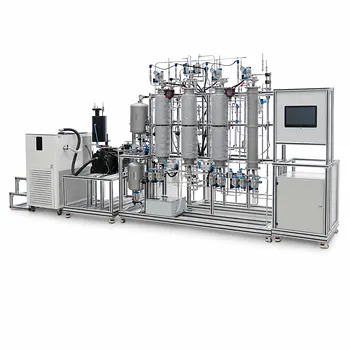
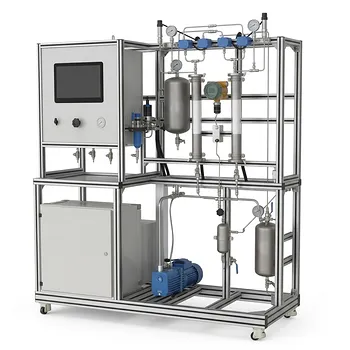
The definitive answer to the most common membrane materials evaluated in gas separation pilot plants for light gases like helium starts with two high-performance polymers: asymmetric polyetherimide (PEI) and polyimide membranes, frequently employed as pure phases or custom blends. These materials dominate academic and research-scale units because their exceptional thermal stability, mechanical robustness, and high intrinsic selectivity for small gas molecules allow students and engineers to reliably study the fundamentals of gas permeation.
While the broader membrane landscape includes everything from ultrathin ceramics to palladium alloys, pilot plants targeting helium separation overwhelmingly rely on polyimide and polyetherimide membranes. Their molecular architecture delivers the most practical equilibrium of selectivity, permeability, and long-term durability required for reproducible hands-on learning and rigorous process development.
Why Polymer Membranes Define Helium Separation Training
Helium’s tiny kinetic diameter and non-polar nature make it exceptionally challenging to separate from other gases. A pilot plant must replicate real-world conditions while remaining safe enough for frequent student use. This is where carefully selected polymers become indispensable.
The Learning Value of a Pilot-Scale Unit
Pilot plants are not just scaled-down factories—they are teaching instruments. They expose operators to concentration polarization, feed pressure effects, and stage-cut dynamics in a controlled environment. Using a mechanically stable, predictable membrane ensures that the observed changes in purity and flux are driven by operational variables, not random material degradation.
Why Helium Demands a Precision Polymer
Helium separates effectively only when the membrane’s free volume elements and chain mobility discriminate between molecular sizes. Glassy polymers like polyimides and PEI provide this discrimination. Their rigid backbones create a tight, size-sieving network that lets helium pass while significantly hindering larger molecules like nitrogen or methane. This intrinsic selectivity is the basis for a meaningful pilot study.
The Staple Materials: Polyetherimide and Polyimide Blends
Asymmetric PEI Membranes: Thermal and Mechanical Integrity
Asymmetric polyetherimide (PEI) membranes are a go-to choice for pilot units handling light gases. Their inherent thermal stability allows operation at elevated temperatures without structural collapse, and their mechanical strength resists the compaction that often plagues softer films. The asymmetric structure—a thin dense selective layer on a porous support—maximizes flux while preserving high helium/nitrogen selectivity, giving operators a clear window into mass transfer limitations.
Matrimid and Other Polyimides: The Benchmark Baseline
Matrimid, a commercial polyimide, has become the de facto standard in countless research labs. With a He/N₂ selectivity often exceeding 100, it provides a repeatable, well-documented performance baseline. This common-reference status means that when a student sees a deviation in helium purity, they can confidently attribute it to a change in operating conditions—not an idiosyncratic membrane batch.
Blending for Custom Performance
Pilot plants frequently evaluate polyimide blends rather than single-component films. Blending allows engineers to fine-tune the separation layer’s fractional free volume and chain packing. A small addition of a highly permeable polyimide to a selective matrix can boost helium throughput without catastrophically reducing selectivity, demonstrating how commercial membrane products are tailored for specific natural gas or refining streams.
How These Materials Compare to the Wider Landscape
Conventional Industrial Polymers
Cellulose acetate and polysulfone remain industry workhorses for CO₂ separation and air dehydration, but they are less common in helium-focused pilot studies. Their selectivity for helium over methane is typically lower than that of polyimides, making them a second-tier choice when high-purity helium is the goal. However, their predictable, well-characterized aging behavior sometimes earns them a spot as a comparative baseline in educational trials.
Ultrahigh-Free-Volume Polymers
Polymers like PTMSP and PMP exhibit gas permeabilities orders of magnitude higher than Matrimid—PTMSP’s oxygen permeability of 9700 Barrer dwarfs Matrimid’s 2.13 Barrer. For helium, this means extraordinary flux, but the promise collapses under real conditions: these materials are notorious for devastating physical aging and susceptibility to solvent swelling. In a pilot plant, their performance can change within days, making them an impractical primary material but an excellent vehicle for studying lifetime phenomena.
Inorganic and Metal Membranes
On a commercial scale, palladium alloys produce ultrapure hydrogen, and dense ceramic membranes can operate at extreme temperatures. However, their cost, brittleness, and complex module sealing make them ill-suited for the frequent disassembly and student handling typical of a teaching or research pilot plant. They remain a niche, not a standard, for helium separation training.
Understanding the Trade-offs in Pilot Evaluations
The Unavoidable Permeability–Selectivity Trade-off
Every membrane material sits on a Robeson-like plot. A polyimide that boosts helium selectivity will invariably reduce overall gas flux. In a pilot unit, this trade-off is not a subtle theory—it manifests as longer run times to achieve target purity versus lower helium recovery rates. Recognizing this tangible balance is a core learning outcome of any well-designed pilot-plant exercise.
Physical Aging and Plasticization
Physical aging causes glassy polymers to slowly lose free volume, depressing permeability over time. Meanwhile, exposure to CO₂ or heavy hydrocarbons can plasticize the structure, temporarily increasing permeability but often at the cost of selectivity. A pilot plant using pure PEI or Matrimid over a semester will visibly demonstrate these effects, teaching operators why industrial modules are often replaced or regenerated on a predictable cycle.
Operational Ceilings
Most polymer membranes, including PEI and polyimides, must stay below 100°C to avoid thermal degradation. Contaminants like water vapor or aromatic hydrocarbons can also accelerate fouling. Pilot evaluations that deliberately introduce wet or contaminated feeds reveal how quickly selectivity decays and prepare students for the real-world gap between laboratory data sheets and field performance.
Making the Right Choice for Your Research or Training Goal
The membrane you select must align perfectly with the objective of your pilot unit. Use these goal-oriented guides to cut through the noise:
- If your primary focus is hands-on education: Start with asymmetric Matrimid or PEI modules. Their rock-solid repeatability allows students to isolate the effects of pressure, temperature, and flow rate without fighting unpredictable material drift.
- If your primary focus is process optimization for high-purity helium: Systematically evaluate polyimide blends. They let you map the selectivity–flux curve and identify the exact formulation that meets your recovery and purity targets under realistic feed conditions.
- If your primary focus is researching durability and long-term stability: Include a baseline polyimide alongside a high-free-volume polymer like PTMSP. The contrast between a stable veteran and a fast-degrading newcomer will yield rich data on physical aging and the practical limits of advanced materials.
By anchoring your pilot-plant studies on the proven, well-characterized performance of polyimide and polyetherimide membranes, you build a foundation of reproducible data that translates directly into reliable industrial helium separation designs.
Summary Table:
| Membrane Material | Key Advantages | Primary Pilot Plant Focus |
|---|---|---|
| Polyetherimide (PEI) | High thermal & mechanical stability, resists compaction | Hands-on education & mass transfer studies |
| Polyimides (Matrimid) | Exceptional He/N₂ selectivity (>100), reliable baseline | Process optimization & student benchmarking |
| Polyimide Blends | Fine-tuned fractional free volume, adjustable flux | Custom performance & separation tuning |
| High-Free-Volume Polymers | Ultrahigh gas permeability, high initial flux | Physical aging, swelling & durability research |
Bring Industrial-Scale Gas Separation to Your Lab
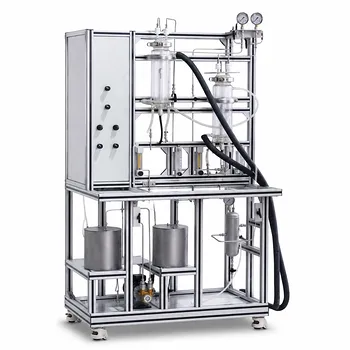
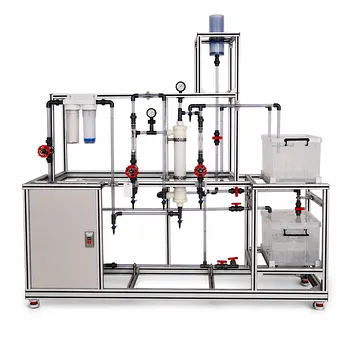
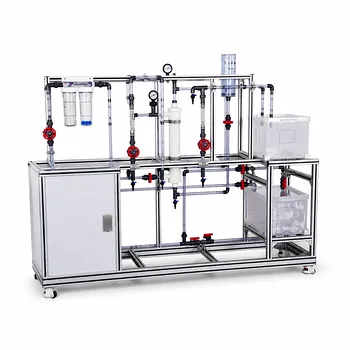
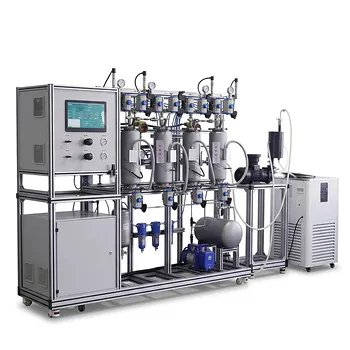
Looking to equip your academic or research facility with state-of-the-art separation technology? LABPARK provides high-quality Educational and Vocational Unit Operations Pilot Plants in chemical engineering, bioprocess & biotech, and environmental & water treatment. Engineered specifically for universities, research institutes, and enterprises, our pilot units help students and researchers bridge the gap between theoretical transport phenomena and practical industrial operations.
Contact LABPARK today to find the perfect pilot plant solution for your educational or research goals!
Related Products
- Multifunctional Membrane Separation Educational Pilot Plant with Ultrafiltration, Nanofiltration, Reverse Osmosis
- Photocatalytic Membrane Separation and Degradation Unit Operations Pilot Plant
- Multi-Functional Membrane Separation Educational Pilot Plant for Unit Operations Lab
- Ultrafiltration Membrane Separation Educational Pilot Plant
- Hollow Fiber Ultrafiltration Membrane Separation Educational Pilot Plant
People Also Ask
- How do PEI, PVDF, and PSU membranes compare in pilot plants? Find the best fit.
- Pervaporation vs. Vapor Permeation: Handling Suspended Solids in Membrane Pilot Plants
- What are the trade-offs of polymer vs inorganic membranes in teaching pilot plants? Key laboratory comparison.
- How can operators optimize operating conditions and cleaning protocols in membrane separation pilot plants to mitigate fouling?
- What are the advantages of membrane separation in pilot plants? Efficient Organic Vapor Recovery