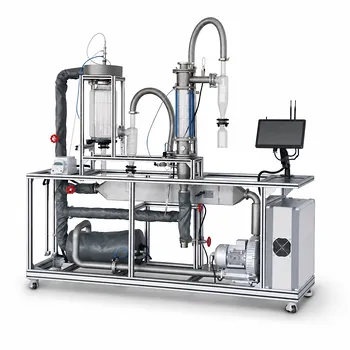
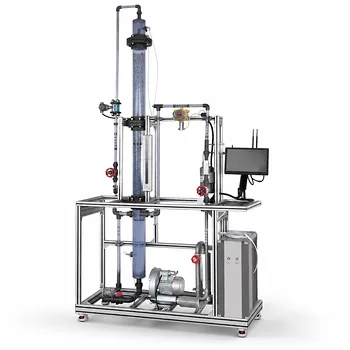
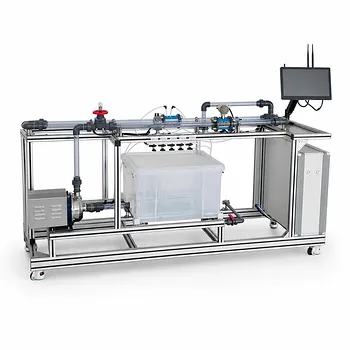
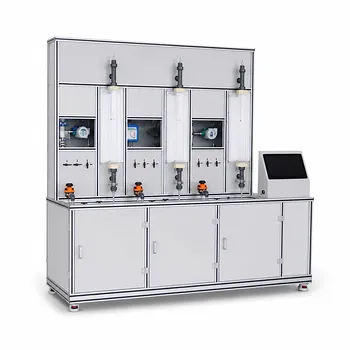
Straight-type and expanded-type fluidized bed roaster reactors differ fundamentally in their freeboard geometry: a straight reactor maintains a constant cross-section throughout, while an expanded reactor increases diameter above the bed, reducing gas velocity to allow fine particles to fall back. This single design choice dictates gas velocity profiles, particle size tolerance, dust carryover, and operational flexibility—making geometry the first decision point when specifying a pilot plant for roasting studies.
The core distinction between a straight and an expanded fluidized bed roaster is whether the freeboard actively disengages entrained fines. Straight reactors keep velocity constant, favoring simplicity and compactness but demanding tight particle size control. Expanded reactors sacrifice some compactness to gain adaptability across varying feeds—the defining requirement for a teaching or multi-feed pilot plant.
The Role of Reactor Geometry in Fluidized Roasting
Fluidized bed roasters suspend solid feed in an upward gas stream, creating vigorous mixing and uniform temperature. The vessel’s shape above the boiling bed—the freeboard—determines what happens to particles that get carried up.
Why the Freeboard Matters
In any fluidized system, smaller particles can be swept out of the bed by the rising gas. The freeboard region either conveys them out (as dust) or gives them a chance to fall back. The straight versus expanded choice is really about which of those behaviors you want the reactor to encourage.
Primary Reference Foundation: Two Defined Geometries
Straight-type reactors extend the same diameter from the gas distributor all the way to the gas outlet. Expanded-type reactors widen at the top, creating a larger cross-sectional area above the bubbling zone. The primary reference maps these physical differences directly to pilot-scale priorities: compactness and throughput versus dust control and feed flexibility.
Structural Differences: Straight-Type vs. Expanded-Type
The Straight-Type Reactor
A straight reactor is a simple cylinder. The cross-sectional area is identical in the fluidized bed and the freeboard above it. Because gas flow rate is constant, the superficial gas velocity stays the same from the distributor to the exit.
This uniformity makes the reactor geometrically compact. There are no diameter transitions to fabricate, so the vessel has high volumetric utilization—almost every cubic meter is active boiling bed. That efficiency appeals when space or capital cost is constrained.
The Expanded-Type Reactor
An expanded reactor adds a conical or stepped expansion above the bubbling zone. The upper freeboard has a significantly larger diameter than the lower bed section.
The key effect is a velocity drop. As gas rises into the wider zone, its superficial velocity falls. Particles that could not settle at bed velocity can now fall back, creating a built-in disengaging zone without adding external cyclones. The primary reference explicitly states this prevents excessive dust carryover and provides better adaptability to varying particle sizes.
Application Criteria: When Each Design Fits
Straight Reactors Excel with Controlled, Fine Feeds
Straight reactors are best suited to fine feed particles, typically under 1 mm, with the primary reference noting that material above 1 mm should not exceed 30–40% of the total. Under these conditions, the uniform velocity can fluidize the bulk without excessive segregation, while the compact design maximizes throughput per unit volume.
They fit pilot operations where the feed stock is well-characterized, consistent, and sieved to a narrow size distribution. Their narrower operating flexibility means you commit to a defined particle size envelope; stray outside it and you risk defluidization or massive dust carryover.
Expanded Reactors Handle Variability and Dust
Expanded reactors are the clear choice whenever feed particle size varies, or when fines generation is a given. The velocity reduction in the freeboard acts as a self-correcting mechanism: even if a transient generates more fines, those particles are more likely to stay in the bed circulation rather than exit the vessel.
The primary reference specifically calls out expanded reactors as ideal for pilot plants designed to teach flexible process control under varying feed stocks. That teaching or research mission implies frequent feedstock changes, inexperienced operators, and deliberate experimentation—all conditions that amplify the value of a forgiving, dust-suppressing geometry.
Understanding the Trade-offs
Neither design is universally superior; each forces you to prioritize certain goals while accepting limitations.
Operating Flexibility vs. Compactness
Straight reactors trade operational flexibility for a smaller footprint and simpler construction. You get high volume utilization but a brittle process window. Expanded reactors sacrifice a degree of compactness (the widened freeboard adds vessel volume and cost) to gain resilience against feed variation and particle attrition.
Dust Carryover and Downstream Equipment
A straight reactor will entrain more fines. If you choose it, you must be prepared to install cyclones or baghouses downstream for catalyst or product recovery. An expanded reactor reduces the dust load at source, potentially simplifying the gas cleanup train—a meaningful advantage in a pilot plant where equipment access and cleaning between runs matter.
Particle Size Tolerance and Run-to-Run Reproducibility
The primary reference highlights that straight reactors limit >1 mm particles to a minority fraction. If your material naturally generates a wide distribution, pre-screening becomes mandatory. Expanded reactors absorb that variability, which not only simplifies sample preparation but also makes run-to-run comparisons more consistent when feed properties drift.
Scalability Signals for Research
For a research pilot plant, the geometry you choose sends a signal about how you envision scale-up. Straight reactors may mimic a bubbling bed where external recirculation and cyclones handle fines. Expanded reactors reflect designs where in-vessel disengagement is preferred, common in some mineral roasting and waste thermal treatment configurations. The choice can influence how credibility of scale-up data is perceived.
Making the Right Choice for Your Pilot Plant Goal
Your selection ultimately depends on what you are optimizing for: space and throughput with a tightly controlled feed, or operational forgiveness across multiple feedstocks.
- If your primary focus is maximizing volumetric throughput with a consistent, fine feed: Straight-type reactors deliver compact, high-utilization performance; just be prepared to compensate for higher dust carryover with downstream separation.
- If your primary focus is training operators or running variable feedstocks: Expanded-type reactors prevent excessive dust loss and accommodate shifting particle sizes, making the pilot plant inherently safer and more predictable for educational or exploratory work.
- If your primary focus is studying dust generation and gas-cleaning integration: A straight reactor paired with cyclones creates a complete system that lets you study entrainment effects; the expanded reactor offloads some of that work to vessel geometry, which may mask the behavior you want to observe.
- If your primary focus is simple, low-cost construction and quick turnaround: A straight reactor minimizes fabrication complexity and vessel height, but it comes at the cost of operating within a narrower process window.
The choice between a straight and expanded fluidized bed roaster pilot plant is not about finding a universal winner. It is about matching the reactor’s inherent disengagement behavior to your experimental mission—and accepting the trade-offs that come with that alignment.
Summary Table:
| Feature | Straight-Type Reactor | Expanded-Type Reactor |
|---|---|---|
| Freeboard Geometry | Constant diameter from bottom to top | Widened/expanded upper section |
| Gas Velocity | Uniform velocity throughout | Velocity drops in the freeboard |
| Dust Carryover | High; requires downstream cyclones | Low; fines disengage and fall back |
| Feed Particle Size | Narrow distribution (typically < 1 mm) | Flexible; tolerates varying sizes & fines |
| Best Suited For | High throughput, consistent feed | Educational labs, variable R&D feeds |
Maximize Your Lab's Potential with LABPARK
Are you looking to equip your chemical engineering laboratory or scale up your thermal processes? LABPARK provides state-of-the-art Educational and Vocational Unit Operations Pilot Plants in chemical engineering, bioprocess & biotech, and environmental & water treatment.
We help universities, research institutes, and enterprises select, customize, and operate the ideal pilot plant configurations—including fluidized bed roasters tailored to your specific feedstocks and learning objectives.
Ready to enhance your research capabilities and training efficiency? Contact LABPARK today to consult with our engineering experts!
Related Products
- Fluidized Bed Gas Solid Catalytic Reaction Educational Pilot Plant
- Multi-Reactor Educational Pilot Plant for Reaction Engineering Unit Operations
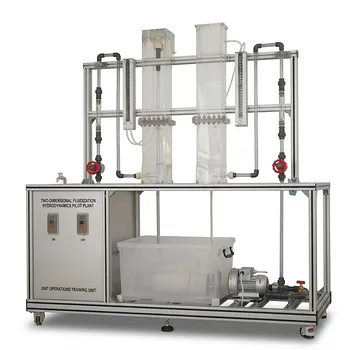
- Two-Dimensional Fluidization Hydrodynamics Educational Pilot Plant for Unit Operations Training
- Multi-Functional Drying Educational Unit Operations Pilot Plant
- Multi Functional Catalytic Reaction and Reactor Evaluation Educational Unit Operations Pilot Plant
People Also Ask
- Why is the bed height-to-diameter ratio (L/dt) critical? Fluidized bed pilot plant selection guide.
- How is the minimum fluidization velocity (U_mf) determined and utilized? A Unit Operations Guide
- How does the Mears criterion evaluate transport resistance? Key Guide to Intrinsic Kinetics
- How do reactor pilot plants safely study gas-solid reactions? Master kinetics with thermal & flow control.
- How do pilot plants demonstrate fluidized-bed reactor advantages over fixed-bed? Find Out Now