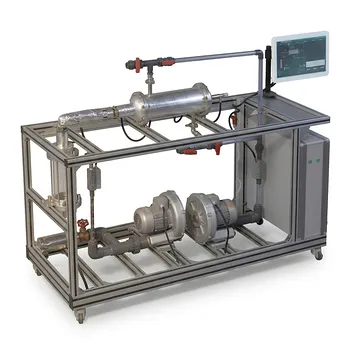
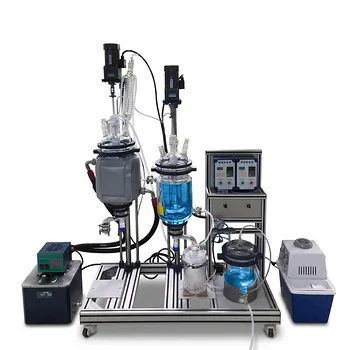
The sudden, catastrophic failure of a low-temperature vessel is almost always a result of selecting a metal with a body-centered cubic (BCC) crystal structure. For any pilot plant vessel operating in cryogenic or sub-10°C conditions, you must avoid BCC metals like standard carbon steel. Their inherent atomic arrangement makes them dangerously brittle at low temperatures, risking a fracture without any prior plastic deformation. The safe path is to select alloys with a face-centered cubic (FCC) or hexagonal close-packed (hex) lattice, such as austenitic stainless steels and certain aluminum grades, which retain their ductility and toughness down to extremely low temperatures.
Material selection for low-temperature pilot plant vessels is a binary choice at the atomic level: avoid BCC metals entirely. The physics is non-negotiable—below their ductile-to-brittle transition temperature, BCC structures shatter. The only engineering certainty lies in FCC (austenitic stainless steel) or hexagonal (aluminum alloy) crystal structures, which remain inherently tough and predictable.
The Crystal Structure Danger Zone: Why BCC Metals Fail
The hazard is not a gradual weakening but a fundamental change in how the metal's atoms respond to stress. This transition from ductile to brittle behavior is dictated by the crystal lattice alone.
The Ductile-to-Brittle Transition Explained
In a BCC lattice, atoms are arranged in a cube with one atom at the center. At higher temperatures, dislocations can move easily, allowing the metal to stretch and deform (ductile behavior). As temperature drops, the thermal energy that enables this atomic movement vanishes.
The metal’s ability to absorb energy through plastic deformation collapses. Instead, stress accumulates at the tips of microscopic flaws until a cleavage fracture rips through the grain structure with minimal energy absorption. The failure is sudden, explosive, and occurs with little to no warning sign.
BCC Metals in Practice: The Carbon Steel Trap
Standard carbon steels are classic BCC alloys. Their historic use in general fabrication makes them a common but deadly assumption for cold pilot plants. At ambient temperature, a steel pipe might bend if overloaded; at -10°C, the same pipe could shatter like glass when struck.
This vulnerability is independent of wall thickness or pressure rating if the wrong metal is chosen. For any component storing or handling liquefied gases, chilled reagents, or cryogenic fluids, the BCC structure of carbon steel makes it an intolerable safety risk.
Safe Harbors: FCC and Hexagonal Structures
The solution lies in crystal structures where dislocation motion remains relatively easy even as thermal energy drops. These metals maintain their fracture toughness, preventing brittle failure.
Austenitic Stainless Steel (FCC): The Workhorse
Austenitic stainless steels, such as the 18Cr-8Ni (304/304L) and 316/316L grades, possess an FCC lattice at all service temperatures. The high nickel content stabilizes the austenite phase, ensuring the metal stays on the safe, ductile side of the transition, even down to -196°C (liquid nitrogen) and below.
This grades provide a combination of corrosion resistance, weldability, and proven low-temperature toughness, making them the material of first choice for pilot plant cryogenic vessels, pipework, and heat exchangers.
Aluminum Alloys (Hexagonal): Lightweight Toughness
Many high-grade aluminum alloys, which have a hexagonal close-packed structure, also exhibit excellent low-temperature properties. Unlike BCC metals, their fracture toughness often improves as the temperature decreases.
Aluminum is a strategic choice where weight matters, or for specific cryogenic heat transfer applications. However, alloy selection must be deliberate—not all aluminum grades perform equally, and some wrought alloys can suffer from stress-corrosion cracking in other environments. For pressure vessels, grades like 5083 and 6061 are frequently validated for cryogenic service.
Understanding the Trade-offs
A purely material-science answer is incomplete without acknowledging the practical compromises an engineer must manage.
The Cost of Safety
Austenitic stainless steel and high-quality aluminum alloys cost significantly more than carbon steel in raw material, welding consumables, and fabrication labor. The surface need might seem to be “pick FCC/hex,” but the deep need is to justify this cost to project sponsors. The catastrophic failure of even one small vessel—and the resulting safety incident, data loss, or equipment destruction—dwarfs the premium paid for the correct material.
The Pitfall of Impure or Unverified Material
A crystal structure on a data sheet is not enough. Real-world failures often occur when a material’s low-temperature toughness is assumed but not verified. Welding, heat treatment history, and impurities can create local brittle zones even in an FCC alloy. For pilot plant safety, impact testing (such as Charpy V-notch tests at the minimum design temperature) is not optional—it is the only defensible proof.
Making the Right Choice for Your Pilot Plant
Your selection must align the material’s crystal structure with the plant’s specific operational realities and risk tolerance. A one-size-fits-all answer does not exist, but these guidelines cover the vast majority of pilot-scale low-temperature operations.
- If your primary focus is general cryogenic fluid handling down to -196°C: Select an austenitic stainless steel (304L or 316L) with an FCC lattice. It provides the most widely trusted combination of toughness, fabricability, and availability.
- If your primary focus is lightweight portable dewars or heat exchangers: Consider high-grade aluminum alloys (like 5083). Their hexagonal structure ensures toughness, but you must strictly verify the alloy and filler metal through impact testing.
- If your primary focus is chilled water or brine systems just below ambient (0°C to -10°C): You might be tempted by cost to consider carbon steel; don’t. Even at these “mild” low temperatures, a BCC structure can embrittle, especially after welding or with stress concentrations. Specify an FCC stainless steel or at minimum a fully killed, fine-grain, toughness-tested carbon steel only after a rigorous fracture mechanics evaluation—but the safer, more predictable path remains the FCC alloy.
The atomic architecture of a metal governs whether it bends or breaks when your pilot plant gets cold. Steering every material choice away from BCC structures eliminates a catastrophic failure mode before it has a chance to exist.
Summary Table:
| Crystal Structure | Low-Temp Behavior | Safety Status | Common Materials |
|---|---|---|---|
| BCC (Body-Centered Cubic) | Ductile-to-brittle transition; shatters under stress | Avoid | Carbon steel |
| FCC (Face-Centered Cubic) | Retains ductility and toughness down to cryogenic temps | Safe | Austenitic stainless steel (304L, 316L) |
| Hexagonal (Close-Packed) | Maintains or improves toughness at low temperatures | Safe | High-grade aluminum alloys (5083, 6061) |
Build Safe and Reliable Pilot Plants with LABPARK
Designing cryogenic or low-temperature systems requires strict material standards to prevent catastrophic failures. LABPARK delivers high-performance Educational and Vocational Unit Operations Pilot Plants in chemical engineering, bioprocess & biotech, and environmental & water treatment tailored for universities, research institutes, and enterprises.
Let our engineering experts help you select the right materials and configurations for your research needs. Contact LABPARK today to request a quote or discuss your project specifications!
Related Products
- Multi-Functional Special Distillation Educational Pilot Plant
- Supercritical High-Gravity Flash Evaporation Educational Unit Operations Pilot Plant
- Rising and Falling Film Evaporation Educational Unit Operations Pilot Plant
- 100L Continuous Loop Hydrogenation Educational Unit Operations Pilot Plant
- Electrolyte Distillation Purification and Formulation Educational Pilot Plant
People Also Ask
- Why does simple distillation yield higher efficiency than flash distillation? Key thermodynamic differences.
- How does double temperature difference control improve distillation pilot plants? Stabilize purity.
- How to Integrate Spectroscopy in Distillation Pilot Plants for Advanced Process Control
- How to Verify Distillation Boundary Lines & Composition Regions with Pilot Plants
- Why is the acentric factor important in pilot plants? Fluid property prediction.