The right choice isn't just about the price tag.
When storing corrosive fluids in a chemical engineering pilot plant, you are really trading off upfront capital against long‑term reliability and maintenance effort. Stainless steel delivers outstanding corrosion resistance and strength—but at a premium. Fiberglass‑reinforced plastic (FRP) carves out a moderate initial cost with good chemical tolerance, while lined carbon steel gives you a low sticker price but demands vigilant, ongoing inspection of its internal protective barrier.
In pilot‑plant corrosive storage, the fundamental fork is between low initial spend and sustained, hands‑off durability. Lined carbon steel appears cheapest but can quietly drain budgets through inspection and repair; FRP often hits the sweet spot for broad acid service; and a properly matched stainless‑steel alloy buys decades of near‑maintenance‑free life, provided the chemistry is truly compatible.
The Initial Cost Equation
Baseline Cost Hierarchy
Equipment purchase cost comparisons start from carbon steel, the most economical structural metal.
In factor‑estimation methods, carbon steel receives a material factor ( f_m = 1.0 ).
Common stainless steel grades like 304 carry an ( f_m ) of 1.3—roughly 30% higher purchase price.
FRP generally lands in a moderate cost band, often between lined carbon steel and solid stainless, though custom lay‑up and resin selection can narrow or widen that gap.
Lined carbon steel begins with the low base cost of carbon steel and adds the expense of the internal corrosion‑resistant lining (glass, PTFE, or elastomer). The total still usually undercuts a corrosion‑resistant alloy vessel.
Installation Cost Considerations
Stainless steel’s higher material cost can artificially inflate total‑installed estimates if traditional installation factors are applied blindly.
Factor‑estimation best practices require adjusting installation factors downward (dividing by ( f_m )), so that instrumentation, piping, and civil works aren’t overpriced just because the vessel body is an alloy.
FRP’s light weight can lower structural support and freight costs, but installation may involve specialized joint preparation and more generous support spacing to prevent flexing.
Lined carbon steel installation mirrors standard carbon steel practice, yet the lining application or post‑fabrication inspection adds a step that can extend the schedule.
Performance and Durability Face‑Off
Corrosion Resistance & Chemical Compatibility
Stainless steel relies on a passive chromium‑oxide film that handles many acids and bases gracefully.
However, chlorides, reducing acids, or hot caustic streams can cause pitting or stress‑corrosion cracking—compatibility testing is non‑negotiable.
FRP achieves its resistance through the resin matrix, which can be tailored to specific chemistries.
It excels against many acids, but strong oxidizers and temperatures above ~200 °F degrade its mechanical properties.
Lined carbon steel turns the corrosion problem over to the lining.
Select a chemically immune lining—PTFE, PVDF, or glass‑flake—and you effectively decouple the fluid from the structural steel, so long as the barrier remains continuous.
Mechanical Strength and Operating Limits
Stainless steel provides high tensile strength, excellent pressure retention, and full resistance to UV, making it robust in both indoor and outdoor pilot bays.
FRP is strong in the hoop direction but bends more easily under point loads; it often needs additional supports and can degrade under prolonged sunlight if not protected.
Carbon steel with a lining marries the structural integrity of thick steel with the chemical barrier—but a single pinhole in the lining can expose the steel to rapid attack.
Maintenance and Lifecycle Implications
Stainless steel generally demands minimal routine maintenance, though initial passivation may be recommended.
FRP calls for periodic checks for crazing, blistering, or UV surface damage—and reliable repairs typically require specialist expertise.
Lined carbon steel imposes the heaviest maintenance burden: scheduled spark tests, visual inspections, and potential relining are the price of that low upfront cost.
Understanding the Trade‑offs
The Hidden Costs of “Cheap” Upfront
Choosing lined carbon may look attractive on a capital budget, but the cumulative expense of shutdowns, inspection labor, and reapplication of the lining can eclipse the incremental cost of a solid‑alloy vessel over the pilot plant’s operational life.
A single undetected lining breach can contaminate an entire experimental campaign, far outweighing any savings.
When FRP’s Light Weight Becomes a Liability
FRP’s low mass lowers freight and foundation requirements, but it makes the tank more vulnerable to accidental impact during reconfigurations or tool drops.
Improper handling can create micro‑cracks that later propagate under stress or thermal cycling.
Stainless Steel’s Achilles’ Heel
Not all stainless grades are created equal.
Using 304 stainless in a chloride‑rich or hot‑acid stream can rapidly destroy the passive layer, turning a premium investment into an early failure—alloy selection must align perfectly with the fluid’s exact composition and impurities.
Making the Right Choice for Your Pilot Plant
The optimal material flows from your specific fluid chemistry, temperature envelope, and lifecycle expectations. Use the following guide to narrow the field:
- If your primary focus is minimizing upfront capital expenditure: Lined carbon steel with a proven, chemically compatible lining typically delivers the lowest initial equipment and installation cost. Mandate a rigorous, scheduled inspection regimen to catch lining defects before they become failures.
- If your primary focus is low‑maintenance, long‑term reliability: Select a stainless steel alloy whose corrosion resistance is documented for your exact fluid—trace impurities included. Use corrected installation factors in your budget to avoid inflated total‑cost projections.
- If your primary focus is balancing cost with performance for a wide range of corrosives: FRP often provides the best middle ground, especially for ambient‑temperature acids. Invest in a robust support structure and a UV‑protective topcoat to extend service life.
By mapping your chemical aggressiveness, thermal limits, and tolerance for downtime to these distinct material profiles, you can lock in a storage solution that fits both your pilot‑plant budget and your research ambitions.
Summary Table:
| Material | Initial Cost | Corrosion Resistance | Maintenance Level | Best Suited For |
|---|---|---|---|---|
| Stainless Steel | High | High (susceptible to chlorides) | Very Low | Long-term reliability & high pressure |
| FRP | Moderate | High (acids, low temperatures) | Moderate | Ambient acid services & weight-sensitive setups |
| Lined Carbon Steel | Low | Dependent on lining integrity | High (regular inspections) | Lower upfront budgets with defined chemical limits |
Build a Safer, More Efficient Pilot Plant with LABPARK
Selecting the right materials for corrosive storage is critical to pilot plant safety and research accuracy. LABPARK provides specialized Educational and Vocational Unit Operations Pilot Plants in chemical engineering, bioprocess & biotech, and environmental & water treatment.
We help universities, research institutes, and enterprises worldwide design robust systems that perfectly balance upfront costs with long-term operational durability.
Ready to optimize your pilot plant design? Contact LABPARK today to consult with our engineering experts!
Related Products
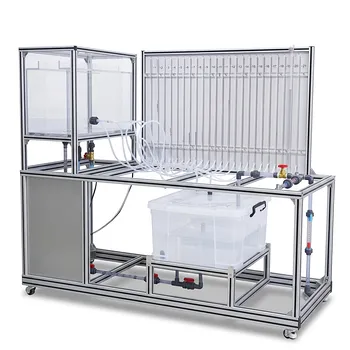
- Bernoulli Equation Demonstration Unit Operations Pilot Plant
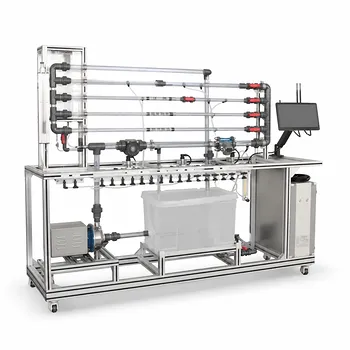
- Fluid Friction Resistance Determination Educational Unit Operations Pilot Plant
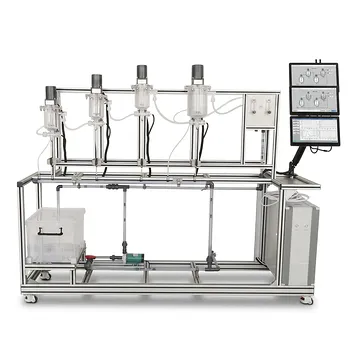
- Multi-Stage Stirred Tanks in Series Residence Time Distribution and Mixing Performance Determination Educational Pilot Plant
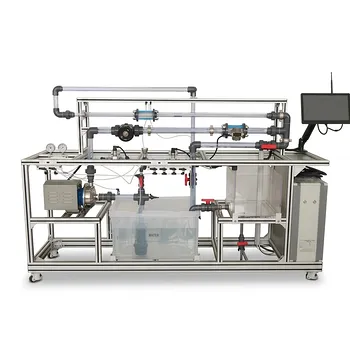
- Centrifugal Pump Performance and Orifice Flowmeter Calibration Educational Pilot Plant
- Water Electrolysis Hydrogen Production and Storage Educational Pilot Plant
People Also Ask
- How does nozzle geometry affect energy efficiency and jet performance in fluid mechanics laboratory demonstration units?
- How is the Bernoulli equation applied in fluid mechanics training plants? Visualize energy conservation rules.
- How to demonstrate rapid vs slow valve closure? Clear water hammer transient experiments for engineering labs.
- How does friction factor differ in laminar vs turbulent flow? Lab Experiment Guide
- How do pilot plants teach U-tube manometers? Master Differential Pressure Calculations