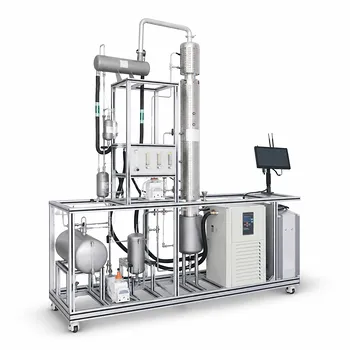
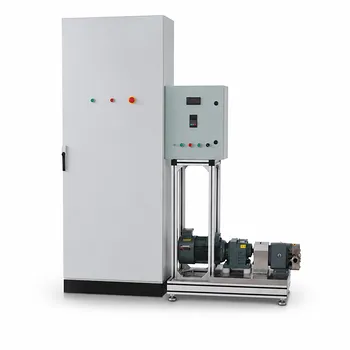
Chemical compatibility and operational safety in educational pilot plants hinge on a systematic evaluation of all wetted materials against every chemical, solvent, and byproduct that will ever touch them. This goes far beyond simple corrosion tables—it means correlating material choice with the full pressure-temperature envelope, accounting for transparent sections that must remain safe, and understanding that a single incompatible seal or gasket can poison a reaction or cause a catastrophic leak. When you bring industrial-scale unit operations into a teaching laboratory, the material selection process must simultaneously protect students, preserve experimental integrity, and demonstrate the real-world design decisions that engineers make every day.
The core takeaway: Selecting materials for a chemical engineering pilot plant is a multi-layered safety decision. You must match the construction materials to the process chemistry, but also integrate pressure relief, thermal limits, and hidden risks like metal ion leaching or polymer degradation—all while preserving the educational need for visibility and hands-on operation.
The Invisible Threat: Why Material Compatibility Is Never Just About Corrosion
Chemical Compatibility Involves the Entire Process Stream
A pilot plant doesn’t just see a single pure reagent. It encounters mixtures, side products, heat-transfer fluids in jackets, cleaning solvents, and sometimes accidental spills. Every one of these can attack materials differently. For example, a stainless steel tank that handles hydrochloric acid beautifully at low concentration might suffer pitting corrosion when the acid concentration shifts or when chlorides concentrate under a gasket.
Even trace contaminants matter. When handling hydroxylamine—a compound sensitive to metal ions—a standard stainless steel dip tube can cause dangerous decomposition or ruin the product. The right choice is an inert material like PTFE (Teflon) for all wetted parts that contact that stream, illustrating that chemical compatibility isn’t just about the bulk structural metal.
The Three Classes of Material Interaction You Must Audit
- Corrosion and wall loss: Acids, bases, and aggressive solvents can thin pipe walls over time, especially in hot, turbulent zones like pump impellers or heat exchanger tubes.
- Product degradation: Even if the metal isn’t visibly corroding, dissolved metal ions can act as catalysts that break down sensitive reagents, producing off-spec results or dangerous runaway heat.
- Component swelling and embrittlement: Polymeric seals, gaskets, and transparent sight glasses can swell in organic solvents or become brittle in oxidizing acids, leading to sudden leaks under pressure.
Training students to audit these interactions—using compatibility charts but also real-world testing—builds the muscle of industrial hazard assessment.
Mechanical and Thermal Integrity: The Scaffold of Safe Operation
Pressure Ratings Are Non-Negotiable Safety Boundaries
Every vessel, tube, and fitting in a pilot plant comes with a maximum allowable working pressure (MAWP) at a given temperature. Material selection directly drives these limits. Carbon steel may be strong enough for 25 bar at room temperature, but if you need to run a hot, corrosive reaction, stainless steel 316 becomes mandatory to maintain that strength without corrosion.
Equally important is the safety layer built into the system. Even with correctly chosen materials, you must integrate certified pressure relief valves, burst discs, and alarms to protect students. The material of the relief device itself must be compatible—a brass valve on a nitric acid line would fail immediately.
Temperature Extremes Change Everything
A material that is ductile and weldable at ambient conditions can become brittle at cryogenic temperatures or lose strength rapidly above 300°C. When a glass-lined steel reactor is chosen for visual clarity and acid resistance, its temperature shock limits (e.g., maximum 180°C with a specific thermal gradient) become a hard operating boundary. Training students to respect these limits is part of teaching inherent safety.
Visual Learning Without Compromising Safety
Why Glass and Transparent Polymers Must Be Specified Carefully
Pilot plants for education often include glass columns in distillation or absorption units so students can observe flooding, weeping, or packing wetting. Glass offers excellent chemical resistance to most acids and solvents, but it is mechanically brittle and can generate sparks under impact. When handling flammable hydrocarbons like heptane, glass sections must be properly grounded and shielded to prevent static discharge risks.
Transparent polymers like polycarbonate can replace glass in lower-temperature, low-pressure sections, but they may cloud or craze with certain solvents. Every transparent component becomes a safety-critical item: you need to verify its compatibility with the entire process stream and its ability to withstand both the operating pressure and the inevitable accidental knock from a student’s tool.
The Educational Value of Visible Process Internals
Allowing observation of hydrodynamic phenomena dramatically accelerates learning, but never at the cost of primary containment. A well-designed pilot plant pairs transparent sections with a secondary containment shield—often a clear polycarbonate screen—so students can see the phenomenon without ever being in the direct line of a leak. This bundling approach turns the material choice into a layered safety decision.
The Hidden Hazards of Seals, Gaskets, and Linings
Small Components, Disproportionate Risk
Seals and gaskets like Kalrez (FFKM), PTFE, or ethylene propylene diene monomer (EPDM) are the first line of defense against leaks. Yet they are often an afterthought. A pump with Teflon diaphragms may work perfectly with strong acids, but if the static O-ring in a flange is standard nitrile rubber, it will swell on contact with acetone and fail within hours.
Teaching students to look up chemical compatibility for every elastomeric component ingrains an industrial practice that prevents catastrophic leaks. For example, when acids are used, the pilot plant’s standard gasket material should be PTFE or Kalrez; EPDM would be a dangerous choice because it degrades rapidly in oxidizing acids.
Leaching and Cross-Contamination from Coatings
Glass-lined steel and PTFE-lined pipes offer corrosion resistance with mechanical strength, but even these can leach trace compounds if the lining is damaged or if the process fluid migrates behind the liner. In educational settings, this risk teaches a critical lesson about material degradation over time—and why industrial plants implement regular inspection intervals, often using borescopes or spark testing.
Embedding Safety Systems into the Material Selection Logic
The Multi-Layered Safety Concept
Industrial loss prevention principles define a hierarchy of protections that begins with inherently safer material choices. Instead of only relying on alarms and relief valves, you first ask: can the material itself be selected to eliminate a hazard? For instance, choosing Hastelloy C for a highly corrosive, high-temperature reaction removes the risk of stress corrosion cracking that stainless steel might suffer.
Above that, you layer basic process control (temperature and pressure sensors that are also compatible with the process), critical alarms, automatic interlocks that shut down feed pumps if pressure spikes, and finally relief systems. In a teaching plant, these layers become a visible demonstration: a student can trigger a high-pressure interlock and see the system safely stop, learning that material strength alone isn’t enough.
Integration Example: The Reactor Jacket
Consider a jacketed glass-lined reactor. The outer jacket connects to a heat-transfer fluid (water, steam, or thermal oil). The inner vessel material (glass-lined steel) is chosen for acid compatibility and visibility. But the jacket itself (often carbon steel) must be compatible with the heat-transfer fluid and protected from corrosion on the cooling water side. If the jacket corrodes through, the heat-transfer fluid could mix with the batch—a dangerous contamination. Thus, even secondary circuits demand careful material selection, a lesson that echoes directly into industrial plant design.
Understanding the Trade-offs and Common Pitfalls
Cost versus Performance: The Educational Balance
Carbon steel is economical and robust for non-corrosive training fluids, but it will quickly rust in a humid lab environment if not constantly oiled or painted. Stainless steel 304 or 316 costs more but offers far longer service life and better resistance to incidental acid splashes. For an educational lab that cycles through different student groups, the lower maintenance and higher durability of stainless steel often justify the higher upfront cost.
However, universities must resist the temptation to specify exotic alloys (like Hastelloy or tantalum) everywhere just for “future-proofing.” Exotics carry extreme cost and are nearly impossible to repair quickly. A modular approach—using standard stainless steel frames with interchangeable glass or PTFE internals—provides the best balance of versatility and safety.
The Danger of One-Size-Fits-All Material Policies
A common mistake is to assume that because a plant is mostly stainless steel, all wetted parts are compatible with the same range of chemicals. The small-bore tubing, the pressure transmitter diaphragm, the sight-glass gasket—each must be individually qualified. In one real-world example, a standard stainless steel pressure gauge bourdon tube failed rapidly when exposed to HCl vapors because the diaphragm behind it was a thin alloy that lacked molybdenum.
Educational settings can turn this pitfall into a powerful instructional moment: before any experiment, students verify a piping and instrumentation diagram (P&ID) and a materials of construction summary that lists every seal and part number alongside its chemical compatibility.
Visibility versus Mechanical Toughness
Glass offers the ultimate clarity, but it is fragile and can create shrapnel hazards. Toughened borosilicate glass and dual-containment shields mitigate this, but they add cost and complexity. Where visual access isn’t critical, a PTFE-lined steel pipe may be safer and simpler. The right choice depends on the learning objective: if you need to demonstrate two-phase flow, the glass is worth the safety overhead; if the goal is purely a reaction kinetics study, a metal system with a small window may be sufficient.
Making the Right Choice for Your Educational and Research Goals
The best material selection decision starts with a clear definition of what you need the pilot plant to teach and withstand over its entire lifecycle. Translate those goals into specific material criteria:
- If your primary focus is training students with water, air, or non-corrosive fluids: Standard carbon steel or 304 stainless steel is sufficient. Emphasize correct pressure ratings, relief valve sizing, and ergonomic layout to teach core process safety without the cost of corrosion-resistant alloys.
- If your laboratory routinely experiments with acids, bases, or chloride-containing streams: Invest in 316 stainless steel as a minimum for structural parts, and specify PTFE or glass-lined components for all wetted surfaces that contact the aggressive fluid. Double-check every gasket material—Kalrez or PTFE are the safe defaults.
- If you need to demonstrate real industrial materials selection, including exotic alloys and linings: Select a modular plant with interchangeable internals. Use a Hastelloy C reactor for extreme corrosives, but also keep a carbon steel vessel for standard runs. Have students perform compatibility reviews for each new experiment as part of their safety training.
- If visual observation of multiphase phenomena is essential: Incorporate tempered borosilicate glass sections with secondary containment shielding and strict grounding protocols for flammable solvents. Always pair glass with a material safety data sheet (MSDS) review that flags any static risk.
- If you aim to teach the full safety lifecycle: Choose materials that visibly corrode or degrade over a semester so students can inspect them, learn failure modes, and understand why industrial plants schedule shutdown inspections. Document the initial wall thickness and let students measure it periodically.
Ultimately, selecting materials for a chemical engineering pilot plant is an exercise in integrating chemistry, mechanics, and pedagogy. When every material choice—down to the smallest O-ring—is seen as a student safety and learning opportunity, the laboratory becomes a powerful sandbox for developing the engineering judgment that industry demands.
Summary Table:
| Material | Chemical Compatibility | Temp/Pressure Limits | Best Use in Pilot Plants |
|---|---|---|---|
| 316 Stainless Steel | High resistance to solvents/mild acids | High pressure & temperature | Piping, structural frames, reactors |
| PTFE (Teflon) | Inert to almost all chemicals | Low strength; max ~260°C | Gaskets, O-rings, tubing linings |
| Borosilicate Glass | High acid resistance; weak to HF | Low pressure; thermal shock risk | Columns, sight glasses for observation |
| Glass-Lined Steel | Excellent acid & chemical resistance | High strength; strict thermal limits | Reactor vessels requiring high purity |
Design Safe & Reliable Lab Systems with LABPARK
Ensure safety and educational excellence in your laboratories. LABPARK provides state-of-the-art Educational and Vocational Unit Operations Pilot Plants in chemical engineering, bioprocess & biotech, and environmental & water treatment for universities, research institutes, and enterprises. Our systems integrate industrial-grade safety controls and robust materials to protect users while delivering hands-on learning.
Boost your lab's safety and efficiency—contact our specialists today!
Related Products
- Carbon Dioxide Hydrogen Methanol Synthesis Educational Unit Operations Pilot Plant
- Multi Pump Fluid Transport Process Piping Unit Operations Training Pilot Plant
- Multi-Reactor Educational Pilot Plant for Reaction Engineering Unit Operations
- Ethyl Acetate Synthesis Unit Operations Pilot Plant for Practical Training
- Multi-Modal Distillation Unit Operations Training Pilot Plant
People Also Ask
- How do temp & pressure affect methanol synthesis pilot plants? Optimize equilibrium and catalyst performance.
- Why is a purge system necessary when operating a gas recirculation loop in a methanol synthesis pilot plant? (Guide)
- Why do modern methanol pilot plants operate at lower pressures? Catalyst & Feed Requirements Explained
- What are the operational requirements for catalyst activation? Safe Methanol Pilot Plant Operation
- Why is the chemical plant startup schedule crucial? De-risk scale-up with pilot plants.