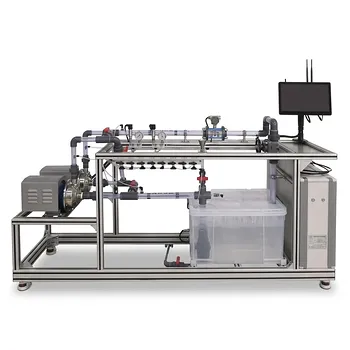
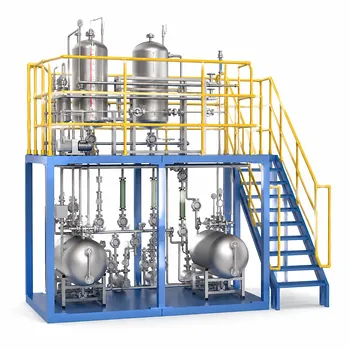
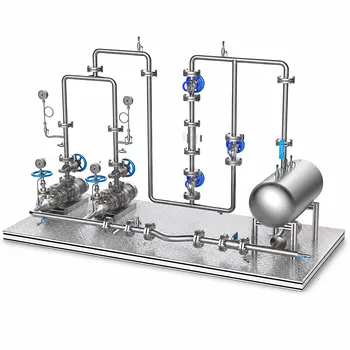
The difference between gland packing and mechanical seals is a lesson in controlled leakage versus near-zero leakage—a fundamental concept students must grasp to understand pump safety, maintenance, and fluid dynamics. In an educational pilot plant, gland packing teaches the basics of friction, wear, and manual adjustment, while a mechanical seal demonstrates precision engineering for hazardous or high-purity fluids.
The core takeaway for selecting a pilot plant: gland packing is ideal for teaching hands-on maintenance, seal leakage principles, and power loss concepts, whereas mechanical seals are essential for demonstrating industrial best practices in safety, environmental control, and handling dangerous chemicals. The right choice depends entirely on the specific learning outcomes you want to emphasize.
Understanding How Each Seal Type Operates
Gland Packing: The Traditional, Forgiving Teacher
Gland packing uses soft, compressible material stuffed around the pump shaft inside a stuffing box. Tightening the gland follower squeezes the packing, creating a seal that reduces—but never completely stops—fluid from escaping.
A controlled leakage rate of a few drops per minute is actually required. That seepage cools and lubricates the shaft, preventing overheating and catastrophic failure. For students, this is a direct, visible demonstration of heat dissipation and the balance between friction and sealing force.
Mechanical Seals: Precision Engineering for a Leak-Tight World
A mechanical seal replaces brute force with finesse. It consists of two ultra-flat faces—one rotating with the shaft, one stationary in the housing—pressed together by a spring mechanism.
A microscopic film of process fluid fills the gap, lubricating the faces and forming a near-leak-free seal. Students learn that this design eliminates the intentional leakage of gland packing, making it suitable for handling dangerous or valuable chemicals, but introduces extreme sensitivity to operating conditions.
Key Differences Students Must Learn
Leakage and Safety Protocols
Gland packing always leaks by design. Students must measure and adjust this leakage—too little leads to packing burnout, too much wastes product and creates slip hazards. This is excellent training for environments where minor leakage is acceptable, like water or non-hazardous slurries.
Mechanical seals change the safety paradigm. They are virtually leak-free, meaning students must recognize that a single drop of fluid can signal imminent seal failure. In a pilot plant handling flammable, toxic, or corrosive fluids, this distinction between “normal” and “critical” leakage is a career-saving lesson.
Maintenance and Troubleshooting Skills
Gland packing demands frequent, hands-on adjustment. Students learn to tighten the gland evenly, spot glazed or hardened packing rings, and repack a stuffing box—foundational skills for maintenance technicians in traditional plants.
Mechanical seals demand a different mindset: no routine adjustment, but high-consequence installation errors. If a seal face is scratched during assembly or the pump runs dry, it fails instantly. Teaching this cultivates a meticulous approach to equipment handling and the importance of following startup procedures to the letter.
Energy Consumption and System Efficiency
A subtle but critical lesson is power draw. The high friction of gland packing causes additional shaft power consumption, which students can quantify by comparing motor amperage or temperature rise.
Mechanical seals operate with much lower friction, consuming less energy for the same flow rate. Calculating this efficiency gain connects the seal choice back to operating costs and sustainability—a valuable systems-thinking skill for future engineers.
Fluid Compatibility and Application Limits
Gland packing is restricted to fluids where a small leak is not a regulatory or safety disaster. It cannot be used with toxic, explosive, or environmentally regulated substances, a clear constraint students must internalize.
Mechanical seals open the door to those challenging fluids. However, they are not universal: slurries with abrasive particles, crystallizing liquids, or fluids that polymerize on contact with air can destroy seal faces. The pilot plant can illustrate how seal materials and flush plans mitigate these risks, teaching the concept of application-specific sealing solutions.
Understanding the Trade-Offs in an Educational Setting
The Simplicity vs. Sensitivity Divide
Gland packing’s greatest strength is its tolerance. Students can make mistakes—over-tightening, running slightly dry—and still salvage the lesson. The packing may smoke or squeal, providing early warnings.
Mechanical seals teach a critical lesson about consequences: a moment of dry running or a misaligned installation can ruin a $500 seal cartridge. This is realistic preparation for high-stakes industrial environments, but the pilot plant must be equipped with flow monitors and low-liquid cutoffs to prevent unintentional damage during training.
The Cost and Prep Time Equation
Gland packing components are cheap, and repacking can be done in minutes by a student. The low cost encourages frequent practice and “destructive testing” to see failure modes.
Mechanical seal replacements are expensive and time-consuming. This forces instructors to balance the value of advanced safety training against the risk of downtime and consumable cost. A pilot plant with both seal types on different pumps offers the best of both worlds, allowing progression from basic to advanced lessons.
What About Sealless Pumps?
Some pilot plants instead use canned motor pumps or magnetic drive pumps, which eliminate the dynamic shaft seal entirely. They demonstrate the ultimate zero-leakage concept but obscure the sealing principles themselves. They are a valuable addition for teaching containment, but they should complement, not replace, the gland packing vs. mechanical seal comparison—students need to understand the “why” before the “how” of sealless technology.
Making the Right Choice for Your Educational Goals
The ideal pilot plant selection depends on which core competencies you want to build in your students.
- If your primary focus is hands-on maintenance and a visceral understanding of friction/leakage: Choose a pump with a gland stuffing box. The visible, adjustable leakage teaches seal failures, cooling, and the importance of regular operator intervention.
- If your primary focus is process safety, handling hazardous chemicals, or preparing students for modern high-integrity plants: Select a pump with a mechanical seal, and equip the pilot plant with the necessary safeguards (dry-run protection, pressure monitoring). Supplement with assembly and troubleshooting sessions using cutaway models to avoid costly damage.
- If your program aims to cover the full spectrum of industrial reality: Invest in a modular pilot plant that includes both seal types, and ideally a sealless pump, allowing a structured progression from basic mechanical concepts to advanced containment strategies.
By matching the seal technology to the lesson plan, you transform a simple pump run into a vivid, lasting lesson in engineering trade-offs.
Summary Table:
| Feature | Gland Packing | Mechanical Seals |
|---|---|---|
| Leakage Principle | Controlled leakage (cools/lubricates shaft) | Near-zero leakage (lubricated fluid film) |
| Maintenance | Frequent, hands-on manual adjustments | Zero routine adjustment, precision installation |
| Energy Efficiency | Higher friction and power consumption | Lower friction, high energy efficiency |
| Best For Teaching | Hands-on maintenance, friction, and wear | Process safety, environmental control, and precision |
Equip Your Lab with Industry-Standard Pilot Plants
Empower your students to master critical process engineering skills with LABPARK. We provide advanced Educational and Vocational Unit Operations Pilot Plants across chemical engineering, bioprocess & biotech, and environmental & water treatment disciplines.
Designed for universities, research institutes, and enterprises, our modular pilot plants offer hands-on training for real-world scenarios—from basic gland packing adjustments to high-precision mechanical seal operations.
Ready to elevate your engineering curriculum? Contact LABPARK today to find the ideal pilot plant solution for your lab!
Related Products
- Multi Pump Fluid Transport Process Piping Unit Operations Training Pilot Plant
- Centrifugal Pump Performance Determination Educational Unit Operations Pilot Plant
- Fluid Transport and Piping Dynamics Practical Training Unit Operations Pilot Plant
- Chemical Pipeline Assembly and Fluid Transport Practical Training Unit Operations Pilot Plant
- Multimodal Absorption and Desorption Pilot Plant for Unit Operations Training
People Also Ask
- Why distinguish Newtonian & non-Newtonian fluids in pilot plants? Prevent design errors.
- How do steady-state and dynamic simulations complement pilot plants? Validate scale-up and controllability
- How can unit operations pilot plants demonstrate simultaneous removal of light and heavy impurities? Configure a modular setup
- How can chemical engineering students use unit operations pilot plants to study kinetics? Master reactor scale-up!
- Why is the chemical plant startup schedule crucial? De-risk scale-up with pilot plants.