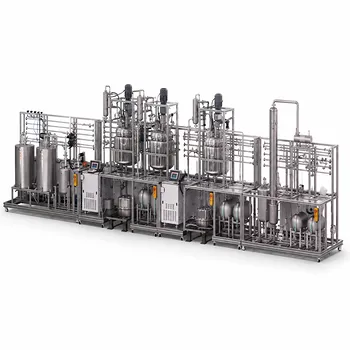
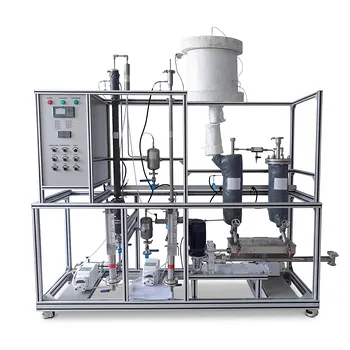
Safety in a unit operations pilot plant is not just about following a checklist—it’s about knowing the true nature of the chemicals you’re working with. Database resources like PubChem and ChemBlink (and the now‑retired Toxnet’s legacy) provide the detailed toxicity, hazard, and environmental fate data that operators need to design safe operating procedures, select personal protective equipment (PPE), and configure waste treatment systems. They turn a generic safety plan into a chemical‑specific defense.
The core insight: Comprehensive chemical data is the bedrock of every pilot‑plant safety layer—from the choice of a gasket material to the setpoint of an emergency interlock. Without this data, even the most engineered safeguards become guesswork, and the gap between “we think it’s safe” and “it is safe” can be dangerously wide.
Unpacking the Databases: More Than Just Data Sheets
PubChem: The Open‑Access Toxicology Powerhouse
PubChem delivers a wealth of bioactivity, toxicity, and physical‑chemical data.
You’ll find solubility, partition coefficients, and hydrogen‑bond properties—numbers that directly inform how a chemical behaves in your pilot plant.
It also now hosts the content of the retired Toxnet, including the Hazardous Substances Data Bank (HSDB), giving you environmental safety, waste disposal guidance, and human health risk assessments in one place.
ChemBlink: The Supplier‑Linked Safety Resource
ChemBlink is a commercial database that links chemical structures to real‑world safety information.
It provides Material Safety Data Sheets (MSDS/SDS), Globally Harmonized System (GHS) hazard labels, UN numbers, and hazard codes.
For pilot‑plant operators, this translates into instant access to proper PPE requirements, storage classification, and transportation numbers—essential for procurement and shipping compliance.
What Happened to Toxnet?
If you’ve been advised to use Toxnet, note that it was decommissioned in 2019.
Its toxicology, environmental fate, and emergency‑response databases have been integrated into PubChem, the NLM’s TOXLINE subset, and the EPA’s CompTox Chemicals Dashboard.
By shifting to these modern resources, you get the same rigorous data in a more actively maintained environment.
From Data to Safe Pilot Plant Design
Building the Multi‑Layered Safety Framework
Industrial loss prevention relies on a layered defense—and every layer starts with chemical data.
Using information from PubChem and ChemBlink, you can inform each of the five safety layers described in modern unit‑operations practice:
- Inherent Safety (Process Design): Choose less‑toxic solvents, design containment for volatility, and select materials that won’t corrode—all based on a chemical’s known properties.
- Basic Process Control Systems: Set operational limits (temperature, pressure, flow) just below the flash point, boiling point, or decomposition temperature found in the database.
- Critical Alarms and Human Intervention: Define alarm thresholds using toxic exposure limits and lower explosive limits (LEL) right from the SDS.
- Automatic Safety Shutdown (Interlocks): Interlock triggers that halt operations when exothermic runaway risks (derived from reactivity data) are detected.
- Pressure Relief Systems: Size relief valves using vapor‑pressure curves and two‑phase flow data from PubChem.
Without database‑derived numbers, these layers are generic; with them, they become a precise, hazard‑specific safety envelope.
Selecting Compatible Materials and Equipment
Material compatibility is the silent guardian of pilot‑plant safety.
A gasket that swells or a tube that embrittles in contact with your solvent can lead to a catastrophic leak.
Data on solubility, hydrogen‑bonding, and octanol‑water partition coefficients (from PubChem) hint at permeation and interaction with elastomers.
ChemBlink’s MSDS often lists incompatible materials directly, allowing you to cross‑check reactor and pipeline material choices before construction.
This aligns with the principle that material selection must balance corrosion resistance, mechanical strength, and cost—and you can’t balance what you haven’t measured.
Configuring Waste Treatment and Emergency Response
Fifteen liters of a novel reaction‑mixture can become a major environmental liability.
PubChem’s ecotoxicity data (still available from the HSDB legacy) tells you the LC50 for aquatic organisms and biodegradability.
Together with the UN-number and hazard class from ChemBlink, you can design a scrubber medium, neutralize waste, and label it for compliant disposal.
When writing the procedures for major releases, you’ll know whether to dike the spill with inert absorbent or to ventilate for toxic vapors—information that comes directly from the vapour‑pressure and inhalation‑toxicity data the databases provide.
Understanding the Trade‑offs and Limitations of Chemical Databases
The Problem of Legacy Sources and Data Gaps
Toxnet’s retirement means that older training materials may send you to a dead link.
Not all substances—especially novel or proprietary compounds—have complete toxicological profiles.
You must treat database information as a starting point, not the final word, and always obtain the latest manufacturer SDS for the exact grade of chemical you are using.
Over‑Reliance on a Single Source
ChemBlink is a commercial database; its data may not be updated as quickly as the underlying regulatory lists.
PubChem aggregates thousands of sources, some of which may have inconsistent quality.
A robust safety review cross‑checks critical endpoints (like carcinogenicity or permissible exposure limits) against official sources such as the EPA’s IRIS, IARC monographs, or the EU’s ECHA database.
Data Does Not Replace Good Engineering Judgement
A database’s LD50 or vapor pressure is a neat number, but your pilot plant runs real mixtures under non‑ideal conditions.
Impurities, synergistic effects, and the scale‑up itself can alter hazard profiles.
Use databases as the input to a formal hazard analysis (HAZOP or what‑if review), not as a substitute for thinking through the specific failure modes of your unit operations.
Making the Right Choice for Your Pilot Plant Safety Plan
The way you leverage these databases depends on what you’re trying to protect first.
- If your primary focus is environmental compliance: Prioritize PubChem’s ecotoxicity and fate data, and ChemBlink’s transport classifications, to ensure your waste streams meet discharge permits and shipping regulations.
- If your primary focus is operator safety and PPE selection: Dive into PubChem’s acute toxicity and GHS hazard codes from ChemBlink to select the correct glove material, respiratory cartridge, and engineering controls before a single chemical enters the plant.
- If your primary focus is designing inherently safer processes: Use database solubility, partition, and reactivity data to substitute hazardous solvents or design containment that withstands the chemical’s aggressiveness, making accidents harder to initiate.
- If your primary focus is training the next generation of operators: Integrate ChemBlink’s SDS and PubChem’s interactive tools to teach students how to interpret safety data sheets and link chemical properties to real‑world pilot‑plant risks.
Ultimately, these databases transform a pilot plant from a collection of equipment into a well‑informed, hazard‑aware operation—where safety is designed in from the first molecule, not bolted on after the first incident.
Summary Table:
| Database | Key Data Provided | Primary Safety & Compliance Application |
|---|---|---|
| PubChem | Bioactivity, physical-chemical properties, solubility, toxicity (incorporating legacy Toxnet HSDB). | Designing inherent process safety, setting control limits, sizing relief systems. |
| ChemBlink | Material Safety Data Sheets (MSDS/SDS), GHS hazard labels, UN transport numbers. | PPE selection, hazardous chemical storage classification, shipping compliance. |
| Legacy Toxnet (HSDB) | Ecotoxicity, environmental fate, human health risk assessments. | Designing waste treatment scrubbers, neutralizing waste, emergency response plans. |
Build a Safer Research Environment with LABPARK
Designing a compliant and hazard-aware facility requires both precise chemical data and reliable equipment. LABPARK provides premium Educational and Vocational Unit Operations Pilot Plants across chemical engineering, bioprocess & biotech, and environmental & water treatment. We help universities, research institutes, and enterprises build robust, engineered safety layers directly into their physical operations.
Ready to elevate your lab's safety, compliance, and research capabilities? Contact LABPARK today to discuss your custom pilot plant requirements!
Related Products
- Fixed Bed Gas Solid Catalytic Reaction Educational Pilot Plant
- Multi Pump Fluid Transport Process Piping Unit Operations Training Pilot Plant
- Carbon Dioxide Hydrogen Methanol Synthesis Educational Unit Operations Pilot Plant
- Ethyl Acetate Synthesis Unit Operations Pilot Plant for Practical Training
- Natural Product Extraction Unit Operations Training Pilot Plant
People Also Ask
- How do reactor pilot plants safely study gas-solid reactions? Master kinetics with thermal & flow control.
- How does the Mears criterion evaluate transport resistance? Key Guide to Intrinsic Kinetics
- Fluidized vs. Fixed Bed Reactors: Comparing Heat & Complexity in Pilot Plants
- Why is a multibed configuration necessary for exothermic reactions? Optimize your pilot plant trajectory.
- How is the friction factor determined for fixed-bed pilot plants? Select the best pressure drop correlation.