You can't just turn up the heat.
For endothermic reactions, thermodynamics provides a clear incentive—higher temperatures increase both the rate constant and equilibrium conversion. But in a real pilot plant, this theoretical push must respect physical ceilings imposed by reactor materials, heat transfer limits, product stability, and—in bioprocesses—the thermal fragility of biological systems.
Increasing temperature in an endothermic pilot plant is a balancing act. Thermodynamics favors higher conversion, but physical limits from equipment integrity, side reactions, product degradation, and biological viability create a hard operational ceiling that cannot be exceeded without risking safety, yield, or equipment failure.
The Thermodynamic Pull: Why Higher Temperatures Are Tempting
Reversible Endothermic Reactions Benefit from a Temperature Boost
For a reversible endothermic reaction, both the rate constant ( k ) and the equilibrium constant ( K_c ) increase with temperature. This means you get faster kinetics and a higher maximum possible conversion. It seems like the simple answer is to operate as hot as possible.
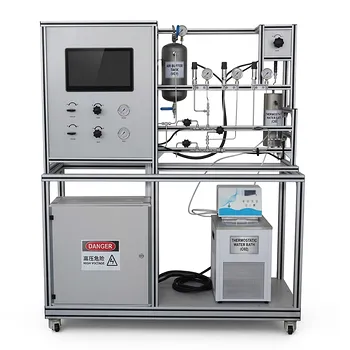
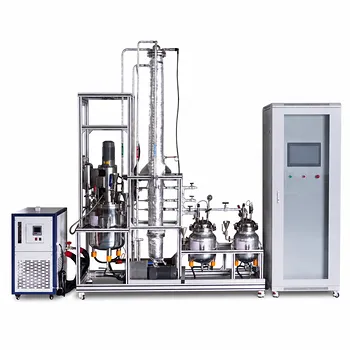
Educational Pilot Plants Reveal the Complexity
Pilot‑scale units often highlight this gap between textbook theory and practical reality. Students quickly learn that the reactor’s physical and material boundaries set real-world limits that thermodynamics alone never reveals.
The Physical Ceiling: Limits Imposed by Equipment and Materials
Material Strength Degrades at Elevated Temperatures
Metals lose tensile strength as temperature rises. For low‑carbon steel, tensile strength can drop from around 450 N/mm² at 25 °C to just 210 N/mm² at 500 °C. Engineers must calculate allowable stress at the actual operating temperature to determine safe wall thicknesses.
Creep Deformation Becomes a Long‑Term Threat
Under continuous load at high temperatures, metals undergo slow, progressive creep. For high‑stress zones like furnace tubes, alloys with high creep resistance—such as Inconel 600 or Incoloy 800—become mandatory to avoid catastrophic failure over time.
Pressure Vessel Codes Set Hard Boundaries
Standard carbon steel plates cannot be used for pressure‑bearing components above 482 °C (900 °F). Exceeding that threshold requires killed steel, low‑alloy steels, or stainless steels to meet ASME BPV code requirements, adding cost and complexity.
Heat Transfer Efficiency Is Not Infinite
Heating jackets and coils have a maximum heat flux they can deliver. For very endothermic reactions like steam reforming, the temperature can drop so quickly that the rate crashes. Reactors must then use a furnace with a very high heat flux, and tube diameters must be kept below 0.1 m to ensure uniform heating and avoid cold spots.
Reactor Design Must Account for Autothermal Boundaries
In processes like gasification, endothermic and exothermic reactions are coupled to achieve autothermal operation. Feeding too much heat‑absorbing reactant (e.g., excess steam) without a matching exothermic supply pushes the system outside the thermal neutrality envelope, requiring external heating that a pilot plant is often designed to avoid.
Process Safety and Product Quality Risks
Thermal Degradation of Products and Side Reactions
Organic molecules become increasingly prone to degradation as temperature climbs. Complex molecules can decompose, and unwanted pathways like polymerization or autoxidation accelerate, drastically reducing selectivity and sometimes creating hazardous by‑products.
Control Challenges and Runaway Potential
If an endothermic step switches to an unintended exothermic pathway at high temperature, the reactor can experience a difficult‑to‑control runaway. Reaction calorimetry in pilot plants teaches that measured heat flow is always a lumped signal—it includes mixing, crystallization, and side‑reaction heats—so interpreting high‑temperature data safely requires deconvolution skills that many operators must develop.
The Bioprocess Exception: When Biology Forbids High Heat
Biological Materials Have an Intrinsically Narrow Thermal Window
Biological reactions occur at body or ambient environmental temperatures. Enzymes denature, cells die, and proteins aggregate well below the temperatures used in chemical synthesis. You simply cannot accelerate a biocatalytic process by raising temperature without destroying the catalyst itself.
Shear Sensitivity Adds Another Constraint
Turbulence is needed for mass transfer and mixing, but biological cells are exquisitely sensitive to shear forces. Pilot‑plant bioprocesses address this with specialized low‑shear impellers and precise temperature control, keeping the system within a tight physiological window while still achieving adequate mixing.
Understanding the Trade‑offs
Conversion vs. Integrity: The Core Dilemma
The fundamental tension is between pushing temperature for maximum equilibrium conversion and preserving the reactor’s structural integrity and product quality. Every additional degree gains conversion but eats into the safety margin of the material and raises degradation rates.
Designing for High Temperature Without Failure
To operate near the edge, designers use cold‑wall reactors, high‑creep‑resistance alloys, and narrow furnace tubes that maximize heat flux while keeping metal temperatures within code limits. The cost and complexity of these solutions must be weighed against the conversion benefits.
Pilot Plants as Learning Platforms for These Trade‑offs
Educational pilot plants exist precisely to let engineers and students experience these conflicting demands. They conduct energy balances that reveal how heat input, sensible heats, and reaction enthalpy interplay, teaching that a simple “more heat” strategy quickly collides with real‑world physical laws.
Making the Right Choice for Your Goal
Define your priority first, then let it guide your operational and design decisions.
- If your primary focus is maximizing conversion: Choose materials and geometry that allow the highest safe temperature—use furnace‑heated tubes with diameters below 0.1 m, high‑alloy steels, and rigorous side‑reaction monitoring. Always stay just inside the material’s allowable stress and code limits.
- If your primary focus is preserving product quality and selectivity: Operate at the lowest feasible temperature that still meets conversion targets. Consider integrating catalysts that lower activation energy, allowing acceptable rates without the degradation risks of extreme heat.
- If you are working with biological systems: Do not attempt to accelerate kinetics by increasing temperature. Instead, focus on optimizing mixing, mass transfer, and nutrient delivery at the biological optimum. Invest in low‑shear agitation and ultra‑precise temperature control to keep the system within a narrow, safe physiological band.
Every endothermic pilot plant forces a choice—chase conversion up to the physical breaking point, or accept a lower temperature and find other levers to pull.
Summary Table:
| Limitation Type | Key Risk & Impact | Mitigation Strategy |
|---|---|---|
| Thermodynamic | Heat transfer limits & cold spots | Narrow tube diameters (<0.1m), high heat flux |
| Material/Physical | Creep & structural failure (>482°C) | High-alloy steels (Inconel 800), cold-wall design |
| Process Safety | Thermal degradation & runaway | Reaction calorimetry, catalysts to lower temp |
| Biological | Cell death & enzyme denaturation | Low-shear impellers, precise temp control |
Ready to safely scale your processes? LABPARK provides premium Educational and Vocational Unit Operations Pilot Plants in chemical engineering, bioprocess & biotech, and environmental & water treatment for universities, research institutes, and enterprises. Equip your lab with systems designed to handle complex thermodynamic limits and precise temperature control. Contact us today to find the perfect pilot plant solution!
Related Products
- Fixed-Bed Chemical Reaction and Gas Dust Tar Removal Unit Operations Pilot Plant
- Multi-Reactor Educational Pilot Plant for Reaction Engineering Unit Operations
- Fluidized Bed Gas Solid Catalytic Reaction Educational Pilot Plant
- Fixed Bed Gas Solid Catalytic Reaction Educational Pilot Plant
- Internal Circulation Gradient Free Catalytic Reaction Educational Pilot Plant
People Also Ask
- When to transition from PID to adaptive control in pilot plants? Key process indicators.
- How do deviations in estimating latent heat impact pilot plant thermal systems? Avoid hardware mis-sizing.
- Why Compare Predicted and Experimental Excess Enthalpy? Key to Accurate Pilot Plant Scale-up
- How to study gasification in pilot plants? Compare exit gas composition & efficiency
- Why Use PTFE & Hastelloy in Chemical Pilot Plants? Prevent Corrosion & Ensure Safety