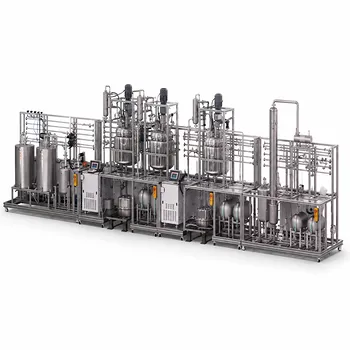
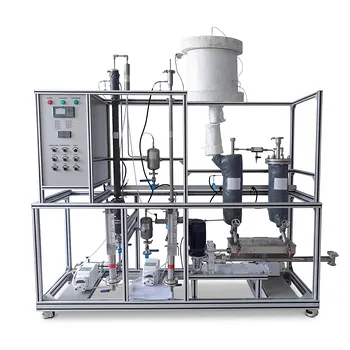
The ion-exchange membrane method redefines chlor-alkali performance. In a teaching pilot plant, it delivers dramatically better energy efficiency, a far more concentrated product, and orders-of-magnitude higher purity than the traditional diaphragm method. Membrane electrolysis yields 32–35% sodium hydroxide with only about 30 mg/L of salt contamination, while the diaphragm approach produces a weak 10–12% caustic solution containing roughly 10,000 mg/L of salt—and it demands extensive thermal energy just to concentrate that product. For a modern unit-operations lab, the membrane process is the benchmark of industrial excellence.
The performance gap between ion‑exchange membrane and diaphragm electrolysis is not incremental—it’s a transformation in energy use, product quality, and process design. Deciding between the two for a pilot plant means choosing between a state‑of‑the‑art, high‑purity green‑chemistry process and a classic, less‑efficient method that still illuminates fundamental mass‑transfer challenges.
How the Two Methods Compare on Performance and Energy
Energy Consumption: A Redefined Baseline
The ion‑exchange membrane cell consumes only 75–80% of the electrical energy required by a traditional diaphragm cell. This 20–25% reduction comes from the membrane’s ability to operate at higher current densities while suppressing back‑migration of hydroxide ions.
Operating costs follow a similar pattern. Membrane‑based plants typically incur 85–95% of the diaphragm plant’s operating expenses, largely because they bypass the steam‑intensive evaporation trains that diaphragm processes demand.
The Hidden Energy Burden of the Diaphragm Route
A diaphragm cell produces a dilute 10–12% NaOH stream. To bring that product to a marketable 30% concentration, the plant must consume roughly 5 tons of steam per ton of 30% caustic soda. This downstream evaporation is the primary reason why the diaphragm method’s true energy footprint is so much larger.
The membrane cell eliminates that steam load. Its catholyte already exits at 32–35% NaOH—often within specification without additional concentration—so the pilot plant can direct its energy savings toward other educational demonstrations.
Product Quality: The Definitive Showdown
Caustic Soda Strength: Weak vs. Market‑Ready
A diaphragm cell’s 10–12 wt% NaOH product is too dilute for direct use or sale. It must be routed through an evaporator and, often, a crystallizer to remove salt and reach industrial concentration. This creates a multi‑step unit‑operation chain that can obscure the core electrochemistry.
A membrane cell generates a robust 30–36 wt% NaOH directly. With concentration close to commercial specification, students can focus on the electrolysis step itself and still analyze a product that reflects real‑world outputs.
Salt Contamination: A Thousand‑Fold Difference
In a diaphragm cell, the microporous separator allows convective flow of anolyte into the catholyte. The result: 1–2% sodium chloride (≈10,000 mg/L) ends up in the caustic product, demanding an additional salt‑removal crystallization step and limiting NaOH quality.
The ion‑exchange membrane’s fluorosulfonate‑based selective barrier permits only cation transport. This nearly eliminates convective mixing, slashing NaCl contamination to around 30 mg/L. Students can measure a near‑pure caustic stream that mirrors the purity needed for membrane‑grade chemicals or food‑grade applications.
Downstream Processing Footprint
The diaphragm method’s contaminated caustic forces the pilot plant to integrate evaporation and crystallization unit operations, inflating the equipment footprint and thermal load. The membrane route compresses the entire purification task into a stringent front‑end brine purification protocol, dramatically simplifying the post‑electrolysis flowsheet.
Operational and Educational Trade‑offs
Feedstock Quality Demands
The ion‑exchange membrane method is unforgiving of impurities. Calcium, magnesium, and other hardness ions must be removed from the brine before it enters the cell to prevent membrane scaling and irreversible damage. This forces students to master brine purification as a critical pre‑treatment step.
Diaphragm cells are far more tolerant of raw brine quality. They accept higher contaminant levels, making them easier to operate with simple laboratory feed preparations—but at the cost of product quality and downstream complexity.
Maintenance, Robustness, and Safety
Diaphragm cells are structurally simple, with a flat‑plate or cylindrical design that students can disassemble, clean, and reassemble with basic tools. Their robustness suits labs where frequent modification or handling of process equipment is desired.
Membrane cells require careful membrane handling and consistent feed quality to avoid premature failure. Once properly installed, however, they demonstrate stable, low‑maintenance operation that mirrors the reliability of industrial membrane plants.
Traditional asbestos diaphragms pose a clear health hazard. While modern polymer‑based diaphragms mitigate this risk, the ion‑exchange membrane process eliminates the asbestos concern entirely, giving the lab a cleaner safety profile and a direct link to green‑chemistry principles.
Teaching Fundamentals vs. Demonstrating Industry Best‑Practices
A diaphragm pilot plant is an excellent vehicle for teaching the fundamentals of convective mass transfer, the consequences of incomplete separation, and the need for post‑treatment unit operations. Students learn why product contamination occurs and how industry historically managed it.
A membrane pilot plant teaches the future. It highlights selective ion transport, process intensification, and how modern chemical engineering reduces energy and waste. Operating this type of cell prepares students for the reality that most new chlor‑alkali capacity worldwide uses membrane technology.
Making the Right Choice for Your Teaching Lab
Whether you select one technology or both, align the pilot plant with your educational mission.
- If your primary focus is demonstrating cutting‑edge chlor‑alkali technology: Choose an ion‑exchange membrane unit. It lets students investigate high‑purity electrochemical production, energy efficiency, and rigorous brine management exactly as practiced in modern industry.
- If your primary focus is illustrating basic mass‑transfer limitations and downstream purification: A diaphragm cell remains a valuable hands‑on platform, provided you use a non‑asbestos separator and explicitly contrast its performance with today’s standards.
- If your curriculum bridges fundamentals and industrial relevance: Integrate both technologies into a single module. Side‑by‑side operation allows students to measure the stark differences in voltage, product concentration, and impurity levels for themselves, turning abstract numbers into lasting engineering insight.
By choosing the cell technology that best fits your learning objectives, you give students a crystal‑clear view of the trade‑offs that drive process innovation.
Summary Table:
| Parameter | Ion-Exchange Membrane Method | Traditional Diaphragm Method |
|---|---|---|
| NaOH Concentration | 32–35% (Market-ready) | 10–12% (Dilute) |
| NaCl Contamination | Low (~30 mg/L) | High (~10,000 mg/L) |
| Energy Consumption | Low (75–80% electrical energy) | High (Requires ~5t steam/t product) |
| Feed Quality Demands | Strict purification required | High tolerance to impurities |
| Safety Profile | Green chemistry, no asbestos | Asbestos hazard (if traditional) |
Elevate Your Teaching and Research with LABPARK
Ready to equip your facility with advanced process systems? LABPARK provides premium Educational and Vocational Unit Operations Pilot Plants in chemical engineering, bioprocess & biotech, and environmental & water treatment.
We help universities, research institutes, and enterprises bridge the gap between academic theory and modern industrial reality. Contact our experts today to get a custom chlor-alkali pilot plant design tailored to your specific training objectives!
Related Products
- Fixed Bed Gas Solid Catalytic Reaction Educational Pilot Plant
- Multi Pump Fluid Transport Process Piping Unit Operations Training Pilot Plant
- Carbon Dioxide Hydrogen Methanol Synthesis Educational Unit Operations Pilot Plant
- Ethyl Acetate Synthesis Unit Operations Pilot Plant for Practical Training
- Natural Product Extraction Unit Operations Training Pilot Plant
People Also Ask
- How do reactor pilot plants safely study gas-solid reactions? Master kinetics with thermal & flow control.
- How does the Mears criterion evaluate transport resistance? Key Guide to Intrinsic Kinetics
- Fluidized vs. Fixed Bed Reactors: Comparing Heat & Complexity in Pilot Plants
- Why is a multibed configuration necessary for exothermic reactions? Optimize your pilot plant trajectory.
- How is the friction factor determined for fixed-bed pilot plants? Select the best pressure drop correlation.