Catalyst selection and support materials are the difference between a pilot plant that delivers stable hydrogen production and one plagued by unexpected shutdowns. In catalytic steam reforming unit operations, the choice of active metal—whether nickel for cost-effective methane reforming, copper for low-temperature methanol, or cobalt for ethanol—directly impacts conversion rates and the dominant deactivation mechanisms. The support material, such as alumina, ceria, or zirconia, then plays a critical role in stabilizing these metals against sintering and carbon deposition, ultimately dictating the catalyst’s useful lifetime.
The synergy between active metal and support defines both the initial activity and long-term resilience of a steam reforming catalyst. While nickel offers high C–H bond cleavage activity, it requires robust oxide supports like ZrO2 or CeO2 to suppress coke formation. For pilot plants handling variable feedstocks, understanding these metal-support interactions enables you to engineer a reactor bed that maintains conversion while resisting deactivation from thermal sintering and carbon buildup.
Why Catalyst Deactivation Occurs in Steam Reforming
The Dual Threats: Sintering and Coking
Sintering is the thermally driven agglomeration of metal particles at the high operating temperatures (500–800 °C) typical of methane and ethanol reforming. As particles cluster, the active surface area plummets, permanently reducing catalytic activity. Coking or carbon deposition is another major killer, especially for nickel-based catalysts. Carbonaceous filaments and encapsulating layers block active sites, increase pressure drop, and can plug reformer tubes entirely. Supports with oxygen storage capacity, like ceria, help gasify these carbon deposits, mitigating the problem at the chemical level.
The Silent Killer: Feedstock Poisons
Even well-designed catalysts fail quickly if trace poisons enter the reactor. Elements like arsenic, sulfur, nitrogen, lead, and copper irreversibly bind to active sites. In any well-run pilot plant, feedstock is first passed through a pre-hydrogenation section operating at around 340 °C and 1.8–2.5 MPa to strip these impurities. Without this step, catalyst lifetime can be measured in hours, not weeks. A sacrificial guard bed at the reactor inlet provides a second line of defense against breakthrough contaminants.
How Active Metal Selection Drives Reactor Performance
Nickel: The Workhorse with a Coking Liability
Nickel (Ni) is the most widely used active metal for methane steam reforming. Its high activity for cleaving C–H, O–H, and C–C bonds makes it extremely effective for hydrogen production. However, nickel is inherently prone to carbon deposition and sintering at the high temperatures required for methane reforming. This means Ni catalysts must always be paired with a carefully chosen support and often a promoter to achieve acceptable lifetimes.
Copper: The Low-Temperature Specialist
For methanol steam reforming (200–350 °C), copper (Cu) is the metal of choice. It offers excellent selectivity and high activity at these lower temperatures, avoiding the extreme thermal stress that sinter Ni particles. The key to Cu performance is ultra-high dispersion; small particle size maximizes surface area and conversion. Any sintering—even at moderate temperatures—rapidly deactivates Cu catalysts, making the support’s stabilizing role absolutely critical.
Cobalt: The Stability Alternative for Ethanol
In ethanol steam reforming (400–800 °C), cobalt (Co) often outperforms nickel in terms of stability and resistance to carbon deposition. While its C–C bond cleavage activity may be slightly lower, the reduced coking rate makes Co catalysts attractive for long-duration pilot runs where consistent performance matters more than peak activity.
The Critical Role of Support Materials in Preventing Deactivation
Anchoring Metals Against Thermal Sintering
Supports like alumina (Al2O3), ceria (CeO2), and zirconia (ZrO2) provide a high-surface-area scaffold that physically separates metal nanoparticles, preventing them from migrating and coalescing. This structural stabilization is the first line of defense against thermally induced activity loss. MgAl2O4 and ZnAl2O4 spinels offer exceptionally high resistance to sintering and are preferred for demanding high-temperature reforming applications. In contrast, silica (SiO2) supports can exhibit lower stability and promote carbon formation under steam reforming conditions.
Chemical Promotion and Carbon Mitigation
Beyond physical separation, some supports actively participate in the reaction chemistry. Zirconia (ZrO2) stabilizes nickel particles and promotes surface hydroxyl groups that boost methane steam reforming rates. Ceria (CeO2) is a highly active support because its reversible oxygen storage capacity continuously delivers oxygen to oxidize incipient carbon deposits, thereby dramatically reducing net coking. This chemical synergy turns the support into an active partner in maintaining catalyst cleanliness.
The Geometry Factor: Shaped Catalysts for Real Reactors
In a pilot plant, catalyst particles are not simple powders. They are formed as rings, wagon wheels, or multi-hole cylinders to address the realities of flow and heat transfer. These geometries reduce internal diffusion path lengths, allowing reactants to reach active sites deep inside the pore structure with less resistance. They also lower bed pressure drop and increase external surface area, which improves heat and mass transfer—critical for the highly endothermic steam reforming reactions.
Integrating Operational Strategies That Extend Catalyst Life
Guard Beds, Purification, and Temperature Programming
Even the best catalyst formulation benefits from smart pilot plant design. A sacrificial guard bed placed directly in front of the main catalyst bed captures irreversible poisons before they do damage. If deactivation is slow and predictable, temperature programming—gradually raising the reactor temperature to compensate for mild activity loss—can extend a run. For reversible deactivation, such as platinum oxidation, intermittent reduction treatments can partially restore activity, a technique readily tested in a pilot plant environment.
Precise Thermal Management
Steam reforming is highly endothermic; a temperature drop across the reactor can stall conversion. Pilot plants must employ multi-stage interstage heating to maintain a uniform 490–530 °C profile at 2–3 MPa. Hot spots must be avoided, as they accelerate local sintering and coking. The combination of shaped catalyst geometry and controlled heating prevents the thermal runaway that destroys catalyst beds.
Understanding the Trade-offs in Catalyst and Support Design
Every choice involves a compromise.
- Activity vs. Stability: High-activity Ni catalysts deliver impressive initial conversion but demand more robust support and promoter packages to control coking. Co-based catalysts may accept a slightly lower rate for a step-change improvement in long-term stability.
- Surface Area vs. Mass Transfer Resistance: While high-surface-area supports are essential for metal dispersion, they can introduce diffusion limitations. Shaped catalysts partially solve this, but at the cost of greater manufacturing complexity. For some reactions, low-surface-area α-Al2O3 (<1 m²/g) is deliberately chosen to suppress side reactions, but it cannot adequately disperse metal for high-activity steam reforming.
- Purity vs. Operational Cost: Adding a pre-hydrogenation section and guard beds increases capital and operating cost, yet it dramatically reduces unscheduled shutdowns caused by poisons. The economic trade-off must be evaluated for each pilot plant’s mission.
- Catalyst Strength: Intricate shaped particles improve transport but can be mechanically fragile, risking channeling or dust formation if not handled carefully.
Making the Right Choice for Your Pilot Plant Goals
Your optimal catalyst system depends entirely on what question you’re trying to answer.
- If your primary focus is maximizing conversion for short-duration studies: Choose a nickel catalyst supported on CeO2 or ZrO2 to leverage high activity while using the support’s oxygen storage to temporarily suppress coking.
- If your primary focus is long-term stability and minimal downtime: Select a cobalt-based catalyst on a MgAl2O4 spinel support, integrate a sacrificial guard bed, and use temperature programming to compensate for gradual activity loss.
- If your primary focus is methanol steam reforming at low temperature: Use highly dispersed copper on a high-surface-area Al2O3 or CeO2 support, and carefully control reduction conditions to preserve small particle size.
- If your primary focus is investigating deactivation mechanisms: Operate the pilot plant with shaped catalyst structures, test supports side by side, and run extended experiments with deliberate poison feeds to benchmark regeneration protocols.
Ultimately, a successful catalytic steam reforming pilot plant is not just about the catalyst formula—it’s about orchestrating the entire system, from metal selection to support architecture and operational safeguards, to achieve the precise balance between performance and durability your research demands.
Summary Table:
| Active Metal | Typical Support | Primary Application | Key Deactivation Prevention Strategy |
|---|---|---|---|
| Nickel (Ni) | ZrO2, CeO2, Al2O3 | Methane Steam Reforming | Ceria oxygen storage to gasify carbon; pre-hydrogenation guard beds. |
| Copper (Cu) | Al2O3, CeO2 | Methanol Steam Reforming | Ultra-high dispersion to prevent low-temperature sintering. |
| Cobalt (Co) | MgAl2O4 Spinel | Ethanol Steam Reforming | High structural stability to reduce coking rates over long runs. |
Optimize Your Chemical Engineering Research with LABPARK
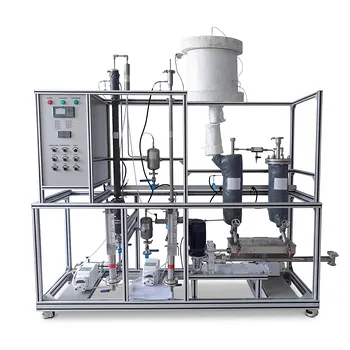
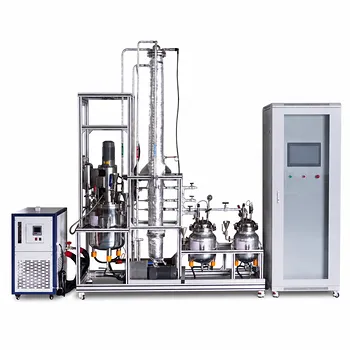
Designing stable, high-performance reaction systems requires precision engineering. LABPARK provides state-of-the-art Educational and Vocational Unit Operations Pilot Plants in chemical engineering, bioprocess & biotech, and environmental & water treatment for universities, research institutes, and enterprises.
Our pilot plants are designed to help you accurately study catalyst behavior, manage thermal profiles, and prevent deactivation in steam reforming and other critical chemical processes.
Ready to elevate your lab's capabilities? Contact us today to explore our custom pilot plant solutions!
Related Products
- Steam Methane Reforming Hydrogen Production and Purification Educational Pilot Plant
- Fixed Bed Gas Solid Catalytic Reaction Educational Pilot Plant
- Fluidized Bed Gas Solid Catalytic Reaction Educational Pilot Plant
- Multi Functional Catalytic Reaction and Reactor Evaluation Educational Unit Operations Pilot Plant
- Methane Cracking Educational Unit Operations Pilot Plant
People Also Ask
- How Do Temp, Pressure & S:C Ratio Affect Methane Reforming? Optimize Your Pilot Reactor
- What are steam reforming pilot plant challenges? Master Feedstock Selection & Design
- What are the differences between steam reforming and ATR in pilot plants? Key Design Guide
- How to Integrate WGS & Purification in Steam Reforming Pilot Plants to Protect Fuel Cells from CO Poisoning
- How is carbon deposition controlled in steam reforming? The Critical Role of S/C Ratio