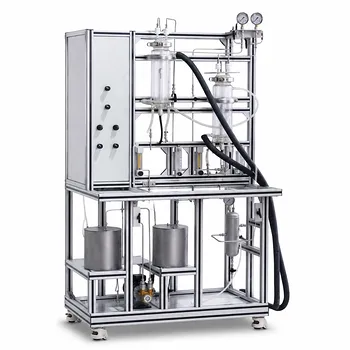
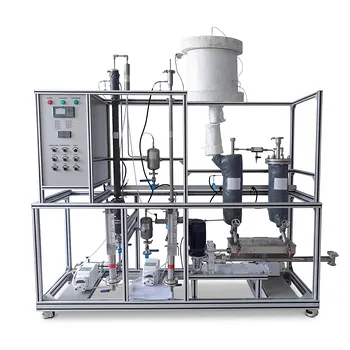
Selecting the right catalyst for a lab- or pilot-scale MTBE reactor is a decision that balances chemical performance against practical operational demands—and three families of acidic catalysts dominate the conversation.
Acidic ion-exchange resins deliver high initial activity and selectivity but introduce corrosion and thermal limitations. Zeolites offer excellent thermal stability and regeneration potential, yet face acid-site degradation. Supported heteropolyacids on macroporous resins achieve near-perfect selectivity without corroding equipment, making them uniquely suited for long-running educational and research setups where reliability and minimal maintenance are paramount.
The surface need is a performance comparison, but the deep need is designing a pilot plant that serves as a durable, low-maintenance teaching or research tool. While each catalyst family has strengths, supported heteropolyacids strike the best balance for uninterrupted operation—delivering up to 99.7% MTBE selectivity with zero corrosion, effectively eliminating the single biggest source of operational headaches in academic pilot plants.
The Three Catalyst Families for MTBE Synthesis
Acidic Ion-Exchange Resins: High Activity, Hidden Cost
Sulfonated macroporous resins (typified by Amberlyst-15) are the workhorse of industrial MTBE synthesis in liquid-phase, low-temperature (50–90 °C) processes.
They provide high catalytic activity per unit volume and excellent selectivity for the etherification of isobutylene with methanol. The reaction is gentle, and conversion is straightforward to optimize.
However, their thermal stability ceiling hovers around 120–130 °C.
Exceeding this limit causes irreversible sulfonic acid group loss—permanently deactivating the catalyst. In a pilot-scale reactor, even minor temperature excursions can necessitate a full bed replacement, disrupting long-term experiments.
More insidious is the corrosion problem.
The acidic nature of the resin, combined with the water produced in the reaction, leads to gradual leaching of sulfonic species. This attacks stainless steel reactors, pumps, and fittings, driving up maintenance and requiring frequent parts replacement—an unacceptable burden for educational labs that aim for continuous, low-touch operation.
Zeolite Molecular Sieves: Thermal Toughness with Shape-Selective Control
Zeolites such as ZSM-5 and ZSM-11 bring two major advantages to the table: exceptional thermal stability and shape selectivity.
They can operate at temperatures that would quickly destroy a resin catalyst, and their well-defined micropore structure restricts the formation of larger byproducts, maintaining high selectivity for MTBE.
The trade-off comes in acid-site stability.
While the crystalline framework withstands high temperatures, the Brønsted acid sites responsible for catalysis can slowly degrade through dealumination or undergo permanent neutralization by trace basic impurities. This is a gradual, often unpredictable decay that demands careful feedstock polishing.
Coke deposition, while less severe than in methanol-to‑gasoline (MTG) processes, is still a concern at elevated temperatures, leading to progressive deactivation.
The ability to regenerate zeolites by burning off coke at high temperatures is a clear advantage, but it also adds process complexity. As a result, zeolite-based pilots naturally become teaching platforms for regeneration cycles—a feature that can be a valuable educational goal or an unwanted layer of operational complexity, depending on your objectives.
Supported Heteropolyacids: The Corrosion-Free Hybrid
Heteropolyacids (HPAs) like H₄SiW₁₂O₄₀ supported on macroporous sulfonic acid resins (HPA/A-15) marry the high activity of a resin with the chemical stability of a Keggin-type polyanion.
These hybrid catalysts exhibit extraordinary MTBE selectivity—up to 99.7%—and conversion rates that rival or exceed conventional resins.
Crucially, the heteropolyacid is strongly anchored to the support, preventing it from leaching into the liquid phase.
This eliminates the corrosion pathway entirely. Reactors, gaskets, and instrumentation remain untouched by acid attack, a game-changer for long-running educational pilot plants that must run for months with minimal intervention.
The only meaningful trade-off is catalyst cost and availability.
While the supported HPA system is more expensive per kilogram than a standard resin, the total cost of ownership often falls once you factor in eliminated corrosion repairs and fewer unplanned shutdowns. For a research environment where data continuity is critical, that premium is often justified.
What Catalyst Behavior Means for Reactor Design and Operation
The Corrosion Problem Dictates Material Selection
If you choose an ion-exchange resin, you’re accepting that stainless steel is a consumable.
Fasteners, tubing, and valves in contact with the reaction medium will need periodic replacement. This forces a design with easy disassembly and generous spare-parts inventory—adding layers of cost and complexity that distract from the core teaching mission. In contrast, heteropolyacid-based systems allow the use of standard 316SS components with negligible corrosion risk, simplifying both construction and long-term maintenance.
Deactivation Profiles Shape the Reactor Configuration
Zeolites, and to a lesser extent resins, deactivate over time.
The classic industrial solution—and a highly instructive one for a pilot plant—is to use multiple fixed-bed reactors in parallel. This configuration, highlighted in processes like MTG where coking is severe, lets you keep one reactor online while another undergoes regeneration. For a university or vocational pilot plant, this arrangement teaches students about cycle timing, thermal regeneration procedures, and continuous process control. If your primary goal is demonstrating industrial realism, a parallel zeolite bed setup is a compelling choice.
Supported heteropolyacids, on the other hand, deactivate so slowly that a single bed can run continuously for an entire semester without regeneration. That shifts the pedagogical focus from troubleshooting catalyst beds to studying steady-state kinetics, feed composition effects, and product purification—ideal for research projects where uptime is paramount.
Regeneration as a Teachable Moment vs. a Time Sink
Burning coke off a zeolite at 500 °C is a powerful demonstration of industrial catalyst management.
But it also demands high-temperature gas handling, careful oxidation control, and additional safety protocols. A design that incorporates in‑situ regeneration capabilities will be more complex and expensive upfront. Decide early whether the educational payoff of teaching these unit operations outweighs the operational overhead. For many academic labs, the low-maintenance, regeneration-free nature of a supported HPA system provides a smoother, safer learning curve.
Understanding the Trade-offs
No single catalyst dominates every dimension. Here is where the real engineering judgment lives:
- Resins deliver the easiest startup and the best-known kinetic behavior, but corrosion and thermal fragility turn a pilot plant into a maintenance project. Their short effective lifetime means you are constantly swapping catalyst—disrupting the long-term data sets that researchers value.
- Zeolites are rugged and regenerable, offering a near‑indefinite structural lifespan if acid sites are protected. However, the regeneration infrastructure adds cost, and acid‑site degradation can cause a slow, permanent drop in activity that is hard to separate from other drift factors.
- Supported HPAs virtually eliminate corrosion and give the highest selectivity, but they come with a higher purchase price and less commercial track record. You’ll need to verify the specific HPA-loading protocol and ensure the support maintains mechanical integrity over thousands of hours.
Making the Right Choice for Your Pilot Plant Goal
Your ultimate decision should be driven by what you need the pilot plant to demonstrate—and how much you can afford to tinker. Use the following goal-oriented guide:
- If your primary focus is maximizing uptime and minimizing maintenance in a teaching or research lab: Choose a supported heteropolyacid on macroporous resin. Its non-corrosive, high-selectivity operation keeps the plant running semester after semester with the lowest intervention, letting students focus on data rather than repairs.
- If your primary focus is demonstrating catalyst regeneration and industrial cycle management: Build a parallel‑reactor system with zeolite catalysts (ZSM-5). The thermal regeneration steps and online/offline switching will vividly teach continuous‑process control and catalyst lifetime management.
- If your primary focus is maximizing conversion per gram of catalyst with frequent, simple catalyst replacement: Start with sulfonic acid ion‑exchange resins. Accept the corrosion management cost, but use common‑rail quick‑disconnect fittings and schedule regular bed swaps to maintain peak activity for short, intensive experimental campaigns.
A well‑designed pilot plant is not just a smaller version of a commercial reactor; it’s a didactic instrument. Align your catalyst choice with the operational story you want to tell—and the maintenance story you want to avoid.
Summary Table:
| Catalyst Type | Key Advantages | Main Disadvantages | Best Suited For |
|---|---|---|---|
| Acidic Ion-Exchange Resins | High initial activity, easy startup | Thermal fragility, equipment corrosion | Short, high-conversion runs |
| Zeolites (e.g., ZSM-5) | Excellent thermal stability, regenerable | Acid-site decay, complex regeneration setup | Teaching cycle & regeneration |
| Supported HPAs | 99.7% selectivity, zero corrosion | Higher initial cost | Low-maintenance research & teaching |
Optimize Your Chemical Engineering Lab with LABPARK
Designing a pilot-scale reactor shouldn't come with constant maintenance headaches. LABPARK provides high-quality Educational and Vocational Unit Operations Pilot Plants in chemical engineering, bioprocess & biotech, and environmental & water treatment for universities, research institutes, and enterprises. Our reactor systems are engineered to handle diverse catalyst environments—like corrosive resins or high-temperature zeolites—ensuring safety, durability, and maximum student learning outcomes.
Let us help you select and customize the ideal pilot plant. Contact LABPARK today to discuss your research and teaching requirements!
Related Products
- Methanol Synthesis and Catalyst Performance Evaluation Educational Unit Operations Pilot Plant
- Carbon Dioxide Hydrogenation Methanol Synthesis Educational Unit Operations Pilot Plant
- Carbon Dioxide Hydrogen Methanol Synthesis Educational Unit Operations Pilot Plant
- Crude Benzene Hydrogenation Educational Unit Operations Pilot Plant
- Ethylbenzene Dehydrogenation Educational Unit Operations Pilot Plant
People Also Ask
- Why is a purge system necessary when operating a gas recirculation loop in a methanol synthesis pilot plant? (Guide)
- How do temp & pressure affect methanol synthesis pilot plants? Optimize equilibrium and catalyst performance.
- Why do modern methanol pilot plants operate at lower pressures? Catalyst & Feed Requirements Explained
- What are the operational requirements for catalyst activation? Safe Methanol Pilot Plant Operation
- Why Compare Predicted and Experimental Excess Enthalpy? Key to Accurate Pilot Plant Scale-up