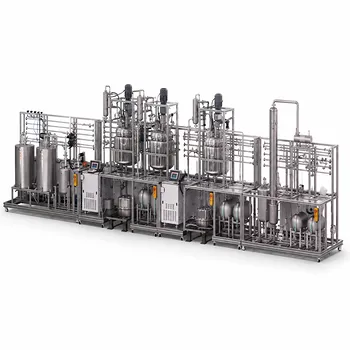
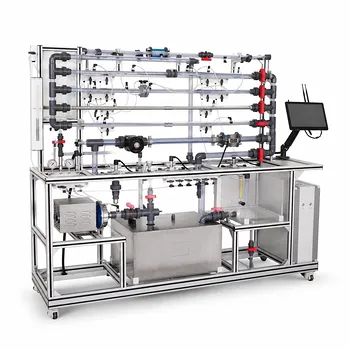
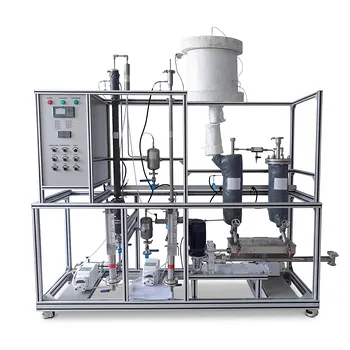
The question isn't just about finding a single spreadsheet or database—it is about building a trusted, multi-layered resource stack that ensures your pilot plant is safe, accurate, and industrially relevant. The most effective approach for laboratory engineers and academic instructors is to synthesize data from three distinct categories: foundational handbooks for theoretical design parameters, specialized online databases for chemical safety and physical properties, and industry standards for component specifications and safety compliance. By consulting these resources in parallel, you ensure your pilot plant design is grounded in proven chemical engineering principles, populated with compatible components, and operated with complete awareness of thermodynamic and toxicological realities.
Building or operating a pilot plant without a structured resource hierarchy leads to incompatible materials, invalid experimental data, and critical safety oversights. The core solution is a tripartite reference framework that combines fundamental design handbooks, chemical property databases, and component engineering standards to create a comprehensive, defensible specification for every experiment.
The Foundation for Pilot Plant Design
Before sourcing a single pump or valve, you must lock down the theoretical design and utility requirements. This foundation ensures the plant can physically operate and generate meaningful, scalable data.
Establishing the Theoretical and Thermodynamic Baseline
General chemical engineering handbooks are the non-negotiable starting point for any pilot plant project. Perry's Chemical Engineers' Handbook is the definitive resource for fundamental data, unit operation design equations, and process economics. It provides the core methodologies for sizing reactors, distillation columns, and heat exchangers.
For the physical and chemical constants required to feed those equations, you must consult dedicated property handbooks. The CRC Handbook of Chemistry & Physics is essential for physical constants and thermodynamic data of organic and inorganic compounds. For properties like solubility, vapor pressure, and boiling points, Lange's Handbook of Chemistry is an excellent companion. For precise molecular-level data, especially on drugs and biologicals, The Merck Index provides detailed physical properties, toxicity, and safety information in a single encyclopedia.
Aligning Infrastructure with Unit Operation Requirements
A perfect theoretical design is useless if the laboratory can't power or cool it. Before finalizing equipment, you must cross-reference the pilot plant's design basis with existing lab utilities. This is a common point of failure in educational settings.
Critically evaluate the availability and specifications of laboratory utilities against the equipment's required inputs. The key factors to verify are electrical supply (voltage, phase, and current capacity), cooling water (flow rate, pressure, and inlet temperature), and any required process steam or compressed air. Neglecting this step can lead to a pilot plant that is physically impossible to start up, undermining the entire experimental objective and rendering collected data useless.
Navigating Component and Material Selection
With the process defined, you must translate theoretical needs into physical hardware. This is where industry standards and specialized commercial indexes become critical.
Decoding Industry Standards for Hardware Specifications
To specify a component for purchase, you need to speak the language of the manufacturer. The most critical resources are the standards published by trade organizations. For heat exchangers, the Tubular Exchanger Manufacturers Association (TEMA) provides the globally recognized standards for mechanical design, tolerances, and terminology. For fluid handling, the Valve Manufacturers Association (VMA) offers detailed specifications on materials, pressure ratings, and leakage rates that are essential for creating a safe and functional piping system.
Mastering the Commercial and Chemical Safety Landscape
Once you have a specification, you need to find a vendor. Industry-specific buyer's guides and indexes, such as the Chemical Engineering Buyers' Guide and process directory websites, are invaluable for locating commercial suppliers of reactors, pumps, and instrumentation. However, sourcing a physical component is meaningless if its material is incompatible with the chemistry. You must perform a rigorous material compatibility check. Use your chosen chemical safety databases to verify that the wetted materials of the reactor, piping, and seals can withstand the chemical environment over the expected temperature and pressure ranges without corrosion or degradation.
The Database Ecosystem: Safety, Data, and Methods
A major part of building a modern curriculum or research plan involves moving beyond static handbook data to dynamic, queryable databases for safety, deeper properties, and advanced experimental protocols.
Building a 'Safety-First' Protocol with Toxicology Databases
Before any chemical is handled in the pilot plant, a thorough hazard assessment is mandatory. This is a core requirement for safe operation. PubChem is a central starting point for retrieving bioactivity, toxicity, and physical property data. For a deeper dive into toxicology, environmental impact, and waste disposal, the specialized Toxnet database provides the necessary information to configure waste treatment systems. To complete the operational safety picture, ChemBlink is highly practical for finding supplier-specific Material Safety Data Sheets (MSDS), hazard classifications, and safe transportation and storage codes.
Advancing the Curriculum with Scientific Research Databases
For academic instructors, developing an industry-relevant curriculum requires incorporating modern experimental methods. Peer-reviewed journal databases are the key resource here. Platforms like ACS Publications, RSC Journals, and ScienceDirect provide access to cutting-edge pilot-scale research. By searching journals such as Analytical Chemistry, Chemical Engineering Journal, and Biotechnology and Bioengineering, instructors can retrieve validated experimental procedures, process optimization strategies, and analytical validation techniques that reflect current industrial practice, allowing them to design much more robust and impactful teaching modules.
Understanding the Trade-offs
No single resource is perfect, and relying on just one creates significant blind spots. The quality of your pilot plant design is directly proportional to your ability to synthesize information across these categories.
- Handbook Data vs. Real Mixtures: Classical handbooks provide pristine data for pure components. They often fail to predict the behavior of complex, multicomponent mixtures in your pilot plant, which can lead to inaccurate simulations and incorrect equipment sizing.
- Static Standards vs. Rapid Innovation: While TEMA and VMA standards ensure baseline quality and safety, they may not cover the latest materials of construction or novel, high-efficiency component designs. You may need to go beyond the standard and consult manufacturer-specific engineering data.
- Public Safety Data vs. Comprehensive Toxicology: PubChem is an excellent rapid screening tool, but for novel compounds or precursors, its toxicity and handling data may be incomplete. In such cases, more exhaustive searches in specialized databases like Toxnet or SciFinder are a critical risk-management step.
- Proprietary Databases vs. Accessibility: Powerful academic tools like SciFinder and Reaxys are indispensable for deep literature and chemical property searches but come with steep learning curves and require institutional access. An over-reliance on free resources like PubChem alone can miss critical reaction and safety data found only in these paid databases.
Making the Right Choice for Your Goal
Your specific objective will dictate the priority of your resources. Here’s how to build your technical stack for the task at hand.
- If your primary focus is designing a new pilot plant from scratch: Start with Perry's Handbook to establish the design basis and standard equations. Then, immediately cross-reference equipment standards from TEMA and VMA to translate your theoretical needs into a draft commercial specification.
- If your primary focus is scoping utilities and lab infrastructure: Your guide is the equipment’s installation requirement sheet. Create a checklist and methodically verify your lab’s electrical, cooling water, and drain capacity against every stated demand before placing an equipment order.
- If your primary focus is developing a safe and modern experimental curriculum: Build your core lesson from the foundational principles in Perry's. Layer on a peer-reviewed method from a journal like Chemical Engineering Journal for experimental rigor, and finalize your pre-lab safety briefing with toxicology data retrieved from PubChem and the relevant MSDS.
- If your primary focus is on operational safety and material compatibility: Begin with a precise chemical list for the entire process. Use a database like ChemBlink to gather all MSDS and hazard codes, and then consult a materials handbook to confirm the wetted parts of every single component can handle the most aggressive chemical in your stream.
By systematically using these resources in the right order, you replace guesswork with a rigorous engineering methodology, building a pilot plant that is not just functional but truly safe, accurate, and worthy of generating scale-up data.
Summary Table:
| Resource Category | Key Databases & Reference Tools | Primary Purpose in Pilot Plant Design |
|---|---|---|
| Theoretical Baseline | Perry's Handbook, CRC Handbook, Lange's | Thermodynamic data, physical constants, and unit operation design equations |
| Component Specs | TEMA Standards, VMA Standards | Standardizing mechanical designs for heat exchangers, valves, and piping |
| Safety & Toxicology | PubChem, Toxnet, ChemBlink | Verifying material compatibility, hazard levels, and locating MSDS sheets |
| Research & Methods | ACS, RSC, ScienceDirect | Accessing peer-reviewed, validated experimental procedures and novel protocols |
Scale Your Lab with LABPARK's Custom Pilot Plants
Translating theoretical design guidelines into a fully operational, safe, and code-compliant facility is a complex task. LABPARK helps universities, research institutes, and enterprises bridge this gap. We provide premium Educational and Vocational Unit Operations Pilot Plants in chemical engineering, bioprocess & biotech, and environmental & water treatment customized to your teaching and research objectives.
Ready to elevate your engineering lab with robust, industry-aligned equipment? Contact our technical team today for a tailored consultation and quotation!
Related Products
- Fixed Bed Gas Solid Catalytic Reaction Educational Pilot Plant
- Carbon Dioxide Hydrogen Methanol Synthesis Educational Unit Operations Pilot Plant
- Ethyl Acetate Synthesis Unit Operations Pilot Plant for Practical Training
- Natural Product Extraction Unit Operations Training Pilot Plant
- Green Anhydrous Ethanol Refining Practical Training Pilot Plant
People Also Ask
- How do reactor pilot plants safely study gas-solid reactions? Master kinetics with thermal & flow control.
- How does the Mears criterion evaluate transport resistance? Key Guide to Intrinsic Kinetics
- Fluidized vs. Fixed Bed Reactors: Comparing Heat & Complexity in Pilot Plants
- Why is a multibed configuration necessary for exothermic reactions? Optimize your pilot plant trajectory.
- How is the friction factor determined for fixed-bed pilot plants? Select the best pressure drop correlation.