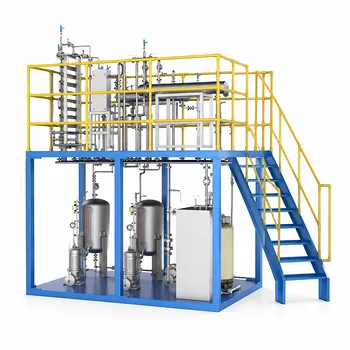
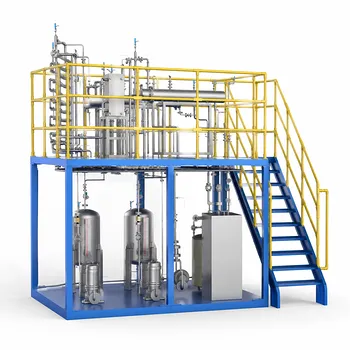
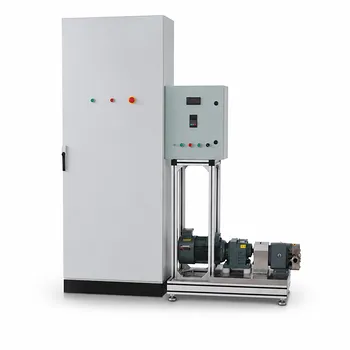
A poorly specified seal, connection, or heat transfer system is the single most common source of catastrophic failure in a teaching pilot plant. When purchasing chemical engineering unit operations pilot plants, the specific process hazards to evaluate include leakage from gaskets, pump seals, and sight glasses—especially under thermal cycling—and the risk of fire or explosion from thermal oil systems operating above their flashpoint. A rigorous pre-purchase evaluation must focus on the integrity of every joint interface and the inherent safety of the heat transfer design.
The core problem is that pilot plants create a dangerous intersection of high temperatures, corrosive fluids, and frequent thermal expansion, which relentlessly attacks seals and connections. The takeaway: you must verify that the equipment uses high-integrity sealing materials and that any thermal oil system includes a properly sized safety relief system and operates well below its autoignition temperature, or choose a safer heat transfer medium entirely.
The Leakage Minefield: Seal and Connection Hazards
Every joint in a pilot plant is a potential leak point. In an educational setting, where operators are still learning, the risk is amplified. You must evaluate these specific failure modes.
Gasketed Joints and Flanges
Gaskets are the most vulnerable points in a piping system. The primary hazard is minor seepage releasing hazardous process fluids into the laboratory, but a sudden blowout can occur under pressure.
Frequent thermal expansion and contraction during startup and shutdown cycles relentlessly work these joints loose. Systems with complex piping or multiple rigid connections are especially high-risk because stress concentrates at the weakest flange.
When purchasing, insist on verifying the gasket material's chemical compatibility with all planned experimental fluids. A common, dangerous mistake is accepting a general-purpose gasket that will be rapidly degraded by a solvent or corrosive chemical.
Pump and Compressor Seals
Rotating machinery introduces dynamic sealing challenges. Pump seal failure is a dominant cause of leaks because wear and vibration from rotating shafts constantly deteriorate the sealing surfaces.
The hazard is not just environmental release; it is the unexpected exposure of a student to a stream of hot, corrosive, or toxic fluid. For pilot plants using vacuum or pressure, air infiltration through a worn seal can also create an explosive atmosphere.
A thorough pre-purchase evaluation must look beyond the pump specification sheet. Request details on the seal type—a double mechanical seal with a barrier fluid is inherently safer for hazardous service than a cheap packed gland.
Sight Glasses and Transparent Sections
The educational value of seeing inside a column or reactor is immense, but glass components are over-stressed pressure boundaries. The specific risks include thermal shock cracking, mechanical impact, and gasket degradation around the glass.
A failing sight glass does not just leak; it can catastrophically shatter, instantly releasing the entire vessel's contents. You must confirm that all glass sections are borosilicate and that their pressure-temperature ratings are clearly derated for the expected service life, not just their new condition.
Bellows and Expansion Joints
Bellows used to absorb thermal expansion are themselves a high-maintenance hazard. The thin convolutions are susceptible to stress-corrosion cracking and fatigue failure, creating a leak path that is often concealed and difficult to inspect.
In a teaching lab, the risk is that such a leak goes unnoticed because students are focused on the experiment, not on a hidden component. The purchasing decision should favor designs that minimize the number of flexible connections, using expansion loops instead where practical.
The Unseen Catalyst: Thermal System Hazards
Heat transfer systems dramatically escalate risk. A leak from a heat transfer system is not just a chemical exposure; it is often a direct fire or steam burn hazard.
Thermal Oil Ignition and Flashpoint
The single greatest thermal hazard is operating a hot oil system above its flashpoint or, worse, near its autoignition temperature. A minor leak from a flange or valve onto a hot surface can then create a self-igniting spray fire.
Evaluating this means demanding the material safety data sheet (MSDS) for the recommended thermal fluid and comparing its flash and fire points against the system's maximum operating temperature. The system design must guarantee a safe operating margin, not just theoretically achieve it.
Missing or Inadequate Safety Relief
Every closed-loop heat transfer loop must have a safety relief valve or burst disc sized for a blocked-flow thermal expansion scenario. The hazard is a simple one: trapped, heated liquid expands, and without relief, it will hydraulically burst the weakest component—usually a gasket or a welded seam.
During procurement, you must verify the relief device's set pressure is below the maximum allowable working pressure (MAWP) of the pilot plant's heat exchanger. Look for proof that the relief path is a hard-piped drain to a safe, sealed catch container, never a discharge onto the floor.
Low-Temperature Embrittlement of Connections
The opposite extreme is also dangerous. If a heat transfer system uses a refrigerated fluid and standard carbon steel piping, operating at low temperatures can cause brittle fracture at threaded connections and welded joints. This is a specific, fast-acting hazard where a seemingly solid pipe joint snaps without warning.
The evaluation is straightforward: if the process design includes cryogenic or sub-zero service, the material specification for all pressure-containing parts, including bolts and flanges, must be rated for low-temperature notch toughness, typically by specifying stainless steel.
Corrosion Under Insulation (CUI) of Heated Piping
A hidden hazard on hot, insulated pilot plant piping is corrosion under insulation (CUI) at connection points. Moisture becomes trapped, and the cyclic heating accelerates corrosion, quietly thinning the pipe wall until a leak occurs at the weakest point—a seal or a weld.
When assessing a potential purchase, ask if the design includes proper weatherproofing of insulation at flanges and valves. A design that allows you to easily remove insulation sections for inspection is far safer than one that permanently hides these corrosion traps.
Understanding the Trade-offs
Safety is not achieved in a vacuum; it involves conscious design trade-offs. Being objective about these will guide a better purchase.
The pursuit of a leak-free plant often leads to all-welded construction. This eliminates gasket hazards but sacrifices the educational flexibility to reconfigure the plant for different experiments. A fully welded heat exchanger loop is safe but cannot be easily disassembled to study fouling. You are trading modularity for integrity.
Similarly, specifying exotic, high-integrity seals like Kalrez or perfluoroelastomer gaskets solves chemical compatibility issues but dramatically increases the long-term cost of replacement and maintenance. If a plant uses a standard nitrile gasket for a cost-saving design, it may fail instantly with a solvent, destroying the perception of safety. A safer initial purchase must balance realistic, compatible material specs against the budget for premium, universal-resistance materials.
Finally, a heavy reliance on complex safety instrumentation—like a safety-rated programmable logic controller (PLC) to shut down on a high-temperature trip—can create a false sense of security. The deep need is inherent safety: a process design that is safe by its very physical principles, not just by an added control layer that can fail or be bypassed during a teaching exercise. A hot oil system with a sufficiently high flashpoint is inherently safer than one that dangerously relies on a temperature interlock.
Making the Right Choice for Your Goal
The correct evaluation criteria change depending on your primary use case. Align your hazard assessment with your core objective.
- If your primary focus is maximizing student safety in a teaching lab: Prioritize heat transfer systems using inherently safe media like steam, water, or a thermal oil with a flashpoint above 150°C over the maximum operating temperature. Reject any design that relies solely on complex instrumentation to prevent a seal-related fire.
- If your primary focus is conducting diverse, aggressive chemical reactions: Insist on a material specification review for every seal, gasket, and O-ring, requiring dual-containment pump seals and corrosion-resistant stainless steel (316) for all wetted connection parts to prevent chemical degradation and leakage.
- If your primary focus is long-term durability with low maintenance: Evaluate the ease of inspecting high-risk points like flange gaskets and sight glass joints. Favor designs that minimize bellows, use expansion loops, and include insulation that can be removed without destroying it, making hidden corrosion a manageable risk rather than a forgotten time bomb.
By anchoring your purchase decision on the mechanical integrity of the pressure boundary and the inherent thermal safety margin, you equip your lab with a tool that is as robust as it is instructive.
Summary Table:
| Component / System | Primary Process Hazard | Key Evaluation Focus |
|---|---|---|
| Gaskets & Flanges | Leakage and blowout due to thermal cycling | Chemical compatibility & high-integrity materials |
| Pump Seals | Wear/vibration leading to toxic/explosive leaks | Double mechanical seals with barrier fluid |
| Sight Glasses | Thermal shock cracking and catastrophic shattering | Borosilicate glass with derated pressure ratings |
| Thermal Oil Systems | Fluid leakage and fire/explosion hazards | Operating temperature vs. flashpoint margin & relief sizing |
Secure the Safety of Your Next Pilot Plant Project
At LABPARK, we understand that safety is the foundation of effective learning and research. We provide premium Educational and Vocational Unit Operations Pilot Plants in chemical engineering, bioprocess & biotech, and environmental & water treatment designed specifically for universities, research institutes, and enterprises. Our systems are engineered with high-integrity seals, robust connections, and inherently safe heat transfer loops to eliminate critical failure risks in your laboratory.
Don't compromise on laboratory safety. Contact LABPARK today to discuss your specific process requirements with our engineering team!
Related Products
- Carbon Dioxide Hydrogen Methanol Synthesis Educational Unit Operations Pilot Plant
- Multi Pump Fluid Transport Process Piping Unit Operations Training Pilot Plant
- Multi-Reactor Educational Pilot Plant for Reaction Engineering Unit Operations
- Ethyl Acetate Synthesis Unit Operations Pilot Plant for Practical Training
- Multi-Modal Distillation Unit Operations Training Pilot Plant
People Also Ask
- How do temp & pressure affect methanol synthesis pilot plants? Optimize equilibrium and catalyst performance.
- Why is a purge system necessary when operating a gas recirculation loop in a methanol synthesis pilot plant? (Guide)
- Why do modern methanol pilot plants operate at lower pressures? Catalyst & Feed Requirements Explained
- What are the operational requirements for catalyst activation? Safe Methanol Pilot Plant Operation
- Why is the chemical plant startup schedule crucial? De-risk scale-up with pilot plants.