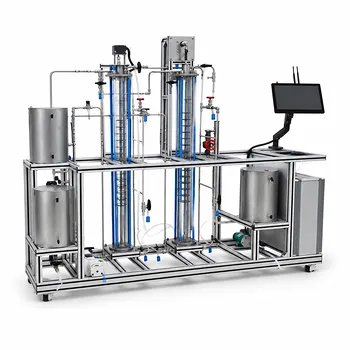
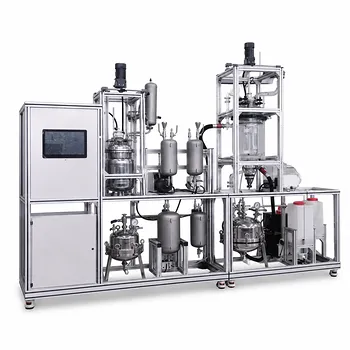
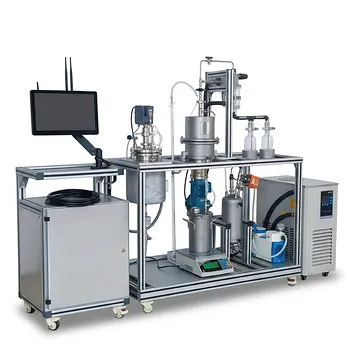
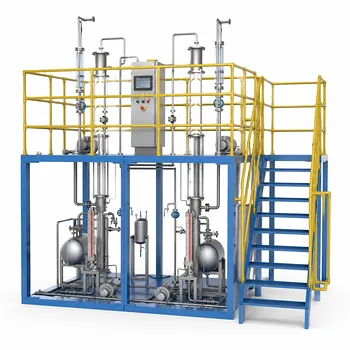
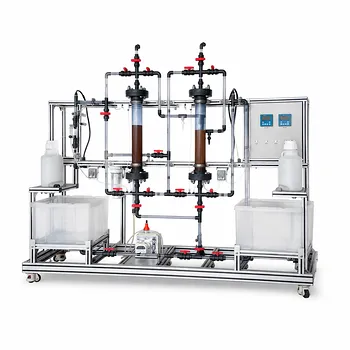
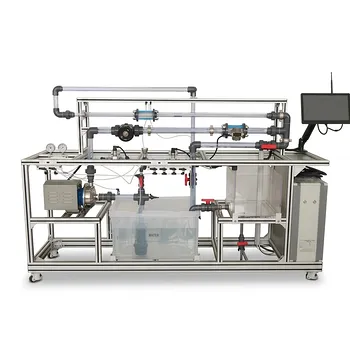
The design of a leaching pilot plant experiment begins with a fundamental binary choice: classifying your process by both the chemical nature of the solvent and the physical method of contacting. Based on the chemistry, your primary options are acid leaching (e.g., sulfuric, hydrochloric, nitric), alkali leaching (e.g., sodium hydroxide, ammonium hydroxide), salt leaching, bacterial leaching, water leaching, and chlorinated leaching. The physical setup is then classified by the contacting method, most commonly as agitation leaching for fine particles in a stirred tank or heap leaching for coarse solids in a packed bed. These classifications directly determine your pilot plant’s materials of construction, safety protocols, and the kinetic data you can collect.
The true experimental goal isn't just picking a solvent from a list—it's engineering a safe, representative system. Your solvent choice dictates every downstream decision, from reactor metallurgy to recovery economics, while your contacting method defines the mass transfer regime you are studying. A decision made in isolation here will cascade into project failure.
Breaking Down the Solvent Classifications
The chemical classification of the solvent is more than a label; it defines the reaction environment and the target solute. Your choice must align with the solid matrix’s chemistry and the component you wish to selectively dissolve.
Chemical Reactivity and Target Minerals
- Acid Leaching: This is the workhorse for metal extraction from ores. Using sulfuric, hydrochloric, or nitric acid creates a low-pH, high-redox environment. It is highly effective but necessitates understanding that you are often running a heterogeneous reaction, not just a simple dissolution.
- Alkali Leaching: Processes using sodium hydroxide or sodium carbonate are critical for selective extraction where the matrix is acidic or amphoteric. This includes extracting alumina from bauxite or treating tungsten ores, and it generally presents less severe corrosion challenges than strong acids for common stainless steels.
- Specialized and Mild Systems: Salt leaching is often used for ion-exchange-driven extractions, while bacterial leaching introduces a biological catalyst requiring precise pH and nutrient control. Water leaching is the simplest, lowest-cost option, ideal for water-soluble salts, but it lacks selectivity.
Setting Up the Physical Contacting Method
The solid-liquid contacting method is what separates a leaching pilot plant from a simple beaker experiment. It dictates how you handle solids, achieve mass transfer, and simulate industrial-scale hydrodynamics.
Agitation Leaching
This setup uses stirred tanks to suspend fine solid particles. You would select this method when studying fast kinetics for finely ground feedstocks. It provides excellent mass transfer but requires subsequent filtration or thickening pilot units to separate the leachate from the raffinate solids.
Heap and Percolation Leaching
Heap leaching simulates stacking coarse ore on a pad and trickling solvent over it. From a pilot plant design perspective, this requires columns resistant to the acidic or alkaline chemistry, reliable solvent distribution plates, and air injection systems for oxidative processes. Your experiment here focuses on long-term kinetics, channeling effects, and permeability—not just contact time.
The Critical Role of Material Compatibility
Selecting your solvent chemistry without simultaneously specifying your pilot plant's materials of construction is the most expensive mistake you can make. The aggressive multi-phase chemistry in leaching leaves no room for generic setups.
Corrosion Resistance is Non-Negotiable
Oxidative acid leaching operates at high redox potentials that rapidly destroy standard stainless steel. Your design must specify highly corrosion-resistant wetted components like borosilicate glass, PTFE (Teflon), or titanium. A stainless-steel flange in a hot hydrochloric acid pilot line will fail, creating both a safety hazard and invalidating experimental results by contaminating the leachate with iron.
Instrumentation for Control
The reaction rate in many leaching processes is directly tied to the redox environment. Relying on manual sampling is insufficient. A robust pilot plant integrates automated oxidation-reduction potential (ORP) sensors and pH transmitters in a control loop with precise dosing pumps. This system manages the real-time addition of oxidants like hydrogen peroxide or sparged oxygen, maintaining the thermodynamic window you designed for your experiment.
Designing for Safety from the Molecular Level
Pilot-plant safety is a primary process variable, not a secondary feature. Many leaching trials involve flammable or toxic organic solvents as phase modifiers or diluents.
Preventing Fire and Explosion
If your solvent system includes ethanol or acetone, you must prevent vapor accumulation. This means designing the skid with an open-frame structure or integrated exhaust hoods for ventilation. Purging the vapor space of feed and product tanks with nitrogen gas blanketing is mandatory to keep the oxygen concentration below the limiting oxygen index. Fixed gas detectors with pre-alarm logic near the leak points provide the last layer of defense.
Containment Engineering
Routine maintenance on leaching pilot plants involves solids handling that strains joints. A best-practice design minimizes leak points by using high-quality welded joints wherever possible, reserving flanges for only the points of mandatory disassembly, like vessel manways or filter housings.
Understanding the Trade-offs
Every decision in a pilot plant design involves a conflict between competing objectives. Acknowledging these trade-offs is critical for experimental validity.
- Extraction Selectivity vs. Solvent Recovery Economics: A solvent that provides perfect solute selectivity (your deep need) might form an azeotrope with water or have a high latent heat of vaporization. This makes downstream separation in a distillation column energetically crippling. You must balance chemistry with process cost, typically favoring a solvent with high relative volatility against the solute.
- Contact Efficiency vs. Phase Disengagement: Agitation maximizes mass transfer but can create stable emulsions or the need for longer settling times. An ideal solvent has a moderate interfacial tension (e.g., 1-47 mN/m) and a high density difference to the aqueous feed. Over-mixing without this property just creates a separation bottleneck in the next unit operation.
- Reaction Rate vs. Equipment Longevity: The highest extraction kinetics might occur at 80°C with concentrated acid, but that pushes PTFE-lined components to their thermal limits and accelerates corrosion on any exposed titanium. Your experiment must either accept a lower kinetic rate or justify the capital cost of rare, exotic alloys like tantalum.
Making the Right Choice for Your Goal
Your final experimental matrix should be driven by a specific research or process development goal. The following priorities will guide your option selection.
- If your primary focus is maximizing selectivity for a target metal: Start with an alkali or acid system known from fundamental chemistry to complex selectively, and invest time in testing solvent modifiers that alter the redox potential without forming hard-to-separate emulsions.
- If your primary focus is studying scale-up kinetics: Prioritize the agitation leaching method in a baffled, geometrically scaled vessel. Use automated ORP control loops to remove mass transfer limitations and isolate the intrinsic chemical reaction rate.
- If your primary focus is operational safety with novel solvents: Design the entire experiment around an aqueous-based solvent or an open-rack reactor with nitrogen blanketing. Prioritize a solvent with a low vapor pressure and high flash point from the start.
- If your primary focus is replicating industrial economics: Avoid the exotic yet perfect solvent. Choose a technical-grade solvent with a moderate cost, verify its separation efficiency in a linked extraction-distillation pilot loop, and build your reactor from glass-lined steel to simulate industrial metallurgy realistically.
By defining your process through both the solvent’s chemical class and its mechanical contacting method, you transform a generic test into a precise, scalable engineering experiment.
Summary Table:
| Classification | Key Options & Methods | Main Considerations & Materials |
|---|---|---|
| Chemical (Solvent) | Acid, Alkali, Salt, Bio-leaching, Water | Selectivity, corrosion profile, and downstream recovery economics. |
| Physical (Contact) | Agitation (tanks), Heap (packed columns) | Mass transfer rates, kinetics, and solid-liquid separation. |
| Material Choice | Glass, PTFE, Titanium, Exotic Alloys | Corrosion resistance (especially in high-pH/low-pH redox systems). |
| Safety & Control | Nitrogen purging, ORP/pH sensors, exhaust | Fire prevention, toxic gas containment, and process automation. |
Looking to build a reliable and safe leaching setup? LABPARK provides premier Educational and Vocational Unit Operations Pilot Plants in chemical engineering, bioprocess & biotech, and environmental & water treatment for universities, research institutes, and enterprises. Our systems are engineered for precise process control, material compatibility, and maximum safety. Contact our specialists today to find the perfect pilot plant solution for your lab!
Related Products
- Comprehensive Liquid-Liquid Extraction Pilot Plant for Engineering Education
- Rising and Falling Film Evaporation Educational Unit Operations Pilot Plant
- Comprehensive Fluid Mechanics Educational Unit Operations Pilot Plant
- Gallium and Indium Selective Extraction Educational Pilot Plant
- Natural Product Extraction Unit Operations Training Pilot Plant
People Also Ask
- How do pilot plants differentiate physical vs chemical extraction? Enhance Chemical Engineering Training
- How to Validate BIPs for LLE Pilot Plants? Steps to Align Simulations with Reality
- How are ternary phase diagrams and LLE data applied in extraction experiments? Optimize Pilot Plant Scale-up
- In a liquid-liquid extraction pilot plant, how is a ternary-phase diagram utilized to determine solvent feed requirements?
- How Do Selectivity & Distribution Coefficients Influence LLE Pilot Plant Solvent Choice?