The foundational safety rule for hot filtration of volatile organic solvents is absolute exclusion of open flames. Instead, you must use enclosed heating sources like water baths, steam jackets, or electric mantles. Equally important, the glassware must be preheated and correctly chosen—a short-stem or stemless funnel is essential to prevent premature crystallization and clogging. Finally, vacuum filtration is generally unacceptable here; the reduced pressure can trigger violent boiling, leading to splashing, vapor release, and product loss.
Hot filtration with low-boiling-point solvents transforms a routine lab operation into a significant fire and explosion risk. The core of safe equipment setup is threefold: eliminate ignition sources, control the solvent’s temperature without causing vigorous boiling, and design the flow path to maintain solubility until the filtrate has fully passed the bottleneck. Following these rules is not just best practice—it’s a prerequisite for pilot plant work and any training in chemical process safety.
Understanding the Hazard Profile of Volatile Solvents During Hot Filtration
Volatile organic solvents present a dual danger under heat: they can form explosive vapor clouds and, simultaneously, their low boiling points make them prone to sudden phase change when pressure drops.
The Fire and Explosion Triangle
An ignition source near a hot filtration setup easily completes the fire triangle—fuel (solvent vapor), oxygen (air), and an ignition spark or open flame. Even a distant Bunsen burner or alcohol lamp can ignite invisible vapors that have traveled across a bench.
How Heat Amplifies the Risk
Heating increases the solvent’s evaporation rate, creating a flammable atmosphere faster. In an unventilated area, this can quickly surpass the lower explosive limit. Therefore, any heating method must be intrinsically spark-free and sealed as much as possible.
Safe Equipment Setup: The Non-Negotiable Foundations
A few deliberate equipment choices make all the difference between a controlled operation and a dangerous incident.
Replacing Open Flames with Indirect Heating
Never use alcohol lamps, gas burners, or hot plates with exposed elements. Acceptable alternatives include:
- Hot water baths (with an immersion thermostat)
- Steam jackets on pilot-scale filter housings
- Explosion-proof electric heating mantles with temperature control
These methods provide even heat distribution, eliminating hot spots that could cause bumping or localized vapor concentration.
The Critical Role of the Funnel Stem
A standard long-stem funnel is a dangerous bottleneck. As the hot solution cools in that narrow stem, the solute crystallizes prematurely, immediately clogging the filter and stopping the operation. The solution is to use a short-stem or stemless glass funnel. Preheating the funnel in an oven just before use ensures the entire flow path stays hot enough to keep the solids dissolved until after they pass the filter paper.
Why Vacuum Filtration Usually Fails Here
Vacuum-enhanced hot filtration might seem faster, but it’s profoundly risky for low-boiling-point solvents. Reducing the pressure inside a heated flask lowers the solvent’s boiling point. What was a calm liquid at atmospheric pressure can suddenly erupt into a violent boil, spraying hot solvent up into the filter and out of the apparatus. The result is product loss, exposure to hazards, and a compromised seal. Except in carefully engineered, pressure-controlled systems, avoid vacuum filtration for these solvents.
Closed-Loop Thinking: Protecting the Operator and the Environment
Safety doesn’t stop when the filtration ends. The damp solid left on the filter still holds solvent that will evaporate into the workplace if not contained.
Moving Away from Open-Air Drying
Allowing the filtered cake to dry on an open funnel or tray releases vapors directly into the breathing zone and creates a secondary fire risk. Instead, a closed-loop inert gas circulation system should be used for any subsequent drying step.
How a Safe Drying System Works
In such a system, the dryer’s exhaust gas first passes through a filter or cyclone to trap particles, then through a condenser that recovers the volatile solvent for reuse. A blower reheats and recirculates the inert gas (typically nitrogen). A makeup gas line compensates for gas lost when solids are discharged, maintaining an oxygen-free atmosphere. This totally eliminates direct atmospheric emission and keeps operators safe.
Common Trade-offs and Pitfalls to Avoid
Implementing these precautions requires balancing thoroughness against practical constraints, but cutting corners always backfires.
- Heating method vs. filtration speed: A water bath heats gently and safely, but this may slightly slow the process compared to a direct flame. Accept that speed is never worth the safety trade-off.
- Preheating effort vs. clogging risk: It takes extra minutes to heat a funnel in the oven, but skipping this step almost guarantees a stem blockage. The time “saved” is instantly lost in rework and cleanup.
- Vacuum temptation: Operators often want to apply vacuum to push through a slow filtration. With volatile solvents, use patience or slightly larger filter paper and a wider funnel instead. If vacuum must be used, the entire setup must be carefully pressure-controlled and capable of containing boil-over.
Making the Right Choice for Your Process Goal
Adapt these principles to your specific situation using the following focused guidelines.
- If your primary focus is maximum operator safety: Insist on a steam jacket or electric mantle, never an open heat source. Add an automatic temperature cut-off and ensure the filtration zone has its own local exhaust ventilation.
- If your primary focus is reproducible yield: Pre-warm not only the funnel but also the receiving flask. Use a stemless funnel to eliminate that cold nucleation point entirely, and have a secondary heating source around the receiver if needed.
- If your primary focus is environmental compliance: Couple the filtration step directly with an inert gas drying loop that recovers solvent. Install a condenser immediately downstream, and never allow the cake to dry in open air even temporarily.
- If your primary focus is training or pilot plant setup: Build a written standard operating procedure that explicitly bans open flames, mandates funnel preheating, and explains why vacuum is prohibited. Drill this in until it becomes muscle memory.
Your safety during a hot filtration with volatile solvents hinges on eliminating spark, controlling the entire thermal path, and respecting the physics of low-boiling-point liquids. Treat these precautions as absolute requirements, and you turn a high-risk task into a routine, safe process.
Summary Table:
| Setup Element | Risk / Failure Mode | Safe Practice & Solution |
|---|---|---|
| Heating Source | Open flames/exposed elements cause vapor ignition | Use enclosed water baths, steam jackets, or electric mantles |
| Funnel Selection | Long-stem funnels cause premature crystallization & clogging | Use a preheated short-stem or stemless glass funnel |
| Filtration Method | Vacuum drops pressure, triggering violent solvent boiling | Stick to gravity filtration; avoid vacuum unless pressure-controlled |
| Cake Drying | Open-air drying releases toxic/flammable vapors | Use a closed-loop inert gas (nitrogen) drying system with condenser |
Modernize Your Unit Operations Training Safely with LABPARK
Teaching complex chemical processes like hot filtration requires equipment that prioritizes safety without compromising educational value. LABPARK provides state-of-the-art Educational and Vocational Unit Operations Pilot Plants in chemical engineering, bioprocess & biotech, and environmental & water treatment for universities, research institutes, and enterprises.
Our custom-engineered pilot plants feature industrial-grade safety controls, explosion-proof components, and realistic process loops to give your students and researchers hands-on, risk-free experience.
Ready to elevate your engineering lab? Contact the LABPARK team today to explore our pilot plant solutions!
Related Products
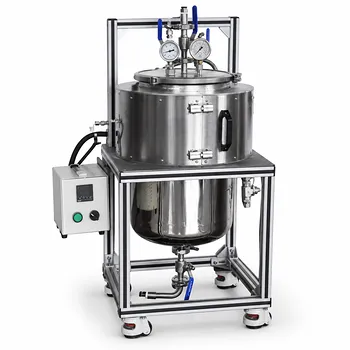
- Hot Filtration Educational Unit Operations Pilot Plant Laboratory System
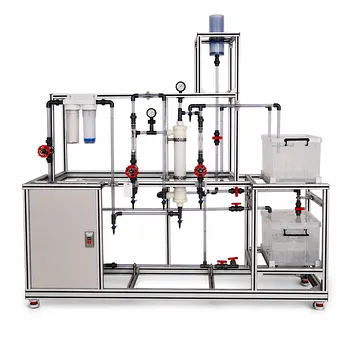
- Constant Pressure Filtration Educational Unit Operations Pilot Plant
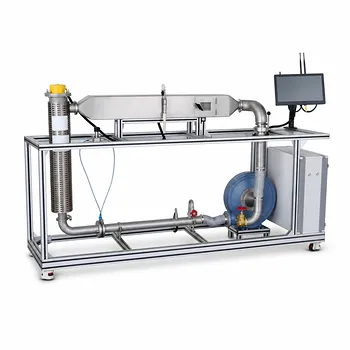
- Circulating Wind Tunnel Drying and Convective Heat Transfer Coefficient Determination Educational Pilot Plant
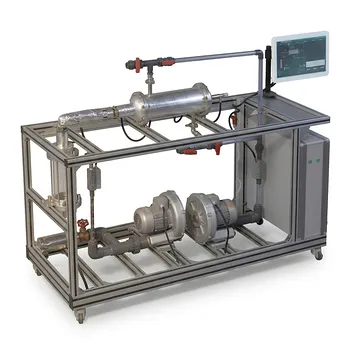
- Shell and Tube Heat Exchanger Heat Transfer Coefficient Determination Educational Pilot Plant
- Multi-Functional Special Distillation Educational Pilot Plant
People Also Ask
- How to Determine Specific Cake (r) & Filter Medium (Rm) Resistance Using Filtration Pilot Plant Data
- How to select solid-liquid separation equipment for pilot plants? A Step-by-Step Guide
- How can researchers identify and resolve filter medium blinding? Optimize Your Pilot Plant Runs
- Why Demo Constant-Rate to Constant-Pressure Filtration on a Pilot Plant? Key Practical Insights
- How do Buchner funnels & leaf filters differ in filtration scale-up? Key Differences Explained