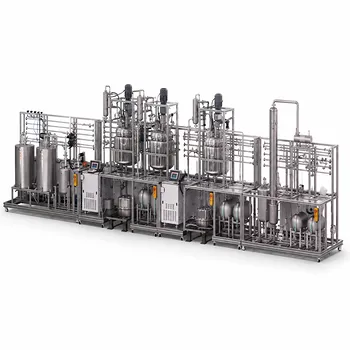
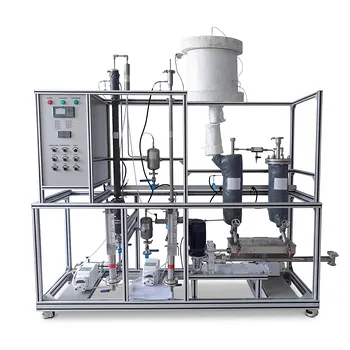
Yes, an empirical chemometric model can turn your pilot plant into a smart, self-optimizing system—but only if you respect its blind spots. The safety and operational limitations are stark: a rigid demand for massive, high-quality datasets; the grave danger of extrapolating beyond the model’s training conditions; and the hidden menace of overfitting, which delivers dangerously false confidence. In a chemical pilot plant, these data-driven flaws don’t just reduce accuracy—they can directly sabotage material balances, overheat reactors, or conflict with hardwired safety controls, turning a predictive tool into a physical hazard.
The core insight: Empirical chemometric models are correlation engines with no understanding of physics. Their greatest safety limitation is that they are blind outside their training envelope, while the operational limitation is their fragility when faced with the messy, dynamic reality of pilot-scale hardware. Using them for process control demands a framework that physically prevents extrapolation, validates every sensor input, and subordinates the model to the plant’s established safety hierarchies. Ignoring this interplay between data and hardware is what transforms a powerful advantage into a major operational liability.
The Brittleness of Empirical Models in Dynamic Pilot Environments
An empirical model’s strength is also its fundamental weakness. It learns patterns only from what it has seen, so any mismatch between training data and live plant conditions instantly erodes its reliability.
The Non-Negotiable Demand for High-Quality Data
Empirical models must be fed large volumes of pristine data to be useful. In a pilot plant, obtaining that data is an engineering challenge in itself.
Sampling errors can poison the entire model foundation. For high-temperature reactions, extracting a sample for analysis often shifts the chemical equilibrium as the sample cools. If your training data represents a cooled, non-equilibrium state, the model will learn the wrong relationship and recommend incorrect temperatures or flow rates in real time.
Mitigating this requires in-situ analytical instruments or rapid quenching—an operational burden that becomes a safety prerequisite. Without it, the model’s control actions are built on fiction.
When the Model’s World Shrinks: The Danger of Narrow Operating Ranges
The only region where an empirical model can be trusted is the convex hull of its calibration data. Once the plant drifts—say, a 20°C increase in reactor temperature to test a new catalyst—you are navigating without a map.
This is not just a performance problem; it’s a direct threat. A pilot plant routinely explores the edges of reaction envelopes, and high temperatures accelerate side reactions, cause thermal degradation, and can initiate exothermic runaways. A model that linearly extrapolates a cooling demand from its narrow training set could gravely undershoot, removing the one barrier preventing a runaway.
The Extrapolation Trap and Its Operational Fallout
Unchecked extrapolation is the single most dangerous failure mode because it converts a software modeling error into a physical event with real consequences for equipment and personnel.
From Inaccurate Prediction to Physical Hazard
Imagine a chemometric model trained on steady-state data around 150°C. It now controls the flow of a utility stream—the cooling water—to a reactor. If an upstream disturbance pushes the reactor to 210°C, the model has no valid basis for deciding how much to open the valve.
A naive prediction might command a cooling flow that is dangerously insufficient. An exotherm can then go uncooled, directly violating the safety evaluation principle that temperature control systems must be robust against all anticipated conditions. The model’s extrapolation has bypassed the entire temperature safety layer.
Undermining Material Balance and Process Stability
Empirical models often manipulate feed ratios to optimize yield. However, the overall material balance of a pilot plant is typically anchored by a flow regulator on the main feed stream.
If a chemometric model, extrapolating beyond its data, commands a secondary feed valve to a position that disrupts this balance, pressure profiles and liquid levels will drift. This can create a hazardous gas-liquid interface where a level controller is not positioned, or it can induce oscillations as the model fights the master flow controller. In a plant designed with the single control valve rule (to prevent competing loops), an unshackled model can inadvertently introduce exactly the kind of conflicting signal the rule was designed to prevent.
Overfitting: The Hidden Operational Time Bomb
Overfitting makes a model look brilliant during development and utterly incompetent during real operations. For pilot-plant safety, this false sense of security is a time bomb.
The Illusion of Control During Development
An overfit model memorizes the noise and specific quirks of one training campaign. It produces artificially optimistic performance metrics. The real pilot plant, however, has inherent variability: raw material charge sequences differ slightly, a pump’s mechanical wear changes its flow characteristic, or the catalyst activity declines.
The overfit model cannot generalize. It suddenly fails to maintain the desired setpoint, and operators—trained to trust the advanced control system—may not react in time to a developing excursion. That operational surprise is what leads to incidents.
How Overfitting Compounds Other Safety Risks
Because an overfit model latches onto spurious correlations, it can make wild moves when a new data point falls just outside its memorized pattern. Consider a model that has incorrectly linked a slight pressure variation to a specific rotating machinery harmonic (a known hazard penalty in process assessments).
If the pump changes speed during a batch, the model might drive a control valve to an extreme position to “correct” a pressure reading, putting strain on seals and creating a leak point. In a hazardous area where intrinsic safety barriers are required, an unexpected mechanical failure from a rogue control signal can defeat the protective envelope.
Bridging the Gap: Integrating Chemometric Control with Pilot Plant Hardware
A chemometric model cannot live in isolation. Its safety depends entirely on how it connects to the plant’s sensors, valves, and safety systems.
Sensor Placement and Data Integrity for Intrinsic Safety
The model’s brain is only as good as its sensors. For hazardous pilot environments, every field instrument requires appropriate safety barriers (intrinsic safety) and correctly specified terminal boards.
A faulty analog input feeding a chemometric controller is a dual threat: it provides bad data that can lead to a dangerous output, and if not properly isolated, it could ignite a flammable atmosphere. Therefore, the operational limitation becomes a maintenance burden: every sensor in the model’s loop demands rigorous, documented verification because its failure is no longer just a measurement error—it’s a potential root cause of a control-driven accident.
Respecting Physical Control Constraints
Empirical models need to be embedded within the existing regulatory control hierarchy, not slapped on top. A control valve must be placed on the discharge line of a pump to maintain proper hydraulics; a chemometric model cannot be allowed to command that valve to a position that causes pump cavitation.
Similarly, the model must never directly fight a critical single control valve or a hardwired interface level controller. The operational limitation is that the model’s authority must be physically bounded (through output clamping or a cascade architecture) so that it can suggest optimizations, but the final safety-critical actions remain with proven, hard-coded controllers that obey the laws of physics.
Understanding the Trade-offs: Model Flexibility vs. Operational Certainty
Adopting chemometric models means you are exchanging first-principles predictability for data-driven adaptability. This trade-off comes with direct safety implications.
- You gain the ability to model complex, poorly understood reaction kinetics, but you lose the guarantee that the model will behave sensibly outside known territory.
- You can optimize for multiple conflicting objectives (yield, purity, throughput) simultaneously, but you accept the constant operational overhead of monitoring for data drift and model degradation.
- You can reduce development time compared to deriving a full theoretical model, but you must invest heavily in fail-safe architectures—like watchdogs that automatically fall back to a conventional PID loop if the model’s prediction uncertainty exceeds a threshold.
The key is never to let the model’s convenience obscure the fact that, in a pilot plant, its predictions have the same authority as a handle on a manual valve. You must treat it as a junior operator with a brilliant but narrow expertise: trust it within its known domain, but never allow it to override the physical safety systems that keep the plant intact.
Building a Safe and Reliable Chemometric Control Strategy
Your approach must match your primary objective and the inherent risk profile of your pilot plant.
- If your primary focus is maximizing yield in an established, well-mapped process: Enforce a strict soft-sensor validation routine using in-situ analyzers, and hard-code an operating envelope that physically limits the model’s setpoints to the convex hull of your calibration data.
- If your primary focus is training engineers on advanced control methods: Use the model as a demonstrator in a constrained, simulated environment first, and emphasize the abrupt failures that occur when you intentionally feed it extrapolated data—making the safety limitation the core lesson.
- If your primary focus is scaling up a novel, safety-critical reaction: Do not commission the model for closed-loop control until you have completed a full process hazard assessment that specifically evaluates the consequences of a model failure during each high-risk phase (exotherm, gas evolution, overpressure). Always combine it with independent safety instrumented systems.
An empirical chemometric model is a powerful tool, but its safe operation hinges on the disciplined recognition that it is just one component in a larger, physics-bound safety system—and never the final authority.
Summary Table:
| Key Limitation | Major Operational Risk | Mitigation Strategy |
|---|---|---|
| High Data Demand | Bad data leads to incorrect real-time control actions | Implement in-situ analytical instruments & rapid quenching |
| Extrapolation | Exothermic runaway & material imbalance | Restrict control setpoints to the calibration data hull |
| Overfitting | Model fails to generalize, causing sudden process drift | Implement watchdog fallbacks to manual/PID loops |
| Hardware Mismatch | Fighting existing physical safety control loops | Subordinate model to hardwired safety barriers & cascade loops |
Secure Your Pilot Scale-Up with Robust Engineering
Integrating data-driven models into your process control requires pilot hardware built on safety-first principles. LABPARK provides state-of-the-art Educational and Vocational Unit Operations Pilot Plants in chemical engineering, bioprocess & biotech, and environmental & water treatment for universities, research institutes, and enterprises.
We ensure our plants are engineered with physical safety barriers, reliable instrumentation, and robust control architectures that prevent operational failures.
Contact LABPARK today to discuss how we can support your research, education, and industrial scale-up goals!
Related Products
- Fixed Bed Gas Solid Catalytic Reaction Educational Pilot Plant
- Carbon Dioxide Hydrogen Methanol Synthesis Educational Unit Operations Pilot Plant
- Ethyl Acetate Synthesis Unit Operations Pilot Plant for Practical Training
- Natural Product Extraction Unit Operations Training Pilot Plant
- Green Anhydrous Ethanol Refining Practical Training Pilot Plant
People Also Ask
- How do reactor pilot plants safely study gas-solid reactions? Master kinetics with thermal & flow control.
- How does the Mears criterion evaluate transport resistance? Key Guide to Intrinsic Kinetics
- Why is a multibed configuration necessary for exothermic reactions? Optimize your pilot plant trajectory.
- Fluidized vs. Fixed Bed Reactors: Comparing Heat & Complexity in Pilot Plants
- How is the friction factor determined for fixed-bed pilot plants? Select the best pressure drop correlation.