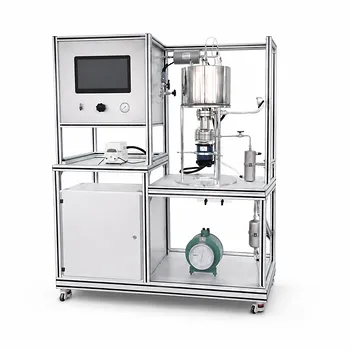
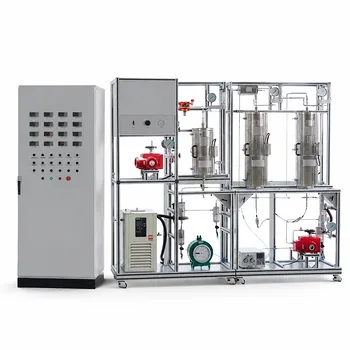
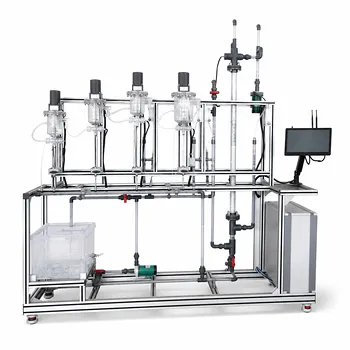
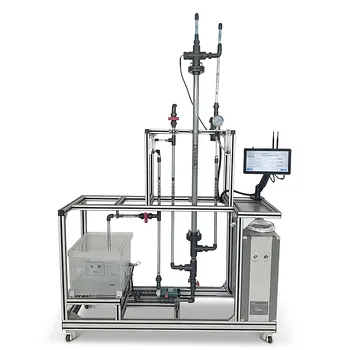
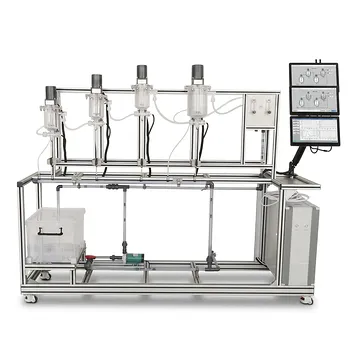
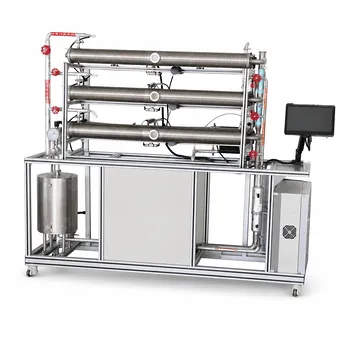
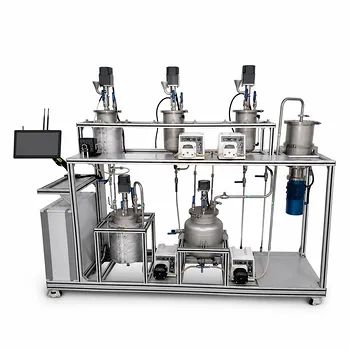
Customizable reactor pilot plants are your process development sandbox. They allow engineers to physically evaluate the delicate balance between reaction kinetics, equilibrium conversion, and heat transfer under controlled, real-world conditions. For an exothermic equilibrium reaction like ammonia synthesis, a tailored pilot unit can test adiabatic fixed-bed arrangements with intermediate cooling loops and gas recycles. For endothermic processes with continuous catalyst regeneration—such as fluid catalytic cracking (FCC)—fluidized or entrained flow pilots enable the study of catalyst transport, heat-carrier dynamics, and coke burn-off rates without risking a full-scale plant.
Process scale-up is fundamentally a heat-management and catalyst-deactivation puzzle. Customizable reactor pilot plants give you a safe, instrumented platform to map thermal profiles, validate catalyst performance, and de-risk the critical balance between kinetics and thermodynamics before committing to capital-intensive industrial designs.
The Fundamental Challenge of Heat Management in Complex Reactions
Highly exothermic or endothermic reactions cannot be understood on paper alone. The real-world interplay between reaction rate, temperature, and conversion demands physical testing in a system that mimics large-scale constraints.
Ammonia Synthesis: Taming a Reversible Exothermic Reaction
Ammonia synthesis is highly exothermic and equilibrium-limited. As the reaction progresses, the temperature rises, pushing against the thermodynamic equilibrium and capping conversion. A pilot plant lets you test adiabatic fixed beds with intermediate cooling loops—removing heat between stages to shift the equilibrium back toward the product. You can also vary gas recycle ratios, a critical lever for managing the temperature profile and maximizing ammonia yield that computational models alone cannot fully capture.
Fluid Catalytic Cracking: Balancing Cracking and Catalyst Regeneration
FCC is endothermic and requires continuous catalyst regeneration via coke burn-off. In a pilot plant, you can deploy a fluidized bed or entrained flow reactor to observe how catalyst particles circulate, how heat carriers distribute energy, and how burning coke rejuvenates activity. These dynamics—catalyst attrition, transport disengagement, and thermal feedback—are nearly impossible to predict without experimental data from a system that physically circulates the solid inventory.
The Role of Customization in Replicating Real-World Conditions
Commercial reactors are never one-size-fits-all. A customizable pilot plant lets you swap internals, adjust quench positions, and modify cycle configurations to mirror specific plant designs. You can test different bed depths, monolith geometries, or nozzle arrangements, directly measuring how each choice shifts temperature hot spots, pressure drop, and conversion profiles. This flexibility is what turns a generic test rig into a reliable predictor of industrial performance.
Measuring What Matters: Catalyst Performance Evaluation
Beyond heat management, the pilot plant is the truth-teller for catalyst behavior. It reveals the real kinetics, deactivation patterns, and thermal sensitivities that influence long-term profitability.
From Kinetics to Deactivation: What Pilot Plants Reveal
A well-designed pilot reactor can decouple intrinsic activity from transport limitations. By testing over a range of space velocities and temperatures, you obtain true kinetic parameters. More importantly, you can track coke formation rates, sintering onset, and regeneration efficiency under realistic gas compositions and temperatures—data that accelerates catalyst selection and cycle optimization.
Solving the Thermal Profiling Puzzle
Temperature measurement inside a catalyst bed is tricky, especially with irregular supports. Foam monoliths, for instance, often prevent direct sensor insertion. Customizable pilot plants solve this by using moveable thermocouples positioned along the reactor axis in inert zones, or by switching to extruded alumina monoliths that allow direct temperature profiling inside the active catalyst zone. This level of thermal mapping is essential for verifying heat integration efficiency and understanding whether your cooling strategy is working as designed.
Understanding the Trade-offs and Pitfalls
No experimental platform is perfect. Being aware of the limitations ensures the pilot plant’s data works for you, not against you.
Cost, Complexity, and Scale Limitations
Pilot plants are capital- and resource-intensive. High-temperature units (>900°C) require exotic materials, robust safety systems, and specialized instrumentation. Moreover, even a customized pilot unit cannot perfectly replicate industrial hydrodynamics—wall effects, bypassing, or maldistribution may differ from commercial vessels, requiring careful data interpretation and scale-up correlations.
The Danger of Data Misinterpretation
Poor thermal profiling or an unrepresentative catalyst loading can lead to false confidence in a catalyst’s stability or an overlooked hot spot. If you rely solely on bulk outlet measurements rather than axial profiles, you risk missing critical intra-bed temperature excursions that cause runaway sintering or poor selectivity. Customization must include thoughtful sensor placement; otherwise, the flexibility of the pilot plant becomes a liability.
Making the Right Choice for Your Process Development Goals
The value of a pilot plant lies in how well its configuration serves your specific reaction’s needs. Match the setup to the problem.
- If your primary focus is a reversible exothermic reaction like ammonia synthesis: Prioritize a pilot plant with configurable adiabatic bed sections, interstage cooling, and variable gas recycle loops to map the temperature-conversion equilibrium.
- If your primary focus is an endothermic cracking process with continuous regeneration: Invest in a fluidized bed or entrained flow pilot that accurately tracks catalyst holdup, heat-carrier circulation, and coke burn-off kinetics under controlled partial pressures.
- If your primary focus is catalyst screening and thermal validation: Demand extensive axial temperature profiling capability—moveable thermocouples or compatible monolith geometries—to capture true intra-bed performance rather than just inlet and outlet data.
A customizable reactor pilot plant transforms heat management and catalyst evaluation from a risky guess into a measurable, optimizable engineering exercise.
Summary Table:
| Reaction Type | Process Challenge | Pilot Plant Configuration Solution |
|---|---|---|
| Ammonia Synthesis (Exothermic) | Equilibrium limits & thermal runaway | Adiabatic beds, intermediate cooling & gas recycles |
| Fluid Catalytic Cracking (Endothermic) | Continuous deactivation & transport dynamics | Fluidized/entrained flow with coke burn-off tracking |
| General Catalyst Screening | Decoupling kinetics from transport limits | Axial thermal mapping via moveable thermocouples |
De-Risk Your Process Scale-Up with LABPARK
Transitioning from bench scale to industrial production requires precise thermal control and accurate catalyst evaluation. LABPARK provides state-of-the-art Educational and Vocational Unit Operations Pilot Plants in chemical engineering, bioprocess & biotech, and environmental & water treatment.
We help universities, research institutes, and enterprises map thermal profiles, validate catalyst performance, and safely model complex reaction kinetics.
Ready to customize your reactor configuration? Contact our engineering team today to request a technical consultation and quote!
Related Products
- Fixed-Bed Chemical Reaction and Gas Dust Tar Removal Unit Operations Pilot Plant
- Fixed Bed Gas Solid Catalytic Reaction Educational Pilot Plant
- Multi-Reactor Educational Pilot Plant for Reaction Engineering Unit Operations
- 100L Continuous Loop Hydrogenation Educational Unit Operations Pilot Plant
- Fluidized Bed Gas Solid Catalytic Reaction Educational Pilot Plant
People Also Ask
- When to transition from PID to adaptive control in pilot plants? Key process indicators.
- How do deviations in estimating latent heat impact pilot plant thermal systems? Avoid hardware mis-sizing.
- Why Compare Predicted and Experimental Excess Enthalpy? Key to Accurate Pilot Plant Scale-up
- How to study gasification in pilot plants? Compare exit gas composition & efficiency
- Why Use PTFE & Hastelloy in Chemical Pilot Plants? Prevent Corrosion & Ensure Safety