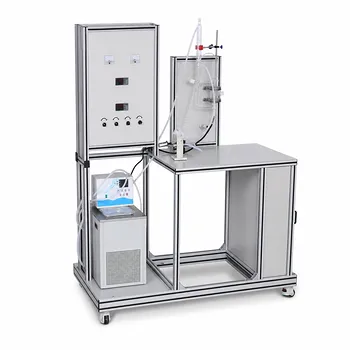
The difference between a successful training run and a catastrophic failure in vacuum distillation often hinges on the safeguards you install before turning on the pump.
Configuring a lab-scale or pilot‑plant vacuum distillation unit for training demands a layered safety strategy. The three non‑negotiable measures are: a chemical shielding train to protect the vacuum pump, rigorous glassware inspection to prevent implosions, and a strict pressure‑release protocol. In a training environment, these essentials must be augmented with additional layers—vacuum breakers on storage tanks, inert atmospheres for flammable solvents, and fully integrated emergency infrastructure—so that operators learn industrial‑grade safety from the start.
A properly configured vacuum distillation training unit protects both people and equipment by layering shields: a chemical shield for the pump (absorbers, traps), a structural shield for the glass (crack inspection, wrapping, proper components), and an operational shield for the system (slow venting, vacuum breakers, inert atmosphere). Neglecting any layer can turn a routine teaching experiment into a violent implosion or toxic release.
Shielding the Vacuum Pump from Contamination and Corrosion
The Absorption Train Sequence
Before the vacuum pump, install a sequential train of towers that chemically strip the gas stream.
As prescribed in the primary reference, this train must contain:
- Anhydrous calcium chloride to remove water vapor,
- Sodium hydroxide to neutralize acid gases, and
- Paraffin wax to capture organic vapors.
This layered barrier prevents corrosive and fouling substances from reaching the pump oil, extending equipment life and avoiding sudden pump failure under vacuum.
Buffer Bottles and Cold Traps
In educational pilot plants, additional components are standard.
- A buffer bottle prevents vacuum pump oil from back‑suctioning into the process glassware if the pump shuts off unexpectedly.
- A cold trap (often dry ice or liquid nitrogen cooled) condenses volatile vapors before they reach the pump, providing an extra polishing step.
Together, these elements form a complete pump‑protection envelope that also safeguards the experiment from oil contamination.
Why Pump Protection Directly Impacts Safety
A failing vacuum pump can cause a sudden loss of vacuum.
If the system rapidly repressurizes while hot, violent boiling or a suck‑back of liquid into the condenser can occur.
By keeping the pump healthy, the entire distillation remains stable and predictable—a fundamental lesson every trainee must internalize.
Fortifying Glassware Against Implosion and Breakage
Mandatory Crack Inspection and Receiver Selection
Under negative pressure, even a microscopic crack can initiate a catastrophic implosion.
Before every run, inspect all glass components—especially round‑bottom flasks and condensers—for star cracks or hairline flaws.
- Never use standard conical flasks as receivers; their flat geometry cannot resist vacuum stress and will shatter.
- Use only thick‑walled, vacuum‑rated round‑bottom flasks and receivers.
Component Selection for Structural Stability
The integrity of the glass train depends on using the right components.
- A Claisen distillation head prevents foam from entering the condenser and reduces mechanical stress caused by bumping.
- A capillary tube (not boiling chips) introduces a fine stream of air bubbles into the boiling liquid, ensuring smooth, non‑bumping boiling under vacuum. Boiling chips are ineffective under vacuum and can lead to dangerous bumping that fractures glass.
- PTFE gaskets provide chemical‑resistant, flexible sealing that reduces the mechanical strain applied to glass flanges.
Physical Guarding and Wrapping
Even with all checks, glass can fail.
Wrap the exterior of vacuum‑exposed glass pipes and components with protective plastic tape. This acts as a catch‑net; if a crack forms, the tape contains the fragments and reduces the risk of injury or uncontrolled release of hot liquid. This practice is explicitly recommended in vocational pilot‑plant guidelines.
Mastering Pressure Control and Release
The Cold‑System Slow‑Vent Rule
The most operationally critical step comes at the end.
Vacuum must be released only after the system has cooled to near ambient temperature.
Slowly admit air through the vent valve—not by disconnecting a joint—to prevent two hazards:
- Thermal shock from a sudden inrush of cold air onto hot glass, and
- Oil backflow from the vacuum pump if the pressure equalizes too abruptly.
This discipline must become muscle memory for every trainee.
Vacuum Breakers on Storage Tanks
Storage and surge tanks in pilot plants are especially vulnerable to implosion from negative pressure.
A pressure drop of just 10 mbar below atmospheric can exert immense crushing force on a tank’s large‑area roof.
Such under‑pressure often arises during outlet pump suction if the tank vent is blocked.
To prevent collapse, every tank must be equipped with a vacuum breaker (or vent valve) that automatically opens to atmosphere when internal pressure falls below atmospheric. This demonstrates essential process‑safety design to students.
Venting and Overpressure Protection
While vacuum is the main focus, glass systems can also dangerously over‑pressurize if vents are blocked or a reaction generates gas.
All glass assemblies must include adequate atmospheric venting to avoid pressure buildup.
For flammable solvents, this passive venting must be paired with active systems:
- Inert gas blanketing (nitrogen purging) in feed and product tanks to keep oxygen below the flammability threshold.
- Flame arresters and relief vents aligned with NFPA 68 and NFPA 69 standards to safely divert a deflagration if it occurs.
Building a Training‑Ready Safety Ecosystem
Explosion‑Proof Instrumentation for Hazardous Solvents
When the curriculum involves low‑boiling, flammable, or toxic materials like carbon disulfide, the configuration must escalate to industrial grade.
- Use ATEX‑rated (explosion‑proof) heating, control, and monitoring instruments.
- Employ high‑efficiency glass or metal condensers to fully capture low‑boiling vapors.
- Integrate a closed‑loop vent scrubber to neutralize toxic off‑gases before they enter the lab.
This setup lets students study vapor‑liquid equilibrium and fractionation without risking exposure or ignition.
Integrating Emergency Infrastructure
A pilot‑plant laboratory must be physically prepared for the unexpected.
Install and clearly label:
- Master shut‑off valves for water, electricity, and gas,
- Fire extinguishers, fire blankets, eyewash stations, and emergency showers,
- First‑aid kits accessible within seconds.
Any operation generating toxic, volatile, or irritating gases must be conducted exclusively in a fume hood.
Operator Protocols and Personal Protective Equipment
Hardware is essential, but human behavior is the final layer.
- All operators must undergo rigorous safety training and sign a safety commitment before entering the lab.
- PPE is non‑negotiable: lab coats, protective goggles, and task‑specific gloves (chemical‑resistant, heat‑resistant, or cut‑resistant).
- Establish clear, written protocols for equipment failure reporting, proper waste disposal, and a mandatory pre‑departure check of all utility lines.
Understanding the Trade‑offs and Common Pitfalls
Adding multiple protective devices can increase system complexity and flow resistance—potentially requiring a higher‑capacity pump.
Inert gas blanketing adds cost and demands careful oxygen monitoring. Wrapping glass may hinder visual inspection for crack development.
Yet in a training environment, these trade‑offs are overwhelmingly justified because they teach future engineers to design with inherent safety.
Avoid these classic mistakes:
- Using boiling chips under vacuum – they are ineffective and can cause violent bumping that shatters glass; a capillary tube is the correct solution.
- Skipping the pre‑run crack check – overconfidence after many runs leads to implosion.
- Venting a hot apparatus suddenly – always wait for cooling.
- Neglecting tank vacuum breakers – even small pilot tanks collapse with surprising force, turning a benign storage vessel into a dangerous projectile risk.
Making the Right Choice for Your Training Setup
Every vacuum distillation training configuration must grow from a solid foundation. Tailor your measures to the hazards of your specific program.
- If you are teaching basic vacuum distillation with non‑hazardous substances: Focus on the three foundational layers—the pump protection absorption train, rigorous glass inspection and wrapping, and the cold‑system slow‑vent rule.
- If your curriculum involves flammable or toxic solvents: Immediately add inert gas blanketing, explosion‑proof (ATEX) instrumentation, vacuum breakers on all storage tanks, and operate entirely within a fume hood or with a closed‑loop scrubber.
- If you are scaling to a multi‑station pilot plant: Default to industrial‑grade safety systems—ATEX‑rated components, permanent vent relief lines, emergency master shut‑offs, and documented standard operating procedures that include failure reporting and pre‑startup safety reviews.
By embedding these layers of protection into the unit from the very first configuration, you transform vacuum distillation from a high‑risk operation into a powerful, safe, and enriching teaching instrument.
Summary Table:
| Safety Layer | Key Components & Actions | Main Purpose |
|---|---|---|
| Pump Protection | Absorption train (CaCl2, NaOH, wax), buffer bottle, cold trap | Prevents corrosion, organic contamination, and oil back-suction. |
| Glassware Integrity | Crack inspection, thick-walled flasks, capillary tube, plastic tape wrapping | Prevents vacuum-induced implosions and contains glass shards. |
| Pressure Control | Slow-venting after cooling, vacuum breakers, atmospheric venting | Avoids thermal shock, system overpressure, and tank collapse. |
| Ecosystem Safety | ATEX-rated instruments, inert gas blanketing, scrubbers, fume hoods | Protects against flammable solvents, toxic vapors, and fire risks. |
Build a Safe & Reliable Training Environment with LABPARK
Ensuring student and operator safety during vacuum distillation requires robust, industrial-grade pilot plant engineering. LABPARK designs and provides premium Educational and Vocational Unit Operations Pilot Plants across chemical engineering, bioprocess & biotech, and environmental & water treatment for universities, research institutes, and enterprises.
Our systems are built with integrated safety layers—including automated vacuum breakers, explosion-proof ATEX components, and chemical shielding trains—ensuring your students learn industrial safety practices in a controlled environment.
Ready to upgrade your lab's safety and training capabilities? Contact LABPARK today to consult with our engineering team.
Related Products
- Continuous Sieve-Plate Distillation Pilot Plant for Unit Operations Laboratory Education
- Multi-Modal Distillation Unit Operations Training Pilot Plant
- Multi-Functional Special Distillation Educational Pilot Plant
- Green Anhydrous Ethanol Purification Extractive Distillation Unit Operations Training Pilot Plant
- Dual-Mode Rectification Pilot Plant for Practical Training Unit Operations
People Also Ask
- How do distillation pilot plants validate VLE data? Achieve reliable solvent separation scale-up.
- Why is the column performance diagram critical? Optimize distillation pilot plant safety & efficiency.
- Why is condensate subcooling critical in pilot plants? Expert Design & Control Guide
- What are the primary reflux ratio control strategies? Master Distillation Unit Operations
- How can real-time carbon number prediction improve distillation pilot plants? Optimize control.