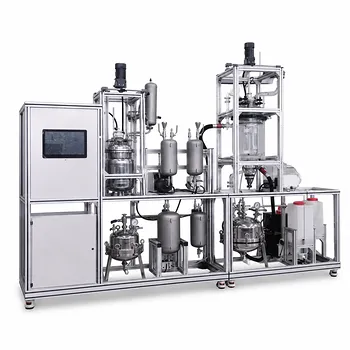
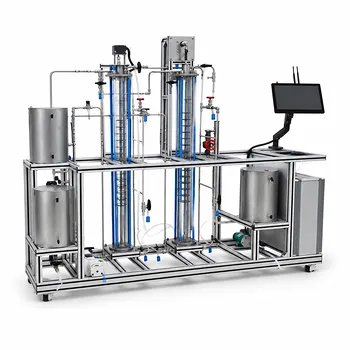
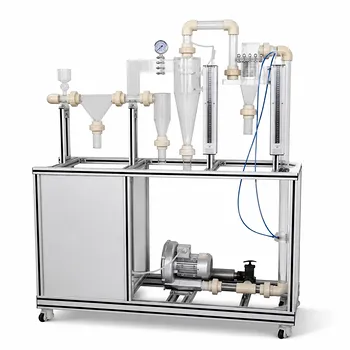
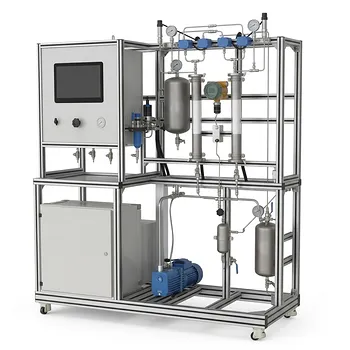
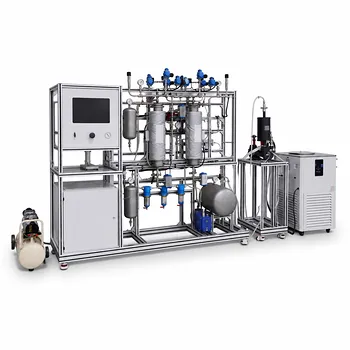
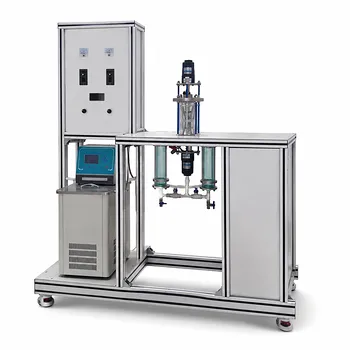
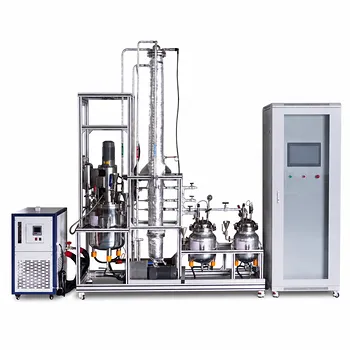
The direct answer: four core pilot plant configurations—batch rectifier, batch stripper, middle vessel column, and batch reactive extractive distillation column—are recommended for teaching and researching reaction and vapor‑liquid separation intensification in batch systems. The configuration you choose depends entirely on the thermodynamic characteristics of the product and its location on the residue curve map. By mapping the product node to the appropriate column type, students and researchers can visualize integrated reaction‑separation pathways that drastically reduce equipment footprint while maximizing pure product recovery.
The fundamental insight is that combining the reactor and the distillation column into a single, intensified unit unlocks dramatic reductions in volume and energy consumption. Selecting the right batch configuration—based on whether your target product is an unstable node, a stable node, or a saddle—turns a complex thermodynamic constraint into a teachable design principle.
Mapping Product Nodes to Pilot Plant Configurations
The primary reference outlines a practical decision framework grounded in simple residue curve analysis. Each configuration addresses a specific product node situation, allowing you to demonstrate reactive distillation boundaries and kinetic‑equilibrium interactions in a hands‑on manner.
The Batch Rectifier: Targeting Unstable Node Products
When the desired product is an unstable node—typically the lowest‑boiling component reachable from your starting distillation region—a batch rectifier is the tool of choice.
The pot acts as a combined reactor and reboiler, vapor travels up a packed or tray column, and the pure product is drawn from the top. This configuration allows students to directly observe how reaction and upward vapor‑liquid traffic pull the mixture toward the lightest‑boiling species, even when chemical equilibrium would otherwise limit conversion.
The Batch Stripper: Ideal for Stable Node Products
If your target product is a stable node (the highest‑boiling component in the region), a batch stripper is the correct setup.
Here, the product leaves from the bottom of the column while lighter impurities or by‑products are removed overhead. The downward liquid flow, enriched with the heavy product, reinforces the separation. This is particularly effective for reactions that produce high‑boiling compounds, as the product stream is continuously removed from the reactive zone, driving the equilibrium forward.
The Middle Vessel Column: Handling Both Sides of a Reaction Equilibrium
Sometimes a reaction equilibrium manifold sits between an unstable node and a stable node that share the same distillation region.
A middle vessel column solves this by placing the reaction vessel in the middle of the column, enabling simultaneous withdrawal of a light product (from the top) and a heavy product (from the bottom). This dual‑removal strategy continuously breaks the equilibrium, giving students a clear demonstration of how intensification can double the conversion boost in a single vessel.
Batch Reactive Extractive Distillation: Overcoming Saddle Products
For products that are saddles—neither stable nor unstable nodes, often corresponding to azeotropes—a standard reactive column cannot achieve pure cuts.
A batch reactive extractive distillation pilot plant adds an entrainer to the mix. The high‑boiling solvent is introduced above the feed point, altering relative volatilities and effectively breaking the azeotrope. This configuration teaches critical entrainer selection criteria and shows researchers how a small process‑chemistry change can unlock a previously “un‑distillable” product.
How These Configurations Demonstrate Process Intensification
These pilot plants are not just column arrangements; they are physical embodiments of the core process intensification goal: integrate to innovate.
Integrating Reaction and Separation
Traditional teaching plants keep the reactor and the distillation column as separate unit operations, which inflates both the equipment list and the energy bill.
By combining chemical reaction with vapor‑liquid separation in a single column, these configurations eliminate the need for intermediate surge vessels and transfer piping. Students see firsthand how a heat‑integrated, intensified system achieves the same transformation in a fraction of the physical space, directly linking the supplementary reference’s definition of intensification to a tangible experimental result.
Visualizing Residue Curve Maps
The primary reference explicitly states that these pilot plants “allow students to visualize and map residue curves for pure product extraction.”
When you run a batch rectifier or middle vessel column, the changing liquid‑composition path is a real‑time trace of the residue curve. Overlaying these experimental curves onto a computed map bridges the gap between abstract thermodynamics and operational design, a teaching outcome that a purely theoretical course cannot replicate.
Understanding the Trade-offs
No single configuration is universally superior. Objectively assessing the drawbacks is essential for setting up a realistic teaching or research program.
- Operational complexity: A middle vessel column requires precise control of three product streams (top, middle vessel, bottom). For introductory labs, this complexity can obscure the intensification principle you are trying to teach.
- Batch‑time overhead: Extractive distillation introduces an additional solvent recovery step, which lengthens the overall batch cycle and demands more sophisticated fraction‑cut management. This can be a valuable lesson in real‑world process economics but a frustration in a time‑constrained practical session.
- Narrow application windows: Each configuration works optimally for a specific product‑node type. If your reaction network shifts the node characteristic during scale‑up, a configuration that worked beautifully at the pilot scale may fail, a critical lesson in robust process design.
- Capital vs. flexibility: A single, highly specialized column teaches intensification brilliantly but offers less flexibility for other separations. A modular skid that can be reconfigured from rectifier to stripper mode may serve a multi‑purpose teaching lab better, even if it sacrifices some intensification purity.
Making the Right Choice for Your Teaching or Research Goal
The best configuration is the one that aligns most closely with the specific principles you need to convey or the reaction system you need to study.
- If your primary focus is studying equilibrium‑limited reactions: Prioritize a middle vessel column pilot plant. It is the only configuration that simultaneously removes both ends of a reaction equilibrium, giving you the highest conversion‑boosting effect for classroom demonstrations or kinetic research.
- If your primary focus is teaching the fundamentals of residue curve maps and distillation boundaries: Start with a modular batch rectifier that can be converted to a stripper. This lets students map unstable and stable nodes on the same unit, grounding the theory in direct, comparable data.
- If your primary focus is demonstrating azeotropic mixture separation: Invest in a batch reactive extractive distillation pilot plant. Incorporate exercises on entrainer screening and solvent‑to‑feed ratio optimization, turning a classic industrial challenge into a rich, multi‑variable research project.
- If your primary focus is minimizing capital investment while covering multiple concepts: A reconfigurable batch distillation skid that can operate as a rectifier, stripper, or middle vessel column (with an add‑on vessel) offers the best teaching‑lab flexibility, even if it does not reach the same intensification extremes as dedicated hardware.
Your pilot plant configuration is a pedagogical instrument as much as a research tool. By matching the column type to the product node, you transform a constraint into a compelling demonstration of why process intensification works—and when it doesn't.
Summary Table:
| Configuration | Target Product Node | Key Operational Benefit | Primary Application |
|---|---|---|---|
| Batch Rectifier | Unstable Node (Lightest) | Pulls reaction past equilibrium upward | Light-boiling product recovery |
| Batch Stripper | Stable Node (Heaviest) | Continuous heavy product removal from bottom | Heavy-boiling product recovery |
| Middle Vessel Column | Intermediate / Equilibrium | Simultaneous top & bottom withdrawal | Dual-product equilibrium shift |
| Reactive Extractive | Saddle / Azeotrope | Alters relative volatility using an entrainer | Breaking azeotropic distillation boundaries |
Bring Advanced Process Intensification into Your Lab
LABPARK provides state-of-the-art Educational and Vocational Unit Operations Pilot Plants in chemical engineering, bioprocess & biotech, and environmental & water treatment. Tailored for universities, research institutes, and enterprises, our modular systems bridge the gap between thermodynamic theory and hands-on application.
Ready to enhance your teaching and research capabilities? Contact us today to find the ideal pilot plant configuration for your lab!
Related Products
- Gallium and Indium Selective Extraction Educational Pilot Plant
- Multi-Reactor Educational Pilot Plant for Reaction Engineering Unit Operations
- Comprehensive Liquid-Liquid Extraction Pilot Plant for Engineering Education
- Gas-Solid Heterogeneous Separation Demonstration Educational Unit Operations Pilot Plant
- Fixed-Bed Chemical Reaction and Gas Dust Tar Removal Unit Operations Pilot Plant
People Also Ask
- How do pilot plants differentiate physical vs chemical extraction? Enhance Chemical Engineering Training
- Why is predicting multicomponent LLE from binary data more challenging than VLE? Master your pilot plant design.
- What is the significance of the isopycnic line in liquid-liquid extraction? Avoid Column Flooding
- How do droplet motion states affect kD in extraction pilot plants? Optimize Mass Transfer
- In a liquid-liquid extraction pilot plant, how is a ternary-phase diagram utilized to determine solvent feed requirements?