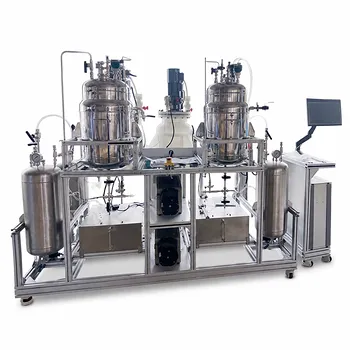
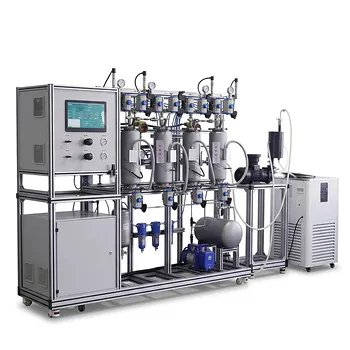
Polyvinyl alcohol membranes are stabilized primarily through chemical crosslinking with agents like glutaraldehyde. This process forms covalent bonds between the polymer chains, drastically reducing swelling, preventing dissolution, and enhancing both thermal and mechanical integrity during harsh pervaporation pilot‑unit operations. Without it, PVA would rapidly degrade under the combined stresses of high temperature and water.
Crosslinking is the foundation of PVA membrane reliability. In pilot‑scale pervaporation, the membrane must withstand heat and aqueous feeds while maintaining separation performance. The right crosslinking density creates a stable network that resists degradation, but finding that balance is critical—too much crosslinking can sacrifice flux and flexibility.
Why PVA Membranes Fall Apart Without Modification
PVA’s hydrophilicity makes it excellent for dehydrating solvents, but it also makes the polymer vulnerable. In a hot, aqueous feed, PVA sorbs so much water that it swells uncontrollably.
The Swelling‑and‑Failure Cycle
Without crosslinking, water molecules force the polymer chains apart. This plasticizes the membrane, causing a loss of mechanical strength and a catastrophic drop in selectivity. Over time, the swollen matrix can even dissolve.
Thermal energy accelerates the problem. PVA’s glass transition temperature is relatively low, and at pilot‑unit operating temperatures (often 60–90 °C), chain mobility increases, further promoting swelling and softening.
Why Pilot Units Demand More
In a laboratory experiment, you might replace a membrane after a few hours. In a pilot unit, operators expect to run continuously for days or weeks. Long‑term thermo‑mechanical stability is non‑negotiable. A membrane that fails prematurely invalidates process data, increases downtime, and drives up cost. Crosslinking is the answer.
How Chemical Crosslinking Solves the Problem
Chemical crosslinking introduces bridges between PVA chains, transforming a soluble, swellable linear polymer into a three‑dimensional network. This is the single most effective method for improving thermal and mechanical stability.
The Glutaraldehyde Reaction
Glutaraldehyde is the workhorse crosslinker for PVA pervaporation membranes. Its aldehyde groups react with the hydroxyl groups of PVA to form acetal bridges, often in the presence of an acid catalyst.
The reaction replaces hydrogen‑bonded physical crosslinks with strong covalent linkages. These covalent bridges lock the chains in place, dramatically reducing the membrane’s capacity to absorb water. Swelling is suppressed, the network remains rigid at higher temperatures, and the membrane no longer dissolves.
Controlling the Network Architecture
Crosslinking density is tunable. By adjusting the glutaraldehyde concentration, reaction time, and temperature, operators can dial in the properties they need. Higher crosslinking yields a tighter network with better stability and sometimes enhanced selectivity, but at the cost of lower permeate flux because the free volume shrinks.
Post‑treatment steps—such as thermal annealing after crosslinking—can further relax stresses and stabilize the structure, improving long‑term performance in the pilot unit.
Understanding the Trade‑offs
Crosslinking is not a free lunch. Every improvement in stability invites a corresponding compromise, and in a pilot plant, these trade‑offs shape operating windows and economics.
Flux vs. Stability
As crosslinking density increases, the membrane becomes less permeable. A highly crosslinked PVA membrane can become so dense that the water flux drops below a practical threshold. In a pilot unit, this means longer run times or larger membrane area to achieve the same separation, impacting capital and operating costs.
Embrittlement Risk
Covalent bridges remove chain flexibility. An over‑crosslinked membrane may become brittle, making it susceptible to cracking during handling, module assembly, or pressure fluctuations. In a pilot plant where membranes are often installed and removed, mechanical robustness during maintenance is just as important as during operation.
Chemical Handling and Safety
Glutaraldehyde is a potent fixative and a known irritant. Safe handling protocols, proper ventilation, and waste management are essential. The added complexity is manageable at pilot scale, but it must be factored into training and standard operating procedures.
Selectivity‑Permeability Balance
Interestingly, crosslinking often boosts selectivity for water because the reduced swelling limits the passage of larger organic molecules. However, if the network becomes too tight, even water transport is hindered, and the overall separation efficiency can plateau or decline.
Complementary Strategies for Pilot‑Scale Robustness
While crosslinking is the core method, a stable membrane alone does not guarantee a successful pilot run. Supplementary approaches can extend membrane life and maintain performance.
Feed Pretreatment and Fouling Control
Fouling, not just thermal degradation, is a leading cause of flux decline. Organic or inorganic foulants can deposit on the crosslinked PVA surface, increasing resistance. In pilot units, pretreating the feed—for example, with microfiltration to remove particulates—preserves the clean membrane surface and the benefits of crosslinking.
Material Selection in Context
Crosslinked PVA remains the benchmark for hydrophilic pervaporation. However, inorganic membranes offer superior thermal and mechanical stability without the need for organic crosslinkers. They are, however, fragile and expensive, making them less forgiving in a training‑oriented pilot environment. The choice of crosslinked PVA versus inorganic alternatives often becomes a teaching point about balancing performance, lifetime, and cost.
Making the Right Choice for Your Pilot Unit
Every pervaporation pilot unit has different goals—demonstrating a process, training operators, or generating scale‑up data. The level of crosslinking must align with those objectives.
- If your primary focus is long‑term, continuous operation: Use a higher crosslinking density with glutaraldehyde, optimize post‑treatment annealing, and implement rigorous feed pretreatment to minimize both swelling and fouling.
- If your primary focus is high water flux and rapid results: Consider a lower crosslinking density to preserve permeability, but plan for more frequent membrane replacement or cleaning cycles.
- If your primary focus is operator training and process education: Crosslinked PVA membranes provide a safe, cost‑effective platform to demonstrate the trade‑offs between stability and flux, and to teach crosslinking procedures as a core unit‑operation skill.
A crosslinked PVA membrane is only as effective as the process controls that surround it. By tuning the crosslinking reaction and coupling it with a robust pretreatment strategy, you can reliably maximize both stability and separation performance in your pilot unit.
Summary Table:
| Method | Mechanism | Key Benefit | Primary Trade-off |
|---|---|---|---|
| Glutaraldehyde Crosslinking | Forms covalent acetal bridges between PVA chains | Drastically reduces swelling & dissolution; improves thermal stability | Reduced water flux (permeability) and risk of embrittlement |
| Post-Treatment Annealing | Relaxes internal stresses within the polymer matrix | Enhances long-term structural stability under heat | Requires precise control over temperature and curing time |
| Feed Pretreatment | Removes particulate foulants prior to membrane contact | Prevents flux decline and extends membrane service life | Adds an additional operational step and filtration equipment |
Elevate Your Chemical Engineering Lab with LABPARK
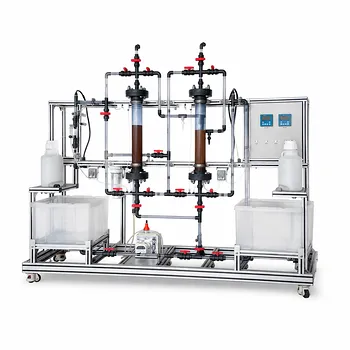
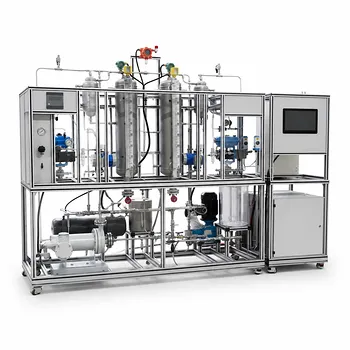
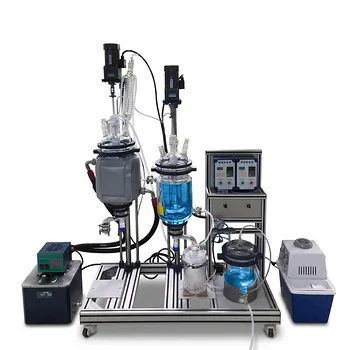
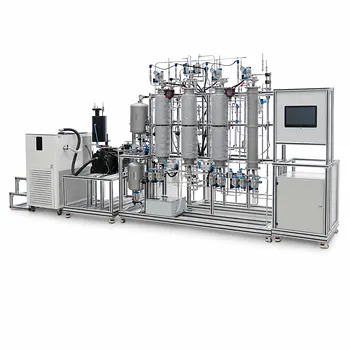
Demonstrating advanced separation technologies like pervaporation requires reliable, industry-grade equipment. LABPARK provides premium Educational and Vocational Unit Operations Pilot Plants in chemical engineering, bioprocess & biotech, and environmental & water treatment. Designed specifically for universities, research institutes, and enterprises, our pilot plants enable students and researchers to master process controls, membrane dynamics, and scale-up fundamentals in a safe, hands-on environment.
Ready to upgrade your laboratory capabilities? Contact us today to find the perfect pilot-scale solution for your institution!
Related Products
- Photocatalytic Membrane Separation and Degradation Unit Operations Pilot Plant
- Hollow Fiber Ultrafiltration Membrane Separation Educational Pilot Plant
- Ultrafiltration Membrane Separation Educational Pilot Plant
- Multi-Functional Membrane Separation Educational Pilot Plant for Unit Operations Lab
- Multifunctional Membrane Separation Educational Pilot Plant with Ultrafiltration, Nanofiltration, Reverse Osmosis
People Also Ask
- What are the key differences in membrane configurations? Choose the Right Unit Operations Pilot Plant
- How Do Pervaporation, Vapor, and Gas Permeation Differ in Pilot Plants? Key Comparison
- What are the structural & performance trade-offs of flat-sheet, spiral-wound, & hollow-fiber membrane modules?
- Pervaporation vs. Vapor Permeation: Handling Suspended Solids in Membrane Pilot Plants
- How do PEI, PVDF, and PSU membranes compare in pilot plants? Find the best fit.