The silent killer of laboratory productivity is a seized joint or a slow leak that ruins a hard-earned distillation. The core precautions for ground glass joints are straightforward: keep them meticulously clean, disassemble them immediately after use, use vacuum grease only when necessary, and avoid abrasive cleaning methods. Neglecting these steps turns precision glassware into expensive scrap.
Ground glass joints fail for two reasons: physical damage from grit or cleaning abrasives, and chemical “freezing” from exposure to bases or thermal cycling. The solution is a disciplined routine of cleaning, immediate disassembly, and selective lubrication—vacuum grease for high-vacuum work, nothing at all for simple atmospheric operations unless reactive chemicals are present.
The Four Pillars of Ground Glass Joint Care
These rules form a unified system. Missing one can cascade into seal failure or costly breakage, even if you follow the others perfectly.
Keep Joint Surfaces Absolutely Free of Particles
A single grain of sand or a stray stir bar fragment is enough to ruin a ground glass joint. When you insert a mating cone into a socket, any hard particle acts like a chisel—it digs a scratch into the precision-ground surface with just a quarter-turn.
These scratches destroy the vacuum seal permanently. The ground surface relies on a network of microscopic ridges that collapse together under light pressure. A scratched path bypasses that entire labyrinth, allowing air or vapor to leak through even with heavy greasing. Always wipe both surfaces with a lint-free cloth before assembly, and never rest a joint directly on a lab bench.
Disassemble Joints Immediately After Use to Prevent Freezing
The most common cause of broken adapters, condensers, and flasks is a frozen joint that won’t budge. Leaving a glass setup assembled overnight is gambling with expensive hardware.
Freezing happens through two mechanisms. Chemical freezing occurs when alkaline solutions or concentrated salt solutions wick into the joint’s micro-capillary gap and etch the glass, creating a solid bridge on evaporation. Thermal freezing is simpler: hot glass expands, locks together, and contracts unevenly on cooling, seizing the joint mechanically. Disassemble while the apparatus is still warm, or at the very latest, immediately after a run. If a joint does stick, use a gentle penetrating solvent and patience—never apply a lever to cold glass.
Use Vacuum Grease Strategically, Not Routinely
Grease is a tool, not a default. For vacuum distillations where you need a near-perfect seal under reduced pressure, a thin, even film of high-vacuum grease is essential. It fills the residual surface imperfections that would otherwise leak.
For atmospheric pressure work, grease is usually unnecessary. A clean, dry ground joint seals itself well enough against ambient pressure. However, there are exceptions: if you are heating strong bases, concentrated salt solutions, or anything that tends to crystallize in the joint, a light coat of grease acts as a barrier to prevent chemical freezing. Over-greasing is just as bad—excess lubricant can contaminate your product and attract grit.
Clean Without Abrasives, and Purge Grease Properly
After a reaction, an uncleaned joint is a future problem waiting to happen. Never use scouring powder, abrasive cleansers, or wire brushes on ground surfaces. Even “gentle” abrasives leave micro-scratches that degrade the seal over multiple uses.
If you used vacuum grease, remove it first with an organic solvent—petroleum ether, ethyl acetate, or acetone are all suitable choices—and a soft cloth or lab wipe. Then wash with your normal aqueous detergent. This two-step process ensures no residual hydrocarbon film remains that could char on next heating or contaminate a sensitive reaction.
Understanding the Trade-offs and Hidden Risks
No single maintenance protocol fits every piece of glassware blindly. The choices you make involve real compromises.
The Double-Edged Sword of Grease
Grease solves the vacuum leak problem but introduces its own headaches. A joint lubricated for vacuum must be thoroughly cleaned before the apparatus is used for a moisture-sensitive or analyzing reaction, because residual silicone or hydrocarbon greases can leach plasticizers or siloxanes into solvents. If you switch frequently between high-vacuum and inert-atmosphere work, consider dedicating separate sets of joints or using PTFE sleeves, which avoid this contamination risk entirely.
The Danger of Over-Tightening with Clips or Keck Clamps
While special joint clips keep connections from slipping apart, they must not be forced to pull a poor-fitting joint together. If a greaseless joint leaks under vacuum, over-tightening a metal clip will not fix it—it only stresses the glass and risks a catastrophic fracture. The correct response is to inspect the surface for damage, clean it again, and if necessary, use a minimal film of the correct grease. A metal clip is a holder, not a correction tool for a bad seal.
Solvent Selection Matters
The primary reference suggests petroleum ether, ethyl acetate, or acetone for grease removal. Acetone is highly volatile and leaves no residue, but it is also more aggressive toward some plastic components or older fume hood paint. Ethyl acetate is a good middle-ground. Avoid chlorinated solvents like dichloromethane unless you have verified compatibility with the specific glass type (borosilicate is generally fine, but soft soda-lime glass may be etched).
Making the Right Choice for Your Application
Your specific goal determines which rules to prioritize. Adapt these guidelines to your workflow.
- If your primary focus is achieving a deep vacuum (below 1 torr): Use a high-quality silicone vacuum grease sparingly, inspect joints for scratches with a magnifier before each use, and always disassemble hot to avoid thermal freezing that can hide micro-cracks.
- If your primary focus is routine atmospheric distillations with clean solvents: Rely on clean, dry joints without any grease; disassemble immediately after the apparatus cools to room temperature to prevent salt or base freezing, and clean only with solvent wipes and mild detergent.
- If your primary focus is handling strong bases or highly concentrated salt solutions: Apply a thin barrier coat of a chemically resistant grease (e.g., PTFE-based or fluorinated grease) to the upper third of the joint to prevent capillary wicking, then clean meticulously with an appropriate organic solvent the moment the run ends.
Ground glass connections are precision interfaces, not brute-force seals. Treat them with the same disciplined care you apply to your reaction conditions, and they will serve leak-free for years.
Summary Table:
| Care Pillar | Best Practice | Key Benefit |
|---|---|---|
| Particle Control | Wipe with lint-free cloth before assembly | Prevents scratches and seal bypass |
| Disassembly | Disassemble immediately after run (while warm) | Prevents chemical and thermal freezing |
| Greasing | Use high-vacuum grease sparingly, only when needed | Avoids contamination while ensuring vacuum tightness |
| Cleaning | Wash with organic solvents and soft wipes; no abrasives | Preserves precision-ground surfaces |
Optimize Your Process Operations with LABPARK
Precise glassware maintenance is just the beginning of successful lab scale-up. LABPARK provides premium Educational and Vocational Unit Operations Pilot Plants in chemical engineering, bioprocess & biotech, and environmental & water treatment. We help universities, research institutes, and enterprises build reliable, industry-grade training and research environments.
Ready to elevate your research or vocational training? Contact our engineering experts today to find the ideal pilot plant solution for your facility!
Related Products
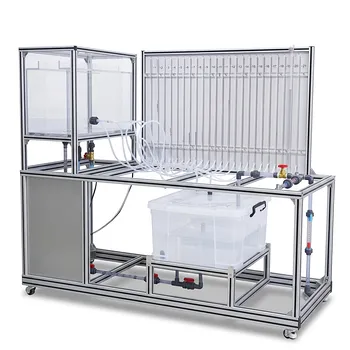
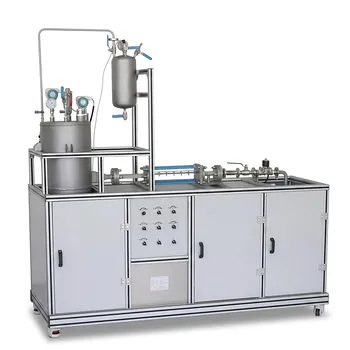
- Multi-Functional Special Distillation Educational Pilot Plant
- Constant Pressure Filtration Educational Unit Operations Pilot Plant
- Bernoulli Equation Demonstration Unit Operations Pilot Plant
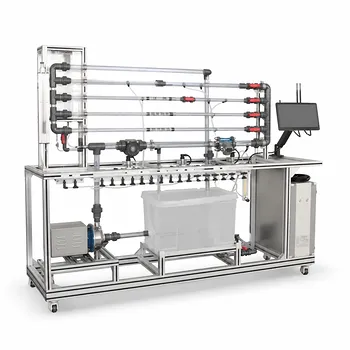
- Fluid Friction Resistance Determination Educational Unit Operations Pilot Plant
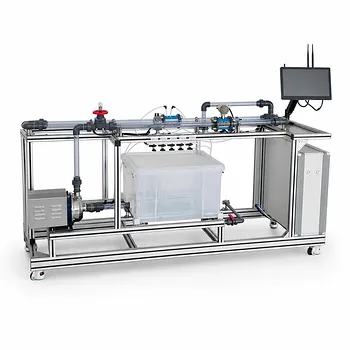
- Orifice and Venturi Flowmeter Calibration Educational Pilot Plant for Fluid Mechanics Laboratory
People Also Ask
- Why does simple distillation yield higher efficiency than flash distillation? Key thermodynamic differences.
- How to Integrate Spectroscopy in Distillation Pilot Plants for Advanced Process Control
- How does double temperature difference control improve distillation pilot plants? Stabilize purity.
- How to Verify Distillation Boundary Lines & Composition Regions with Pilot Plants
- Why is the acentric factor important in pilot plants? Fluid property prediction.