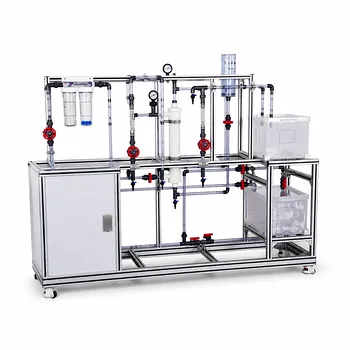
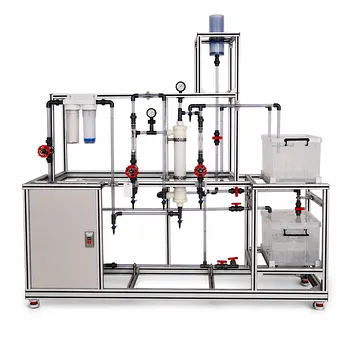
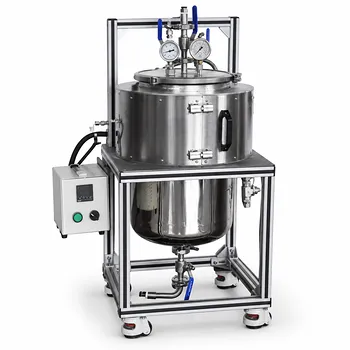
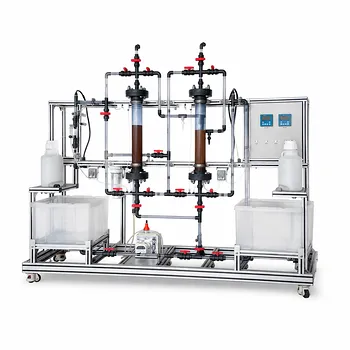
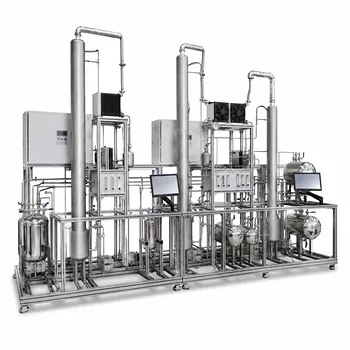
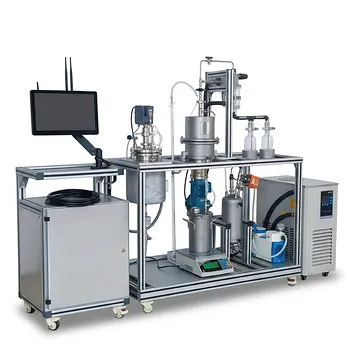
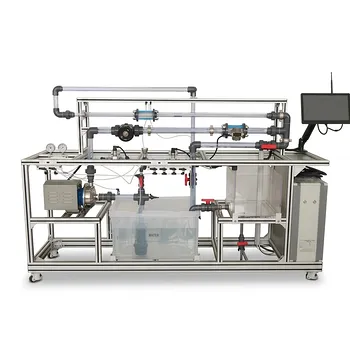
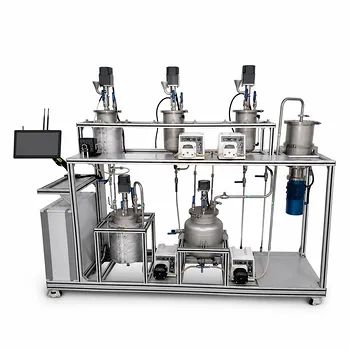
An ultrafiltration pilot plant is far more than a simple filtration device. In biotechnology and food engineering laboratories, a UF pilot system demonstrates four core unit operations: concentration, diafiltration (buffer exchange), clarification, and molecular fractionation. Each operation comes to life as students manipulate transmembrane pressure, cross-flow velocity, and temperature to achieve real separations while confronting the unavoidable challenges of membrane fouling and concentration polarization.
A UF pilot plant bridges textbook theory and industrial practice. It lets researchers concentrate monoclonal antibodies under controlled shear, clarify fruit juice without heat, and recover milk proteins from whey—all while teaching how to prevent the gel-layer that would otherwise cripple productivity. The real value lies not just in what the membrane retains, but in how you control the mass‑transfer boundary layer that forms on its surface.
Concentration and Diafiltration: The Biotech Core
The same pilot plant that processes fruit juice can switch to a high-value protein feed. In bioprocess training, the emphasis shifts to precise volume reduction and buffer exchange under gentle conditions.
Concentration: Removing Water to Boost Product Titer
Concentration is simply the removal of solvent (usually water) to increase the solute concentration. In a UF pilot plant, a protein solution or monoclonal antibody harvest is circulated across a membrane with a molecular weight cutoff low enough to retain the product. Permeate (water, salts, small peptides) passes through, while the retentate becomes progressively more concentrated. Students observe how the protein concentration rises, measuring the volume reduction ratio and using in-line sensors to track purity and yield. This operation mirrors the first step in many downstream purification trains.
Diafiltration: The Art of Buffer Exchange
Diafiltration is the continuous addition of a new buffer to the retentate while permeate is removed. It is critical when a protein must be transferred from a cell‑culture harvest medium into a formulation buffer. The UF pilot plant allows students to perform constant‑volume diafiltration: they add fresh buffer at the same rate permeate flows out, washing away small impurities while keeping the target macromolecule. By sampling the permeate conductivity, they can verify when the original salts and metabolites have been swept out. This hands‑on demonstration teaches buffer‑exchange efficiency, dilution factors, and the trade‑off between diafiltration volumes and process time.
The Shear Connection
Proteins are shear‑sensitive. The pilot plant’s pump speed and module geometry directly control the shear rate at the membrane wall. Under excessive shear, mAbs can aggregate or unfold. By reducing pump speed or selecting a low‑shear module, students learn to balance flux and product integrity—an engineering dilemma that textbooks alone cannot convey.
Clarification and Fractionation in Food Engineering
Food‑grade UF pilot plants transform turbid, raw ingredients into clear, shelf‑stable products without destroying heat‑sensitive nutrients.
Juice Clarification and Polyphenol Preservation
Fruit juices contain pectin, cell debris, and haze‑forming colloids that UF can remove in a single cold‑processing step. The pilot plant demonstrates clarification: the feed passes through a membrane that rejects suspended solids and large polysaccharides, delivering a sparkling permeate. Unlike thermal evaporation, UF operates at low temperatures, so polyphenolic antioxidants remain intact. Students measure color, turbidity, and antioxidant capacity before and after to quantify the separation quality. This showcases how a membrane operation can simultaneously clarify and “cold‑sterilize” a beverage.
Dairy and Protein Recovery
In dairy applications, the same pilot plant concentrates milk proteins or recovers whey proteins from cheese‑making by‑products. Whole milk or whey is circulated; the UF membrane retains casein micelles and whey proteins while passing lactose, minerals, and water. The retentate stream becomes a protein‑rich concentrate suitable for yogurt or protein powder. Students learn that the choice of membrane cutoff (typically 10–50 kDa for whey proteins) determines both the protein yield and the final product’s functional properties.
Size‑Exclusion Fractionation
UF dovetails with the fundamental principle of size exclusion. Pilot‑scale UF vividly illustrates that molecules smaller than the membrane pores—salts, organic acids, sugars, and small peptides—permeate freely, while larger macromolecules like proteins and polysaccharides are retained. By analyzing permeate and retentate compositions, students see how a single unit operation can fractionate a complex stream solely by molecular dimensions, reinforcing the link between pore size and rejection efficiency.
From Principles to Practice: Operating the Pilot Plant
The true educational power of a UF pilot plant lies in the knobs it puts into the operator’s hands.
Optimizing Transmembrane Pressure and Crossflow
Permeate flux initially rises with transmembrane pressure (TMP) but eventually plateaus when a stagnant layer of retained solutes forms a hydraulic barrier. Students increase pressure stepwise and plot flux vs. TMP, discovering the critical point where further pressure adds no value. They then raise the cross‑flow velocity to sweep the membrane surface, directly observing how turbulence disrupts the gel layer and restores flux. This demonstrates the classic trade‑off: higher pumping costs for sustainable flux.
Monitoring and Preventing Fouling
Concentration polarization is the precursor to irreversible fouling. In the pilot plant, a protein or juice feed will eventually foul the membrane if left unchecked. Students measure the permeate flow decline and learn mitigation strategies: periodic back‑pulsing, optimizing module selection (tubular vs. spiral‑wound), and implementing a cleaning‑in‑place (CIP) cycle with enzymatic or alkaline detergents. These practical lessons embed the habit of thinking about membrane lifecycle, not just a single run.
Understanding the Trade‑offs
UF is not a universal solution. Several inherent limitations shape how it should be used in teaching and research.
The Pressure‑Flux Plateau
Gel‑layer controlled filtration teaches a humbling lesson: beyond a certain TMP, pumping more energy does not increase output. The plateau forces students to think about mass‑transfer limitations rather than brute force, a concept that applies to many chemical engineering unit operations.
Product Loss and Membrane Integrity
Some product inevitably adsorbs to the membrane or becomes trapped in the fouling layer. Yield loss and gradual membrane degradation are real phenomena that pilot‑plant runs can quantify over multiple cycles. Students compare initial and final water permeability to assess fouling severity and learn why regular CIP protocols are non‑negotiable in a sanitary food or biotech facility.
UF vs. Neighboring Membrane Technologies
A UF pilot plant is most instructive when compared side‑by‑side with nanofiltration (NF) or reverse osmosis (RO) units. UF retains proteins but lets salts pass; NF retains divalent ions and small organics; RO retains virtually everything except water. Demonstrating these differences using the same feed stream teaches how membrane selection dictates the separation outcome. UF will never perform desalting or demineralization, and it cannot sterilize on its own—for that, a microfiltration stage is required upstream.
Making the Right Choice for Your Lab
Tailor the UF pilot plant configuration and experimental plan to your primary educational or research objective.
- If your primary focus is biotherapeutic downstream processing: Prioritize modules with precise shear control and diafiltration capability to teach buffer exchange and protein stability under realistic conditions.
- If your primary focus is food product development: Configure the plant for gentle clarification and concentration of heat‑sensitive juices or dairy streams, emphasizing polyphenol retention and organoleptic quality preservation.
- If your goal is to teach engineering fundamentals: Use model protein solutions and a data‑logging control system to demonstrate the Hagen–Poiseuille and osmotic pressure models, and to quantitatively map the concentration polarization boundary layer.
- If maximizing membrane lifetime is a core learning outcome: Incorporate rigorous CIP demonstrations with enzymatic or alkaline cleaning agents, so students grasp the full cycle of operation, fouling, and recovery.
A well‑designed UF pilot plant turns abstract separation theory into a tangible, data‑rich experience that prepares students and researchers for the real‑world constraints of food and biotech manufacturing.
Summary Table:
| Unit Operation | Main Applications | Key Engineering Metrics |
|---|---|---|
| Concentration | Protein titer boost, dairy concentration | Volume reduction ratio (VRR), flux vs. TMP |
| Diafiltration | Buffer exchange, desalting protein solutions | Dilution factor, salt removal efficiency |
| Clarification | Juice cold-sterilization, haze removal | Turbidity, color, antioxidant preservation |
| Fractionation | Size-exclusion molecular separation | Rejection efficiency, membrane pore cutoff |
Equip Your Laboratory with LABPARK Pilot Plants
Translate complex separation theory into practical, hands-on experience. LABPARK designs and supplies premium Educational and Vocational Unit Operations Pilot Plants in chemical engineering, bioprocess & biotech, and environmental & water treatment for universities, research institutes, and enterprises.
Our customizable ultrafiltration (UF) systems allow students and researchers to master key processes like concentration, diafiltration, and fouling control with industrial-grade controls.
Contact our engineering team today to find the perfect pilot plant configuration for your lab.
Related Products
- Hollow Fiber Ultrafiltration Membrane Separation Educational Pilot Plant
- Ultrafiltration Membrane Separation Educational Pilot Plant
- Multifunctional Membrane Separation Educational Pilot Plant with Ultrafiltration, Nanofiltration, Reverse Osmosis
- Multi-Functional Membrane Separation Educational Pilot Plant for Unit Operations Lab
- Hot Filtration Educational Unit Operations Pilot Plant Laboratory System
People Also Ask
- What are the main types and mechanisms of membrane fouling? Optimize Your Pilot Plant Operations
- Isotropic vs. Anisotropic Membranes: How to Choose the Best Pilot Plant Modules
- How do membrane materials affect ultrafiltration pilot plants? Compare PSU, PES & Ceramics for Biotech Training
- How do PEI, PVDF, and PSU membranes compare in pilot plants? Find the best fit.
- How can operators optimize operating conditions and cleaning protocols in membrane separation pilot plants to mitigate fouling?