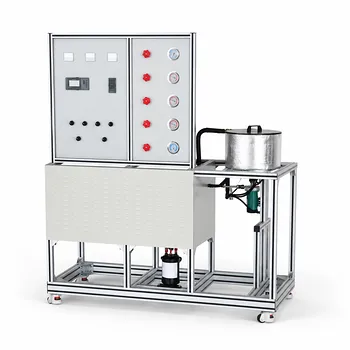
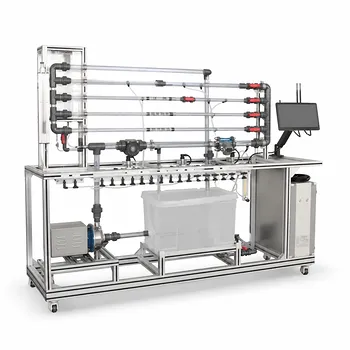
Bienzyme electrodes and substrate-recycling sensors transform pilot-plant training by turning trace-level detection into an ultrafast, teachable signal. Their significance lies in amplifying electrochemical signals through cyclic enzyme reactions, enabling students to monitor analytes at subnanomolar concentrations in just a few seconds. This capability directly addresses the educational need to demonstrate high-sensitivity, real-time analytical methods for process control, automation, and safety—all within the hands-on environment of a chemical engineering pilot plant.
A core training objective in pilot plants is to move beyond theory and give future engineers the tools to manage industry-relevant detection limits and response times. Bienzyme electrodes with substrate recycling achieve both, essentially condensing an ultra‑sensitive bioassay into a near‑instantaneous sensor signal, and in doing so they make online quality control and closed‑loop automation tangible learning experiences.
Why Low‑Concentration Monitoring Matters in Pilot Plant Training
Pilot plants replicate industrial‑scale dynamics in a controlled, educational setting. Students quickly learn that critical compounds—reaction by‑products, trace metabolites, or toxic intermediates—often appear at levels far below what a standard electrode or probe can measure reliably. Without ultra‑sensitive detection, subtle shifts in kinetics or early contamination go unnoticed, undermining both safety and product quality. Integrating sensors that can reliably detect subnanomolar species therefore fills a gap between academic instrumentation and industrial expectations.
The Educational Value of Seeing the Unseen
When students can visualise a concentration change of 0.1 nM in real time, they internalise concepts like reaction order, enzyme inhibition, and mass‑transfer limitations far more concretely than they would from a textbook. This immediacy turns abstract kinetic models into observable trends, strengthening the connection between data and process decisions.
How Bienzyme Electrodes and Substrate‑Recycling Sensors Work
At the heart of these sensors is a simple but powerful idea: take a small analyte molecule and cycle it rapidly between two enzyme‑catalysed states, each cycle delivering an electron to the electrode. This repeated turnover creates a far larger current than a single reaction would generate—a true signal amplification.
The Signal Amplification Mechanism
A typical configuration, such as a Lacc‑GDH electrode with a ferrocene‑derivative redox label, pairs an oxidase (e.g., laccase) with a dehydrogenase (e.g., glucose dehydrogenase). The analyte (often a phenolic compound or alcohol) is oxidised by the first enzyme, then immediately reduced back by the second, while a mediator like ferrocene shuttles electrons between the active site and the electrode. Every cycle releases multiple electrons, and the electrochemical current is amplified proportionally. This effect lifts the detection limit to the subnanomolar range without requiring a large sample volume or a lengthy incubation.
Achieving Sub‑Nanomolar Detection in Seconds
Because the recycling runs continuously at the electrode surface, the sensor responds within a few seconds—no waiting for an endpoint colour to develop. That speed is critical for pilot‑plant applications where a reaction happens faster than a traditional assay can measure. Students experience firsthand how rapid‑response sensors can close the control loop, enabling automatic adjustments of feed rate, pH, or temperature before a process drifts out of specification.
Teaching Future Engineers Through Advanced Analytical Modules
The core significance of these sensors is pedagogical: they become a vehicle for transferring high‑level analytical competence directly into the hands of trainees. When a pilot plant module includes a bienzyme sensor, the curriculum shifts from “measure a concentration” to “design a monitoring strategy for a live, dynamic system.”
Online Quality Control and Automation Skills
Students learn to interface the sensor with data‑acquisition systems and programmable logic controllers. They see that a fast, sensitive signal is the prerequisite for automated quality control—not simply an endpoint check. By programming alarms or feedback loops based on the sensor output, they gain practical experience in the closed‑loop automation that drives modern biomanufacturing and fine‑chemical production.
Safety Compliance and Real‑Time Hazard Detection
Trace toxins or runaway‑reaction precursors can escalate rapidly. A sub‑nanomolar‑capable sensor that refreshes every few seconds allows students to simulate real‑time safety compliance scenarios. They witness how early warning based on amplified signals can trigger quenching or venting steps, embedding a safety‑critical mindset that pure theoretical training rarely achieves.
Understanding the Trade‑offs and Limitations
No technology is flawless. Bienzyme electrodes introduce complexity that must be managed, and a well‑designed training module uses these limitations as teaching points.
- Enzyme stability – Proteins denature over time. Students must learn to monitor baseline drift, schedule enzyme‑layer replacement, and calibrate under process‑like temperature and pH conditions. A sensor that fades during a run teaches the value of robust maintenance protocols.
- Electrochemical interference – Other electroactive species in the process stream (e.g., ascorbic acid, dissolved oxygen) can contribute to the signal. Training must include tactics like differential measurement, selective membranes, or pulsed detection to isolate the true analyte signal.
- Calibration complexity – Because the amplification factor depends on the enzyme‑recycling rate, which can vary with small changes in flow or fouling, standard two‑point calibration may not suffice. Students encounter the need for in‑line standard additions or dynamic recalibration.
Acknowledging these pitfalls helps trainees develop the troubleshooting skills they’ll need when scaling a sensor from the lab bench to a production line.
How to Apply This to Your Pilot‑Plant Curriculum
When deciding how deeply to integrate bienzyme‑electrode modules into your teaching, align the choice with the learning outcomes you want to emphasise.
- If your primary focus is fundamental bioelectrochemistry: Use the sensor as a hands‑on demonstration of enzyme‑mediator kinetics. Let students alter mediator concentration or pH and watch the signal amplification shift in real time.
- If your primary focus is process integration and automation: Build the module around a live reactor loop that the sensor controls. Have students write the logic that adjusts cooling or substrate feed when the analyte concentration breaches a threshold.
- If your primary focus is analytical method validation: Challenge students to benchmark the sensor against off‑line HPLC or mass spectrometry. This sharpens their ability to critically compare speed, sensitivity, and specificity across analytical platforms.
By treating the bienzyme sensor not as a finished black box but as a teachable system, you transform a simple concentration measurement into a masterclass in modern process‑analytical technology. That, ultimately, is why these sensors are so significant in training modules: they give students the confidence to design, deploy, and troubleshoot the high‑stakes monitoring tools that industry demands.
Summary Table:
| Feature | Technical Mechanism | Pedagogical Value |
|---|---|---|
| Signal Amplification | Cyclic enzyme reactions (e.g., Lacc-GDH) | Visualizes subnanomolar changes in real time |
| Rapid Response | Continuous surface-level recycling | Enables closed-loop automation training |
| Process Safety | Fast, trace-level hazard warning | Teaches safety compliance & risk mitigation |
| Real-World Challenges | Enzyme degradation & electrochemical interference | Develops industrial troubleshooting skills |
Empower Your Students with Advanced Process Control
To effectively teach real-time analysis and automation, students need hands-on experience with industry-grade systems. LABPARK designs and manufactures high-performance Educational and Vocational Unit Operations Pilot Plants tailored for chemical engineering, bioprocess & biotech, and environmental & water treatment.
Whether you are a university, research institute, or enterprise, our pilot plants deliver the realistic environments needed to master analytical sensors, closed-loop control, and process safety.
Contact LABPARK today to discuss your training module requirements and elevate your educational capabilities!
Related Products
- Electrolyte Distillation Purification and Formulation Educational Pilot Plant
- Multi Functional Catalytic Reaction and Reactor Evaluation Educational Unit Operations Pilot Plant
- Electrochemical Water Treatment Educational Unit Operations Pilot Plant
- Electrolytic Hydrogen Production Educational Unit Operations Pilot Plant
- Alkaline Membrane Water Electrolysis Educational Pilot Plant Unit Operations Training System
People Also Ask
- Why does simple distillation yield higher efficiency than flash distillation? Key thermodynamic differences.
- How to Integrate Spectroscopy in Distillation Pilot Plants for Advanced Process Control
- How Batch vs Continuous Configuration Affects Distillation Pilot Plant Versatility & Footprint
- How does the feed thermal state influence distillation pilot plant design and utility consumption?
- How to Verify Distillation Boundary Lines & Composition Regions with Pilot Plants